The Complete Restaurant Furniture Buying Guide (Chairs, Tables & Booths)
Why restaurant furniture matters more than you think
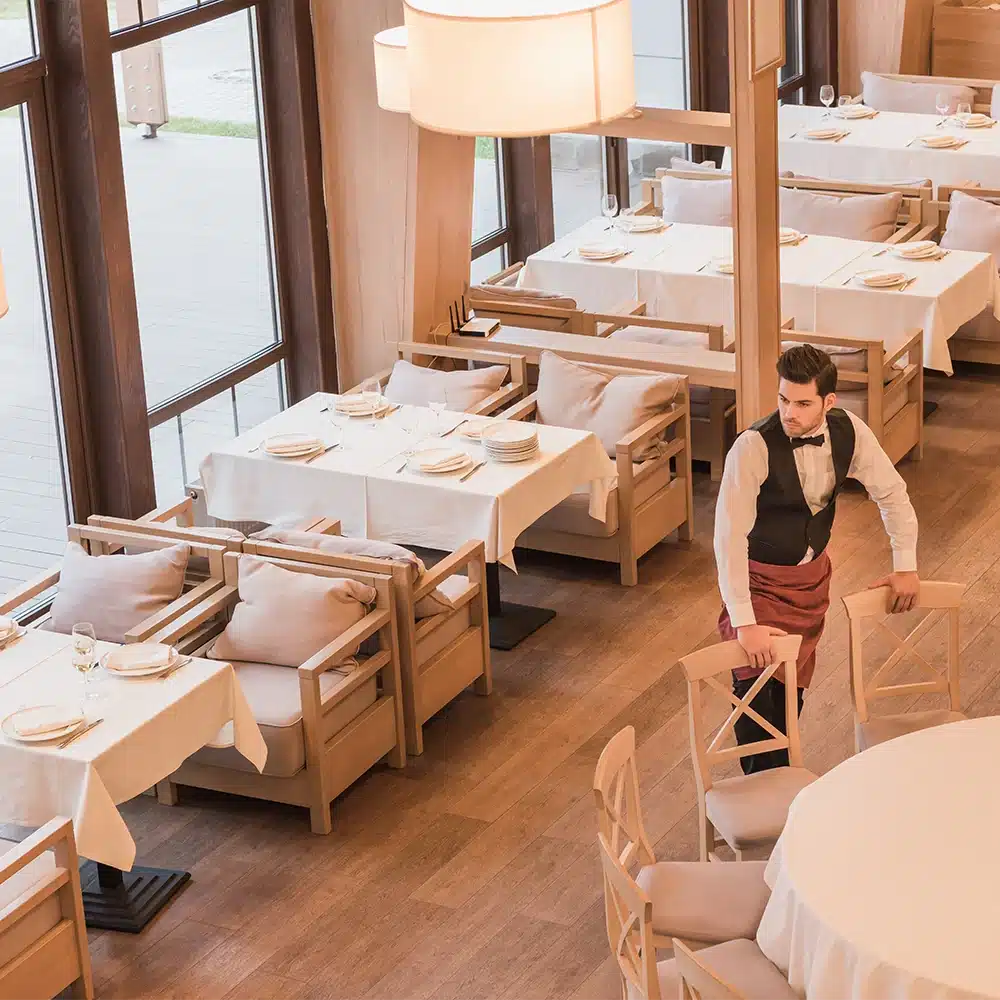
When you picture your restaurant, café, bar or pub on a busy Friday night, you probably think about the food, the team and the atmosphere. The furniture quietly holds all of that together. The right restaurant chairs, tables, bar stools and booth seating set the pace of service, influence how long people stay, and say a lot about your brand before anyone has tasted a thing.
For independent operators, restaurant furniture is not just décor. It affects how many covers you can fit without annoying your guests, how smoothly staff can move, the dining experience, how noisy the room gets, and how easy it is to turn the space between breakfast, lunch and evening service. Get it right and the room feels effortless; get it wrong and you are forever nudging chairs, apologising for wobbly tables and replacing damaged pieces years before you budgeted to.
This guide walks through the major decisions step by step: how to plan a layout, choose restaurant chairs, bar stools and restaurant tables, when to invest in booth seating, and how to balance aesthetics, durability and budget. It is written from a contract furniture manufacturer’s perspective, so it is grounded in what actually works in real UK hospitality settings, not just what looks good on Pinterest.
Throughout, we’ll point you to relevant categories in our commercial furniture collection so you can see examples of each option in practice.
Start with your concept, covers and layout
Before you look at fabrics or table top finishes, it helps to be clear about three things: what kind of venue you are running, how many people you need to seat, and how guests and staff will move through the space.
A quick brunch café has very different needs to a neighbourhood bistro with long dwell times or a pub that trades heavily on wet sales. If you rely on quick table turns, you might lean towards lighter metal chairs or wood chairs, compact restaurant dining tables and only a little upholstery. If you expect guests to spend two to three hours over a meal and bottle of wine, generous upholstered chairs and booth seating suddenly become much more valuable and increase guest experience.
Covers come next. Most operators start with a target number in their head; the challenge is achieving that without making the room feel like an aircraft cabin. As a rule of thumb, you should aim for realistic spacing between chairs, and meaningful circulation routes for staff with full trays. Comfortable clearances around restaurant tables, booth runs and bar areas make everyone’s life easier and reduce the risk of accidents. When you add deeper upholstered chairs or banquettes, their extra depth has to be accounted for early in the planning, not squeezed in at the end.
This is where fixed seating and space-saving solutions such as our Compact Lite booth seating become powerful. By pushing seating right back to the wall and optimising seat depth and back angle, they help smaller restaurants and cafés increase covers while still feeling comfortable and on-brand.
Most independent venues end up with a blend of loose restaurant chairs, some bar stools and a proportion of booth seating. The exact mix depends on your concept. A casual bar may use a lot of poseur tables and stools around the bar; a family restaurant might rely more on fixed booths and sturdy dining chairs; a café could use a flexible mix of two-tops, window counters and a couple of bigger tables for groups. The important thing is that the layout supports the way you actually trade across the week, not just how the space looks at 7pm on launch night.
Choosing restaurant chair types: metal, wooden and upholstered options
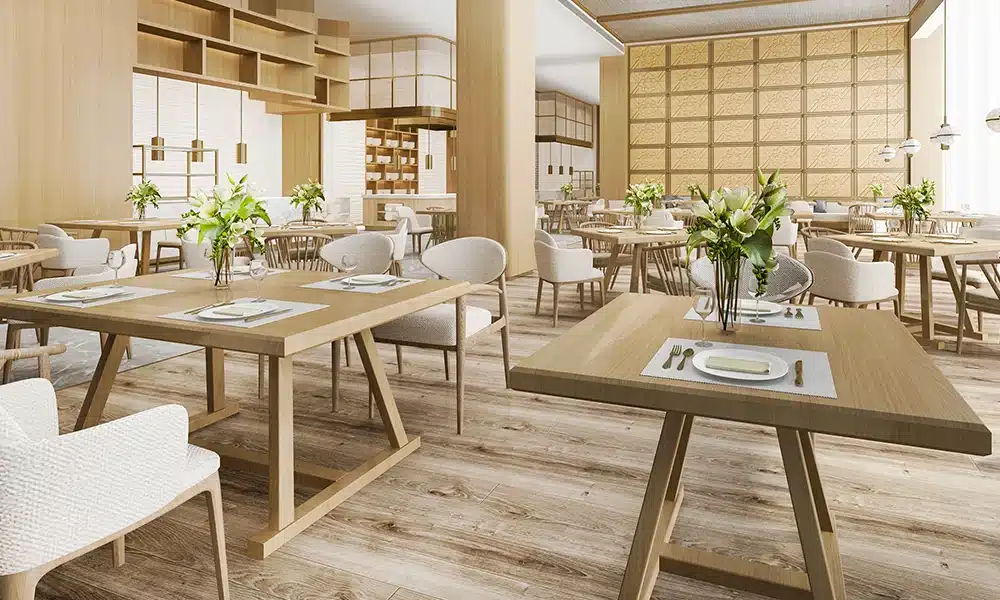
Restaurant chairs do more work than any other piece of furniture in your venue. They are dragged, stacked, leaned back on, sat on by children, and climbed over by people sliding into booths. They need to be comfortable, contract-grade and easy to live with, not just pretty.
Metal chairs for busy, hard-working spaces
Metal restaurant chairs are a favourite in fast-casual venues, busy cafés and bars where furniture takes a pounding. A good metal chair frame is incredibly strong for its weight and usually slimmer than a comparable wooden frame, which helps in tighter spaces and along window counters.
In practice, metal chairs are popular where you expect a lot of movement and regular cleaning. They are forgiving when chairs are knocked together and can be wiped down quickly at the end of service. You can keep them bare for a more industrial look, or add seat pads and upholstered panels to soften the feel. Our metal framed chairs cover that full spectrum, from simple café styles to fully upholstered bar-restaurant designs.
Wood chairs for warmth and character
Wood chairs immediately add warmth and a more “hospitality” feel to the room. They work particularly well in pubs, gastropubs, bistros and neighbourhood restaurants that want to feel relaxed rather than clinical.
Contract-grade wooden chairs, such as those in our wooden framed chairs range, are engineered very differently from domestic chairs. Joints are reinforced to withstand daily commercial use, and frames are usually made from beech, oak or another hardwood chosen for stability and strength. You can specify stains from pale oak through to deep walnut, then layer fabric, genuine leather or faux leather upholstery on the seat and back to match your brand.
Wooden chairs are also forgiving when it comes to mixing and matching. Many independent pubs and cafés intentionally combine a couple of chair designs and stains so the room feels collected rather than too “fitted out”.
Upholstered and luxurious chairs for longer dwell times
If you are running a more premium restaurant, brasserie or cocktail-led venue, upholstered chairs and armchairs start to earn their keep. They encourage people to stay that bit longer and impove the dining experience,which often translates into dessert orders, extra drinks and a more relaxed pace of service.
Our luxurious chairs are designed with deeper seats, refined proportions and higher backs for comfort over longer sittings. These work well at feature tables, along windows, or in smaller dining rooms where you want to signal something more special. In larger spaces you might use them selectively, combining them with simpler restaurant dining chairs to balance budget and footprint.
Getting ergonomics right: height, depth and back support
Whatever style you choose, ergonomics matter. Most restaurant dining chairs work to a seat height of around 450–480mm to pair with 730–760mm high restaurant tables. That creates a comfortable gap for thighs and allows most guests to sit with a natural posture.
Seat depth is easy to overlook. If the seat is too deep, shorter guests end up perched on the front edge; if it is too shallow, the chair feels mean and unsupportive. A usable depth around the 400–450mm mark suits most people. Backrests should offer some lower back support and a gentle recline; perfectly upright backs can feel punishing over a long meal, but chairs that recline too far encourage slouching and make eating awkward.
When you mix chairs and booth seating at the same table, try to keep seat heights and eye lines reasonably consistent so people sitting opposite each other feel part of the same conversation. Our restaurant chairs and dining seating collection shows how different frames and upholstery thicknesses translate into real-world proportions.
Fabrics, Crib 5 and cleaning in the real world
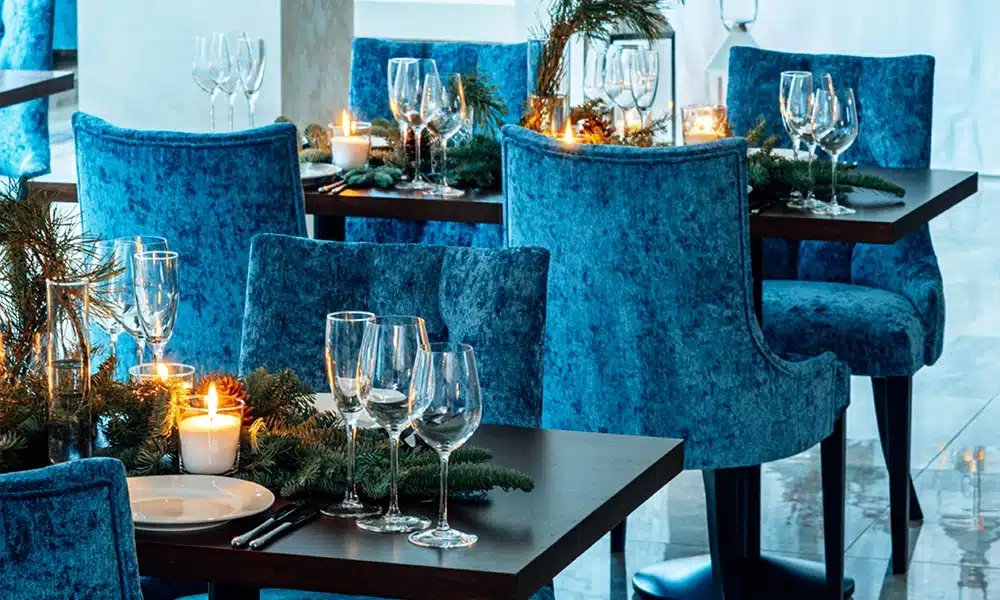
For UK hospitality venues, any upholstered restaurant chairs must meet Crib 5 fire regulations for contract furniture. That means both the foam and covering materials are tested to a higher standard than domestic furniture. It is good practice to ask your supplier to confirm Crib 5 compliance in writing, especially if you are mixing fabrics and faux leathers from different ranges.
Cleanability is just as important as compliance. Light fabrics photograph beautifully but need more maintenance in a family-heavy restaurant. Wipe-clean faux leather or high-performance contract fabrics are often a better choice for everyday service, especially on restaurant dining chairs that see a lot of turnover. Our guide to Crib 5 regulations for hospitality seating explains how regulation, upholstery choices and day-to-day cleaning come together.
If you have very specific colours or textures in mind, our made-to-order chairs allow you to choose fabrics and finishes that tie in with your booth seating and bar stools so the whole furniture range feels cohesive.
Special cases: outdoor, stackable and polypropylene plastic chairs
Bar stools and high-top seating
Bar stools and poseur-height tables give you another layer to work with in your restaurant furniture layout. Used well, they lift the atmosphere, support wet-led sales and make awkward spaces useful.
In bars and pubs, stools at the counter are part of the experience. Guests like the informality of perching at the bar, chatting directly to staff and watching service in action. Stools alongside poseur tables also work brilliantly as a holding zone for guests waiting on a restaurant table, or as a dedicated drinks area for people who are not eating.
In cafés and quick-service restaurants, high-top seating is common along windows and fixed counters. It encourages shorter stays and makes good use of space that might otherwise be wasted. For small premises, a well-designed run of poseur tables with bar stools can add meaningful extra covers without feeling cramped.
The key technical detail with bar stools is height. A typical bar or poseur table stands around 1050–1100mm high, and the stool seat height should usually be about 250–300mm lower than the underside of the top. That gap gives guests enough room for their legs and keeps posture comfortable. Our bar stools and poseur height seating range includes both simple backless stools for quick drinks and fully upholstered high-back chairs for longer dwell times.
Comfort features matter more than you might think. For a couple of quick drinks, a backless metal stool is perfectly acceptable; for guests eating a full meal at the bar, a proper backrest, footrest and shaped seat make a big difference. Our bar stool collection spans that whole spectrum so you can match stool comfort to how long you expect people to stay.
Restaurant tables: sizes, tops and bases
Once seating is sorted, restaurant tables come next. They define the rhythm of the floor plan, set the tone visually and take a lot of abuse from cutlery, glasses, cleaning chemicals and hot plates.
Choosing sensible table sizes
Most independent restaurants get excellent mileage from a simple family of table sizes. Square two-tops around 600×600mm or 700×700mm are the backbone of many layouts because they can serve couples in everyday service and push together easily for larger groups. Rectangular four-tops around 1200×700mm feel generous without wasting space. For bigger parties, you can either use longer rectangular tops or cluster standard sizes together.
The important thing is to keep these sizes consistent so your layout can be flexible. Standard restaurant table dimensions also align neatly with typical booth seating modules and chair footprints, which makes planning much easier.
Table top materials: laminate, wood and stone
Table tops are where practicality and aesthetics really collide. They need to feel right for your concept and price point, but they also need to wipe down hundreds of times a week and survive cutlery, plates and cleaning products.
At the more budget-friendly end, 25mm laminate and MFC tops are very popular in cafés, canteens and casual dining. They are tough, easy to clean and come in a wide range of woodgrains and solid colours. Our 25mm premium laminate table tops and MFC “Tuff Tops” are specified for hospitality use, so they are more robust than domestic equivalents.
If your restaurant or gastropub leans into a more natural or rustic aesthetic, solid wood tops may be worth the investment. Plank-style tops and character oak options add warmth and a sense of permanence, especially when paired with upholstered booth seating and wooden chairs. Our solid wood table tops include various timbers and finishes that sit comfortably in both traditional and contemporary schemes.
For higher-end restaurants and cocktail bars, stone and stone-effect tops create an immediate sense of luxury. Real marble is timeless but heavy and more porous; porcelain and ceramic marble-effect tops offer a similar look with excellent scratch and stain resistance and are often better suited to commercial environments. You can find these options in our commercial table tops buying guide, along with advice on which materials perform best in different hospitality settings.
Table bases: stability and style
Even the best table top is ruined by a wobbly base, completely shattering the guest experience. In a commercial environment, bases have to deal with uneven floors, excited children and chairs being pushed hard into their legs.
When choosing bases, you need to match the base footprint and column to the size and weight of your top. Larger tops may need bigger plates or twin columns; very long tables often work best with two separate bases to avoid rocking. Flat disc or square bases are popular because they are easy to clean around, while more decorative bases suit heritage pubs or brasseries.
Our table bases cover everything from understated black flat bases to traditional cast-iron designs and contemporary trumpet-style bases in metallic finishes. If you are unsure where to start, our article on choosing the right table base explains how to pair bases and tops for stability and aesthetics.
If you would rather not assemble combinations yourself, our complete tables offer tried-and-tested pairs of tops and bases, which is especially helpful when you are working to a tight schedule.

Booth seating and banquettes
What booth seating does for your restaurant
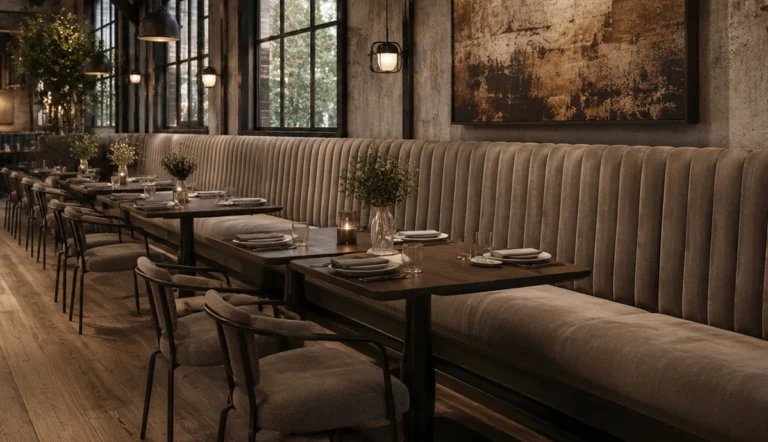
Guests love booths because they feel like “their” space, enhancing the overall dining experience. They are brilliant for families, groups, and regulars who desire a sense of a little territory within a busy room, contributing to a more personalized and enjoyable dining experience. From an operator’s perspective, booths keep chairs out of circulation routes, make tables easier to set consistently and can make narrow spaces usable that would otherwise be awkward.
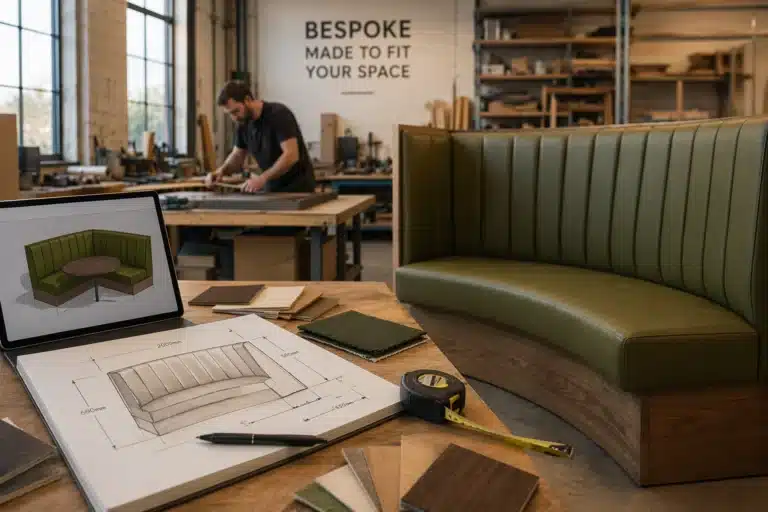
Our booth and banquette seating range is all made to order in the UK, which means we can match seat heights and depths to your restaurant tables and chairs, and adjust back heights to give exactly the level of privacy you want.
Key booth seating families
To keep your options manageable, it helps to think in terms of core families rather than dozens of individual models.
The Kansas range is a classic all-rounder. It offers multiple back styles—plain, fluted, buttoned, quilted—and sits comfortably in everything from casual dining through to smarter neighbourhood restaurants. The Serene collection takes a more contemporary, modular approach, with clean lines and options for higher backs that create more intimate zones. Compact Lite is slimmed down for small restaurants and cafés where every centimetre counts. Haven Storage incorporates lift-up seating for venues that need built-in storage without sacrificing guest comfort.
Because all of these are manufactured in our own factory, they can be sized and upholstered to match your restaurant dining chairs and bar stools, creating a cohesive furniture range rather than a mix of unrelated pieces.
Layouts: runs, corners and feature booths
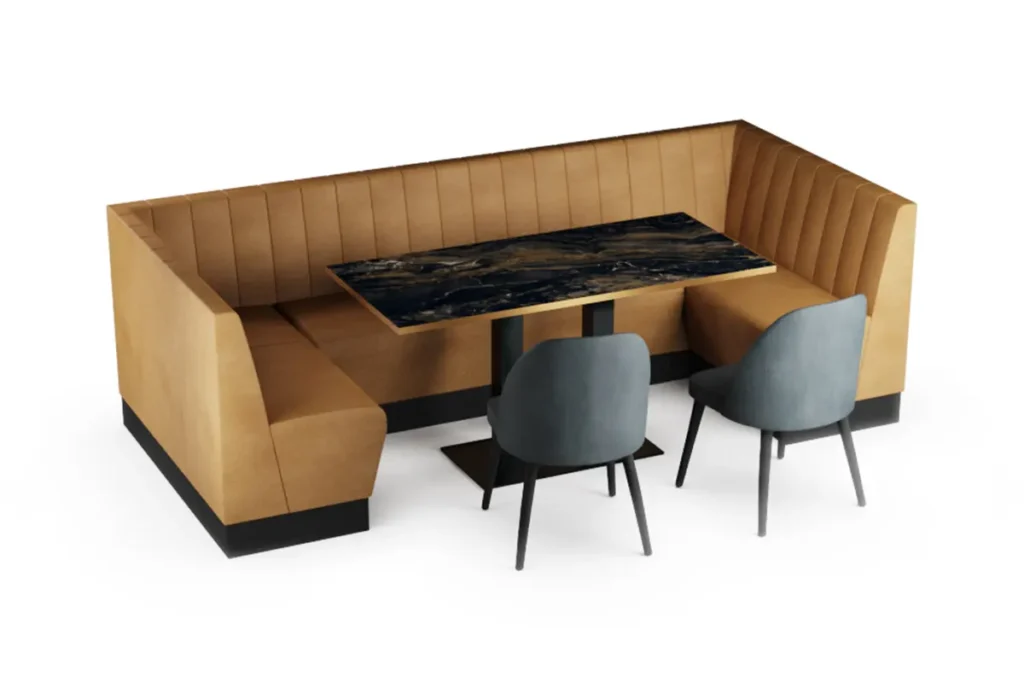
Booths are incredibly flexible in layout, which is why they appear in so many schemes. Straight runs along walls are the most common, especially when teamed with a line of two-tops or four-tops facing into the room. Corners are a natural place for L-shaped banquettes, turning what might otherwise be dead space into highly desirable tables.
Larger U-shaped or circular booths are perfect as feature tables for celebrations and regulars. Used sparingly, they give the floorplan some drama and become the seats guests ask for by name. Our article on captivating booth seating layouts shows how combinations of straight, corner and curved units can be used even in modest venues.
Comfort, fabrics and fire safety
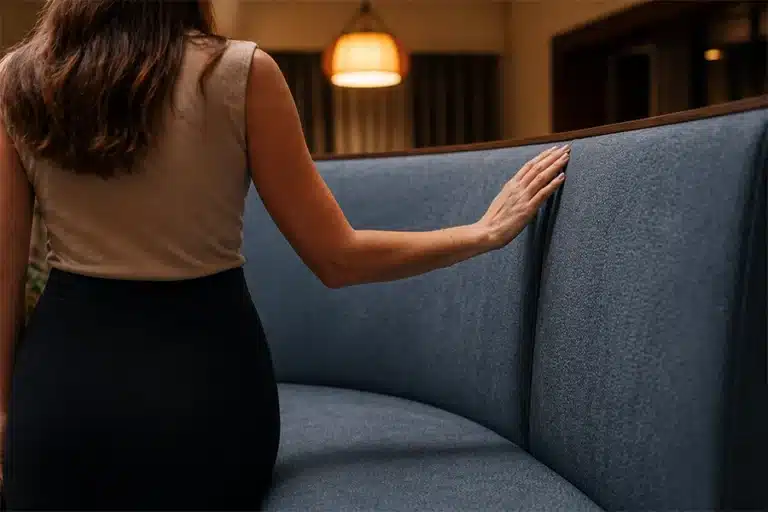
Because guests often stay longer in booths, comfort is key to customer satisfaction. Seat depth, back angle and foam density all play a role. Higher backs, especially in the Serene collection, can also help with acoustics, absorbing sound in lively dining rooms and making conversation easier.
Fabrics and faux leathers are where you can express your brand. It usually makes sense to keep the bulk of the seating in hard-wearing, easy-to-clean materials and then use accent fabrics on feature panels or scatter cushions. Our buyer’s guide to choosing fabrics for restaurant booth seating explains how to align colour, texture, Crib 5 compliance and day-to-day cleaning.
Indoor versus outdoor restaurant furniture
If you trade outdoors at all—whether that is a small pavement area, a terrace or a full pub garden—you will need to think about outdoor restaurant tables and chairs separately from your indoor furniture.
Outdoor restaurant furniture has to cope with rain, UV, temperature changes and regular moving. Domestic garden sets rarely stand up to the demands of commercial service. Our outdoor commercial furniture collection is built around weather-resistant frames, appropriate coatings and tops that will not swell or delaminate when exposed to the elements.
For pubs and cafés, the workhorses usually live in the outdoor tables and bistro chairs for pubs and cafés category. These products are designed with stacking, storage and easy cleaning in mind, so staff can set up and break down quickly. Many operators also use outdoor complete tables that pair suitable tops with heavy-duty bases so they stay stable on patios and slightly uneven ground.
Practical buying considerations: durability, regulations, budget and logistics
Contract-grade durability
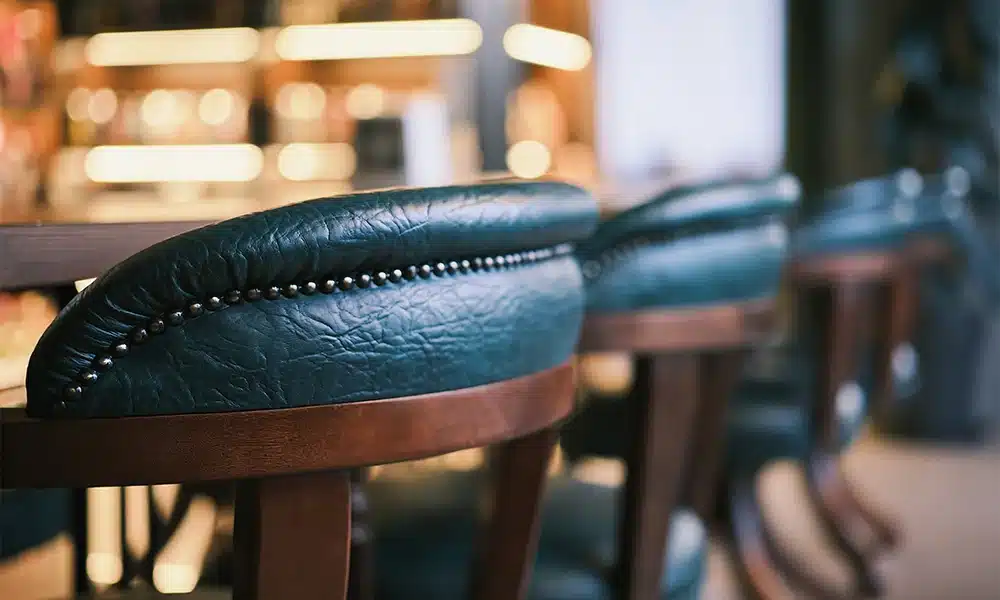
The biggest distinction is between contract furniture and domestic furniture. Contract-grade restaurant furniture is designed and tested for much heavier use: higher weight loads, more frequent cleaning, and the reality that chairs will be knocked, stacked and dragged every day. Frames are thicker, joints are stronger and finishes are more resilient.
Buying cheaper domestic pieces might feel like a saving in the short term, but they often start to fail just as your business hits its stride. Wobbly legs, torn upholstery and chipped table tops are not only frustrating, they also undermine the impression of quality you want to give guests. Working with a contract furniture specialist helps you avoid those hidden costs.

Fire regulations and Crib 5
In the UK, hospitality venues are subject to strict fire regulations. For upholstered restaurant chairs, bar stools, booth seating and soft furnishings, that usually means Crib 5 compliance as a minimum.
This is not an area to cut corners. Using non-compliant upholstery can cause serious issues with licensing, insurance and safety. Always ask for confirmation that your chosen products and fabrics meet Crib 5 contract standards, and keep that documentation with your other compliance records. Our article on fire safety and Crib 5 regulations is a good reference if you want to understand the technical side in more detail.
Budget levels and where to spend
Most independent operators do not have an unlimited budget for restaurant furniture, so it makes sense to decide where money will have the most impact.
Fixed items—booth seating, banquettes, key feature tables—are often worth investing in because they define the look and layout of the room and are expensive to replace. You can then balance the budget with more economical restaurant chairs and simpler tables in less prominent areas. Likewise, the furniture that sees the heaviest use, such as bar stools in front of a busy bar, should be robust and high quality.
Lead times, delivery and installation
Lead times vary between off-the-shelf imports and made-to-order UK-manufactured furniture. If you have a fixed opening date, it is important to work backwards and lock in your restaurant furniture order early, especially for custom booth seating and upholstered pieces.
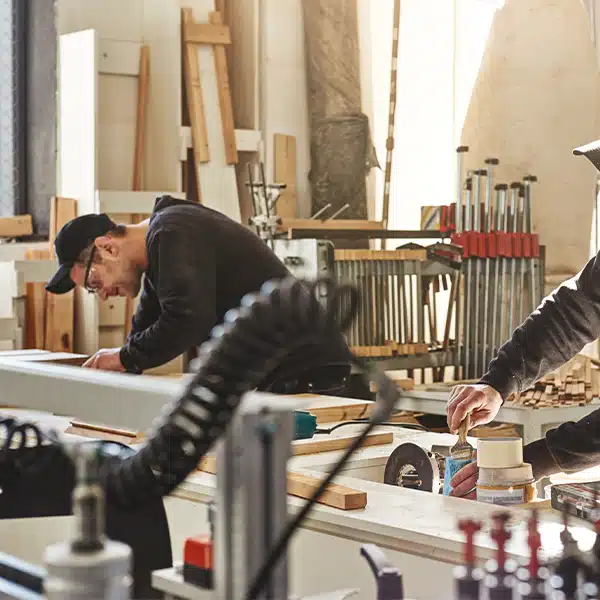
Because we manufacture in Britain, we can offer predictable lead times and better control over production. Our team is used to coordinating with shopfitters and designers, and we can deliver furniture in phases if that suits your programme. For booth seating and more complex schemes, we also offer site survey and installation services so everything fits exactly as intended.
Choosing restaurant furniture with confidence
Furnishing a restaurant, café, bar or pub isn’t just about filling a room — it’s about creating a dining experience that feels effortless for your guests and efficient for your team. The right mix of restaurant chairs, tables, bar stools and booth seating shapes everything from dwell time to acoustics, circulation routes and even average spend.
Once you understand the fundamentals and industry standards — ergonomics, materials, contract-grade durability, fire safety, layout planning and brand alignment — the process becomes far clearer. Instead of guessing, you’re making calm, informed decisions that serve the space you’re building and the business you want to grow.
Ready to Plan Your Outdoor Furniture Space?
As a UK manufacturer with more than three decades of hospitality experience, we design and build furniture that stands up to daily service while helping independent operators create memorable, welcoming spaces. Whether you’re planning a full fit-out or refreshing a few key areas, we can help you choose pieces that genuinely earn their place on your floor.
- sales@hcfcontract.co.uk
- 01708 331757
FAQs: Restaurant Furniture for Independent Venues
See Our Other Inspiration Posts and Guides