Fire Safety & Crib 5 Regulations for Hospitality Seating
Why Fire Safety For Upholstered Furniture Matters In Hospitality
If you run a restaurant, bar, café or hotel, you already know how crucial atmosphere is. Lighting, music and furniture all play their part. But the moment something goes wrong – a candle tips over, a menu catches, a napkin brushes a flame – you’re suddenly relying on something much less visible: the fire safety regulations for upholstered furniture.
In hospitality, people sit close together in busy spaces, often with naked flames and hot equipment nearby. The fabrics, foams and fillings in your banquette seating, dining chairs and hotel lounge sofas can either slow a fire down or help it spread. That’s why UK fire regulations and fire safety standards for hospitality seating go beyond domestic standards and why terms like Crib 5, BS 5852 Crib 5 and “contract-grade upholstered seating” appear in every serious specification.
This guide is written for independent venue owners, interior designers and fit-out contractors who need clear, practical answers about UK regulations. We’ll explain:
- What Crib 5 regulations actually are
- Where and when you need Crib 5 upholstery in restaurants, bars and hotels
- How fire safety regulations for upholstered furniture fit into your broader responsibilities
- How to choose Crib 5 compliant fabrics and Crib 5 compliant faux leather without killing your design scheme
We’ll keep it grounded in real hospitality projects, with examples drawn from our own work manufacturing booth and banquette seating for UK venues.
What Is Crib 5 And Why Does It Matter?
If you’ve ever wondered “what is Crib 5”, you’re not alone. It’s one of those phrases everyone throws around in hospitality, but few people can actually define.
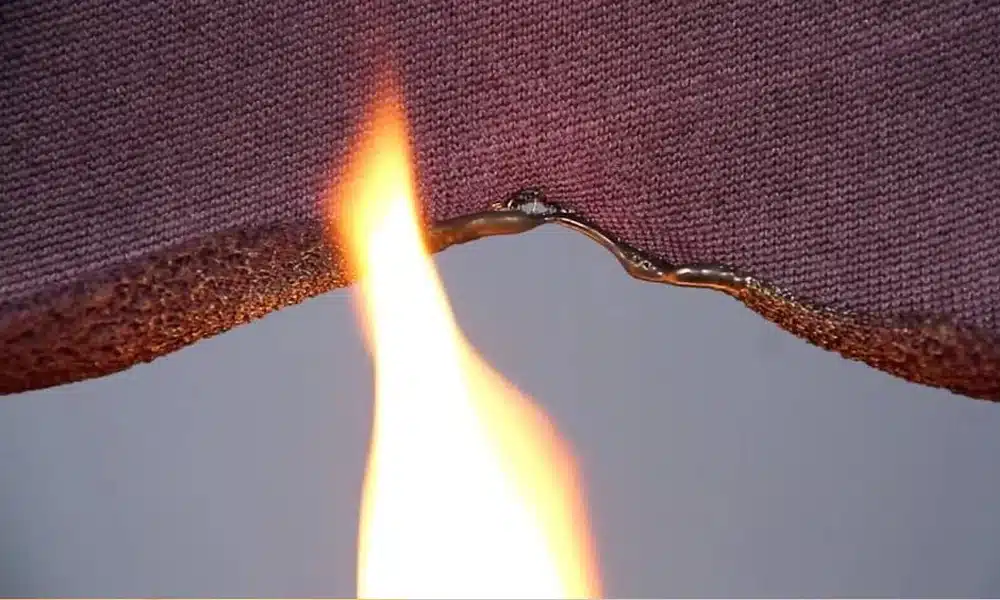
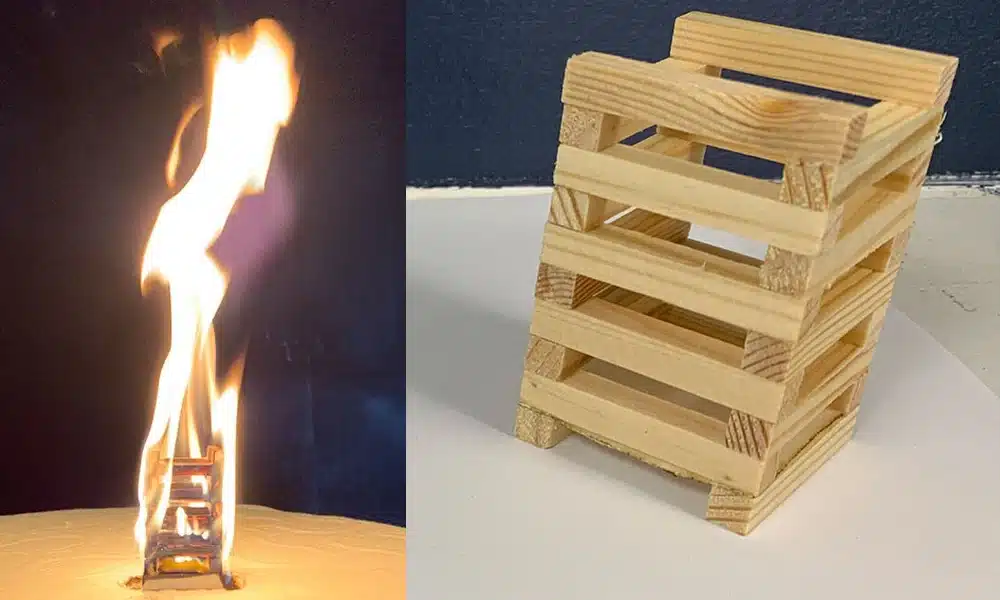
In simple terms, Crib 5 (sometimes written Crib5) is a fire safety level based on a test set out in BS 5852, the British Standard for assessing how upholstered furniture reacts to ignition. The Crib 5 test – also known as Ignition Source 5 – uses a small wooden “crib” (a stack of timber pieces) that’s set alight and placed on an upholstery composite made up of the fabric, foam and any interliner.
To pass, the materials must self-extinguish within a set time and not allow the flames to spread beyond defined limits. The test is far more demanding than the simple cigarette and match tests used for domestic furniture, which is why it’s regarded as the benchmark for fire safety regulations for upholstered furniture in commercial environments.
When an item is described as Crib 5 upholstery or Crib 5 furniture, it means the full composite (fabric plus foam) has been tested and shown to meet the BS 5852 Crib 5 performance level. It does not mean the piece is “fireproof”; it means it is significantly more resistant to ignition and flame spread, buying valuable time in a real incident.
For restaurants, cafés, bars and hotels, this is critical. You’re dealing with:
- High footfall and fast turnover
- Candles, tealights and open kitchens
- Guests who may be unfamiliar with the building
- Staff who need time to respond and evacuate safely
In that context, choosing Crib 5 compliant fabrics and foams for seating is one of the most important safety decisions you make.
How Crib 5 Fits Into UK Fire Regulations For Hospitality Seating
It’s easy to assume there is “one big law” that says “you must have Crib 5 furniture”. In reality, Crib 5 regulations are part of a wider framework.
At a high level:
- The Furniture and Furnishings (Fire) (Safety) Regulations 1988, and later amendments, set flammability requirements for upholstered furniture, with more stringent expectations for non-domestic and contract use.
- BS 5852 provides test methods (including Crib 5) to measure the ignitability and flame spread of upholstery composites.
- BS 7176 then groups different commercial environments into hazard categories – low, medium and high – and ties these to appropriate test levels. In practice, most hospitality venues (restaurants, cafés, bars, hotel lounges) fall under Medium Hazard, which points to Crib 5 performance as the norm.
On top of that, venue operators must comply with the Regulatory Reform (Fire Safety) Order 2005, which puts the onus on the “responsible person” to carry out a fire risk assessment and take appropriate measures. Seating that meets BS 5852 Crib 5 and BS 7176 Medium Hazard is widely regarded as one of those appropriate measures in public hospitality spaces.
So while the legislation doesn’t always spell out “you must buy this exact chair”, it effectively expects that fire-retardant upholstery for restaurants and hotels will be Crib 5 compliant. Insurers, building control and licensing teams will usually assume this as a baseline too.
(This article is for information only and isn’t legal advice. When in doubt, you should always check your fire risk assessment and speak to your local fire officer or consultant for fire safety legislation.)
Do I Need Crib 5 Furniture In My Restaurant, Bar Or Hotel?
The short answer to “do I need Crib 5 furniture” in hospitality is: yes, almost certainly.
Crib 5 is generally expected for:
- Restaurant dining seating – loose chairs, banquettes and booth seating in dining rooms and breakfast areas
- Bar and pub seating – bar stools, lounge seating, high tables with upholstered stools
- Hotel seating – lobby sofas, lounge chairs, restaurant booths, bar seating and public-area ottomans
In guidance aimed at hospitality businesses, medium-hazard properties – including hotels, restaurants and guest accommodation – are regularly advised to use contract furniture that meets Crib 5 / Ignition Source 5 standards.
If members of the public will be sitting on it in your venue, or it’s in a staff area where people may spend long periods (canteens, staff rooms), you should assume it needs to be Crib 5 compliant.
The main exceptions are:
- Outdoor-only seating where furniture is never brought indoors (though some operators still prefer Crib 5 for consistency)
- Very low-risk spaces with no public access – even then, many operators standardise on Crib 5 for simplicity
From a practical point of view, it’s easier to specify contract-grade upholstered seating throughout – chairs, bar stools, booth seating and hotel lounge seating – and know everything is covered, rather than juggling different fire standards in different corners of the building.
Understanding The BS 5852 Crib 5 Test
To specify Crib 5 upholstery with confidence, it helps to know what the test actually involves and what it does not do.
Under BS 5852 Crib 5, an upholstery composite (fabric + foam + any interliner) is mounted on a test rig that simulates a seat. A small wooden structure – the “crib” – made of slats is placed on the surface, soaked in a specified accelerant and then ignited.
The test measures:
- Whether the composite ignites
- How far and how fast flames spread
- Whether burning or smouldering continues once the crib fuel is exhausted
To pass, the flames must self-extinguish within a defined time and must not spread beyond the crib area or cause excessive smouldering. If the fire spreads rapidly, burns through the composite or continues smouldering for too long, the sample fails.
A few key points:
- It’s a composite test. A fabric can be “Crib 5 capable” but only genuinely Crib 5 when tested with a particular foam and interliner.
- It’s more intense than a simple match. Ignition Source 5 is significantly more demanding than the small flame and cigarette tests used for domestic furniture.
- It’s about slowing and containing fire. Crib 5 does not make furniture non-combustible; it aims to reduce ignition risk and flame spread so people have more time to respond.
For you as an operator, the important thing is to ensure your contract seating supplier works with materials that have passed the right tests and can provide documentation if required.
Crib 5 Upholstery, Fabrics And Faux Leather Explained
Once you accept that your venue needs Crib 5 performance, the next question is how that translates into fabrics, faux leathers and day-to-day specifying.
Crib 5 Compliant Fabrics
Many contract upholstery fabrics are supplied as Crib 5 compliant fabrics, meaning they have either:
- Been woven and finished specifically to pass BS 5852 Crib 5 when used over standard contract foam, or
- Been tested and certified when used with a particular interliner and foam combination
For hospitality projects, you’ll typically be looking at:
- Woven contract fabrics designed specifically for fire-retardant upholstery for restaurants and hotels
- Vinyls and faux leathers already engineered to meet BS 5852 Crib 5 and BS 7176 Medium Hazard
When we manufacture restaurant booth seating, we always specify fabrics that are either inherently Crib 5 or can be brought up to that level with the correct interliner or back-coating by treating fabric, in line with the relevant BS standards.
Crib 5 Compliant Faux Leather And Vinyl
Many contract upholstery fabrics are supplied as Crib 5 compliant fabrics, meaning they have either:
- Been woven and finished specifically to pass BS 5852 Crib 5 when used over standard contract foam, or
- Been tested and certified when used with a particular interliner and foam combination
For hospitality projects, you’ll typically be looking at:
- Woven contract fabrics designed specifically for fire-retardant upholstery for restaurants and hotels
- Vinyls and faux leathers already engineered to meet BS 5852 Crib 5 and BS 7176 Medium Hazard
When we manufacture restaurant booth seating, we always specify fabrics that are either inherently Crib 5 or can be brought up to that level with the correct interliner or back-coating by treating fabric, in line with the relevant BS standards.
Using Customer’s Own Material (COM)
If a designer or brand team wants to use a specific fabric that isn’t already Crib 5, it may still be possible – but it has to be handled correctly. Typically that means:
- Checking whether the fabric can be FR treated (some natural fibres and loose weaves are unsuitable)
- Using a specialist finisher to back-coat the fabric or pairing it with a tested FR interliner
- Testing the final upholstery composite where necessary to confirm Crib 5 performance
We regularly work with COM fabrics, advising where additional treatment or testing is needed so that finished restaurant or hotel seating still satisfies fire regulations for restaurant seating and hotel seating fire regulations.
For a deeper dive into mixing design, durability and fire safety in banquettes, our article How To Choose Fabrics For Restaurant Booth Seating (Crib 5 Explained) is a useful companion.
Applying Crib 5 Regulations To Different Hospitality Spaces
The core requirement – using Crib 5 compliant upholstery – stays the same, but how it plays out looks slightly different across venue types.
Restaurant Dining Rooms
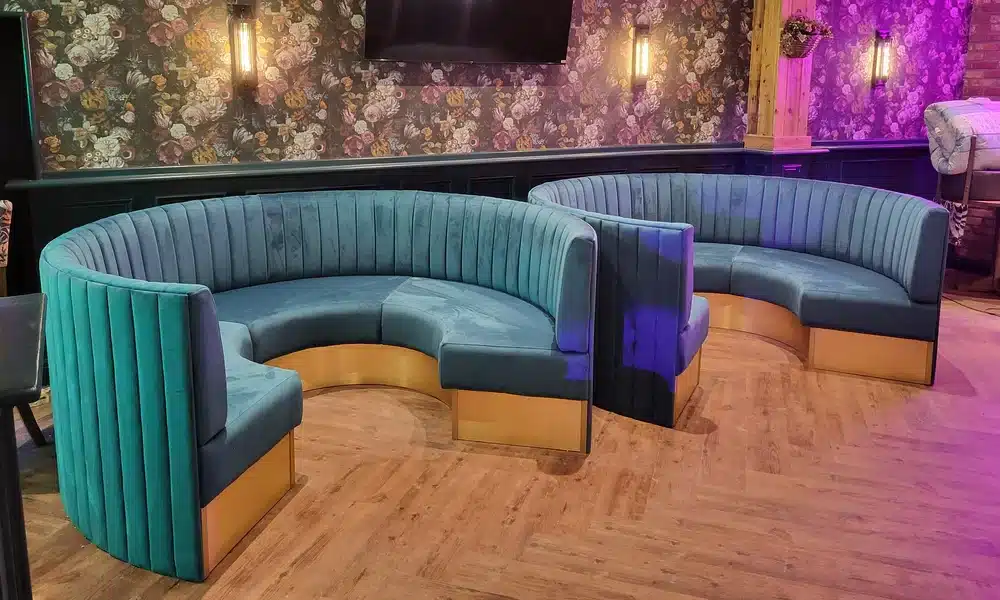
In restaurant dining rooms, the main focus is on:
- Fixed booth and banquette seating
- Loose restaurant chairs and dining seating
- Any upholstered bar stools or window seats used for dining
All of these should be specified as Crib 5 contract-grade upholstered seating. Our restaurant chairs and dining seating range is built on that assumption as standard: contract frames, contract foams and Crib 5-compliant fabrics or faux leathers.
Bars, Pubs And Lounge Areas
Bars and pubs often mix bar stools, poseur seating and softer lounge pieces. Here, naked flames, alcohol and late trading hours increase risk, so fire-retardant upholstery for restaurants and bars is non-negotiable.
Our bar & pub furniture and bar & pub booth seating categories are designed around contract-grade frames and Crib 5 upholstery for exactly this reason.
Hotel Lobbies, Lounges And Bedrooms
Hotel seating fire regulations are especially sensitive because guests may be unfamiliar with escape routes and are often present overnight. Public seating – lobbies, lounges, bars, restaurants – should always be Crib 5. For many hotel groups, it’s simplest to standardise on Crib 5 throughout all guest-facing seating.
Our hotel lobby seating & lounge furniture is built on Crib 5 upholstery as standard, with fabrics and faux leathers selected to meet both design and regulatory requirements.
Bedrooms are sometimes treated differently under certain schemes, but given recent updates to fire-safety thinking for upholstered furniture, many operators now choose to adopt Crib 5 throughout the building rather than mixing standards.
Outdoor Seating That Comes Indoors
Outdoor furniture that never comes inside and uses minimal upholstery may not need Crib 5. But in practice, many venues store cushions indoors overnight or bring outdoor pieces into multipurpose spaces.
If there is any chance that upholstered outdoor items will be used in enclosed public areas, you should treat them as indoor seating and work on the basis that Crib 5 regulations apply. Our outdoor commercial furniture range is selected with that in mind, making it easier to manage stock across seasons.
Free Download: Commercial Hospitality Seating Fire Safety Checklist
Navigating Crib 5 regulations and commercial upholstery standards can be confusing, particularly when specifying seating for restaurants, cafés, hotels, schools and other public-use environments.
To help simplify the process, we’ve created a practical downloadable guide covering the key considerations when choosing commercial booth and banquette seating.
This free PDF guide includes:
- Understanding Crib 5 regulations
- Commercial upholstery compliance basics
- Common specification mistakes
- Hospitality seating fire safety checklist
- Questions to ask seating suppliers
- Key considerations for restaurants, cafés, hotels and schools
HCF Contract Furniture has supplied commercial seating solutions to hospitality venues, schools, offices and public interiors across the UK for over 35 years.
Working With Designers, Fit-Out Contractors And Shopfitters
For interior designers and fit-out contractors, Crib 5 needs to be baked into the project from the very beginning, not checked at the end.
A few practical points:
- Include Crib 5 in the brief. Make explicit that all banquette seating, dining chairs, bar stools and hotel lounge furniture must meet BS 5852 Crib 5 as a minimum.
- Use contract suppliers. Domestic furniture – even if it looks similar – rarely meets fire safety regulations for upholstered furniture in commercial settings. Using recognised contract suppliers minimises risk.
- Coordinate COM fabrics early. If you’re bringing your own fabric, check fire performance and treatment options as soon as possible. Last-minute changes can be expensive and limiting.
- Keep documentation. Test certificates, fabric specifications and declarations of performance should be filed alongside other compliance documents so you can demonstrate due diligence if queried by insurers or authorities.
At HCF, we’re used to working as part of a wider project team – designers, QSs, main contractors and shopfitters – and can advise on Crib 5 regulations while still helping you hit the aesthetic brief. Because we manufacture in our own UK workshop, we have direct control over foams, fabrics and construction methods, which makes compliance more straightforward.
Common Myths And Mistakes About Crib 5
Even experienced operators and designers sometimes get tripped up by Crib 5. A few misconceptions crop up again and again.
“The fabric says FR so it must be Crib 5.”
Not necessarily. “FR” might mean it passes a cigarette and match test for domestic use but not the full BS 5852 Crib 5 composite test. Always check what standard the FR claim refers to.
“Once the fabric is Crib 5, everything is fine.”
Remember that Crib 5 tests the composite. Changing the foam, adding an interliner or pairing the fabric with a different substrate can change performance. That’s why we treat upholstery as a system, not a collection of parts.
“Crib 5 is only for hotels, not small cafés.”
Crib 5 is about how the furniture behaves in a fire, not how big the venue is. Small independent cafés, bistros and bars still host members of the public and still fall under the same fire regulations for restaurant seating as larger operators.
“If my chairs are older, I don’t need to worry.”
If you’ve inherited seating of unknown origin, it may never have met current contract standards. As part of your fire risk assessment, it’s wise to review legacy furniture and plan a phased replacement with Crib 5 upholstery.
“Crib 5 furniture can’t catch fire.”
Crib 5 reduces ignition risk and slows flame spread; it does not make seating non-combustible. Good staff training, evacuation planning, fire escape routes and maintenance of extinguishers and alarms are still essential.
How HCF Handles Crib 5 Regulations In Practice
As a family-run UK manufacturer specialising in hospitality, we work with Crib 5 regulations every day. It shapes how we design, build and upholster our seating.
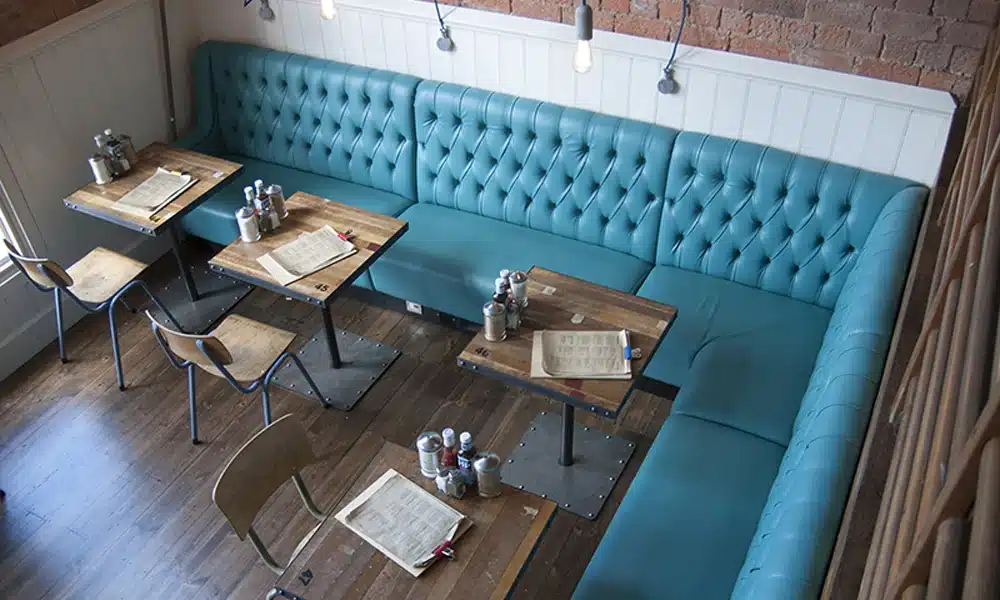
Across our ranges – from Kansas booth seating through to the Serene Collection and Haven Storage booths – we assume that all hospitality seating will be used in environments where BS 5852 Crib 5 and BS 7176 Medium Hazard are the baseline.
That means:
- Using contract CMHR foams and fillings appropriate for commercial fire safety
- Working primarily with Crib 5 compliant fabrics and Crib 5 compliant faux leather
- Advising on treatments and testing when clients supply their own materials
- Keeping specifications and documentation so we can support you with evidence if asked by landlords, insurers or enforcement officers
Because we build everything to order in our own workshop, we can also support mixed environments: for example, specifying ultra-durable faux leather for family-heavy bar dining while using a more tactile fabric on feature hotel lounge seating, all within a Crib 5-compliant framework.
Safer Seating, Confident Decisions
Fire safety in hospitality can feel technical and intimidating, but the principle behind Crib 5 regulations is straightforward: ensure your upholstered furniture resists ignition and slows flame spread so guests and staff have time to get clear.
For independent restaurants, bars, cafés and hotels – and for the designers and fit-out teams who support them – the most practical approach is to treat Crib 5 as the baseline for all public-facing seating. If people will be eating, drinking or relaxing on it, it should be contract-grade upholstered seating built on Crib 5 compliant fabrics or faux leathers.
As a UK manufacturer specialising in banquette seating, restaurant chairs and hotel lounge furniture, HCF bakes these standards into every hospitality project. You get the design freedom – fabrics, colours, back styles and layouts that match your concept – with the reassurance that the technical side has been handled properly.
If you’re planning a new venue or reviewing an existing one and you’re unsure where you stand on Crib 5 upholstery and fire regulations for restaurant seating, we’re here to help.
Ready To Specify Crib 5 Compliant Seating?
If you’d like practical guidance on Crib 5 regulations, upholstery choices or fire-safe booth seating layouts, our team can help. We’ll work with your drawings, brand brief or moodboard and recommend contract seating that satisfies UK fire regulations for hospitality seating without compromising design.
Start your project with HCF today – get in touch for expert advice, Crib 5 compliant seating options and a tailored specification for your venue.
- sales@hcfcontract.co.uk
- 01708 331757
Frequently Asked Questions About Crib 5 Upholstery For Hospitality
In most cases, yes in practice – especially anywhere the public sits. Hospitality venues are generally treated as medium-hazard environments, where contract furniture is expected to meet Crib 5 / Ignition Source 5 standards. Using non-contract seating could put you at odds with fire safety regulations for upholstered furniture and your own fire risk assessment.
Crib 5 is one specific test level within BS 5852. The standard describes several ignition sources and methods; Crib 5 refers to the ignition source 5 wooden crib test on an upholstery composite.
When people say “Crib 5 upholstery”, they usually mean it has passed this BS 5852 test at the level expected for contract seating.
Check purchase documentation, labels and test certificates if you have them. If you inherited furniture or bought it from a domestic supplier, there may be no clear evidence. In that case, your fire risk assessment should consider whether replacement is needed. When you work with HCF, we can provide specification details and supporting information for all contract seating we supply.
See Our Other Inspirations and Guides