Restaurant Chairs & Dining Seating Buying Guide for UK Hospitality
For independent restaurants, cafés and pubs, your restaurant chairs do far more than fill space around a table. They define how long people are happy to sit, how easily you can turn the room, and how your brand feels from the moment a guest pulls out a chair. Get your dining seating right and you create a room that works on a busy Friday night and a quiet Tuesday lunch – comfortable, efficient and easy to run.
This page looks at restaurant seating from a practical, operator’s point of view. We’ll explore what makes a good restaurant dining chair for commercial use, how to choose dining chairs for a restaurant layout, key restaurant chair heights, and how to balance comfort, durability and style. As a UK manufacturer of restaurant chairs and dining seating, we’ll also share how contract-grade design, Crib 5 upholstery and smart space planning come together in real hospitality spaces
Why restaurant chairs matter more than you think
Chairs are often the first piece of furniture your guests properly “meet”. The weight as they pull them out, the feel of the fabric, the way the backrest supports them – all of that quietly tells people whether they’re welcome to relax or expected to rush. In chairs for busy restaurants, that first impression is doing a lot of work for you.
For small independents, the best chairs for small restaurants are those that work hard across different trading patterns. A lunch service might need fast-moving café chairs and bistro chairs that are easy to reset, while fine dining and evening service needs restaurant dining chairs that feel more indulgent for date nights and longer sittings. Good dining seating bridges those needs, helping you protect average spend while still turning tables when you need to.
That’s where genuine commercial dining chairs earn their keep. Contract restaurant chairs are engineered to cope with daily use, different body shapes and constant movement – something domestic furniture simply isn’t designed for. Over the course of a year, that difference becomes very obvious in wobbles, repairs and call-outs.
Materials & styles: wooden, metal and upholstered restaurant chairs
Most restaurant dining seating within hospitality furniture falls into three broad families: wooden restaurant chairs, metal restaurant chairs and upholstered restaurant chairs. Each brings something different to the room, and many venues use a blend.
Wooden restaurant chairs
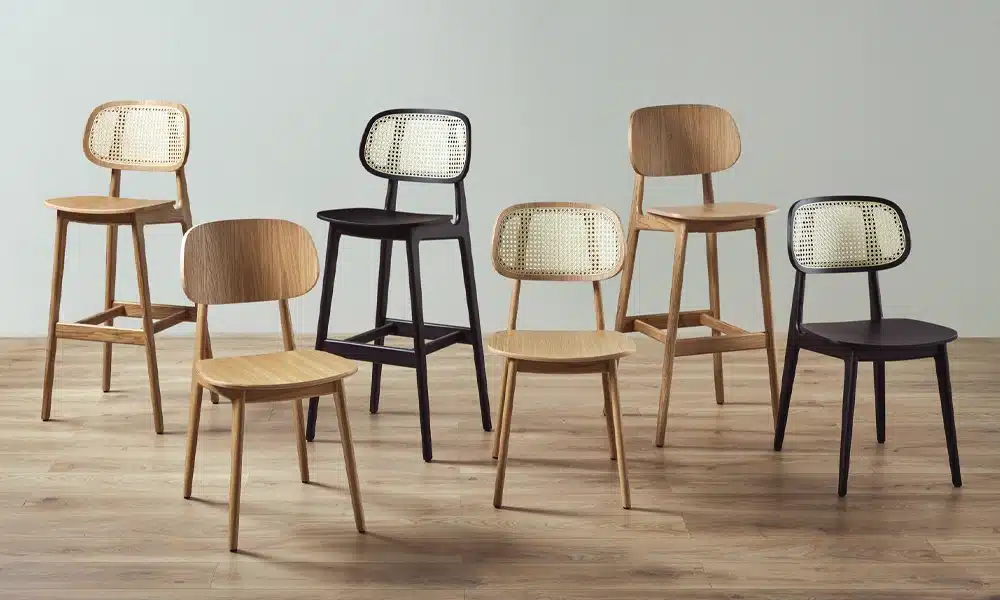
Wooden restaurant chairs are a natural fit for pubs, brasseries and relaxed bistros. They bring warmth, texture and a handcrafted feel that works beautifully with natural stone, exposed brick and soft lighting. From a practical point of view, solid timber frames are robust and can be stained or lacquered to match your bar front, floor or joinery. Our wooden framed chairs collection includes classic pub chairs, farmhouse styles, refined contemporary options and everything in between for casual dining.
For chairs for small restaurants, slim timber profiles and open backs keep the room feeling light, while allowing you to tuck chairs in fully under tables to maximise circulation. Add an upholstered seat pad only where you need extra comfort, such as against walls or in slower-turnover zones.
Metal restaurant chairs
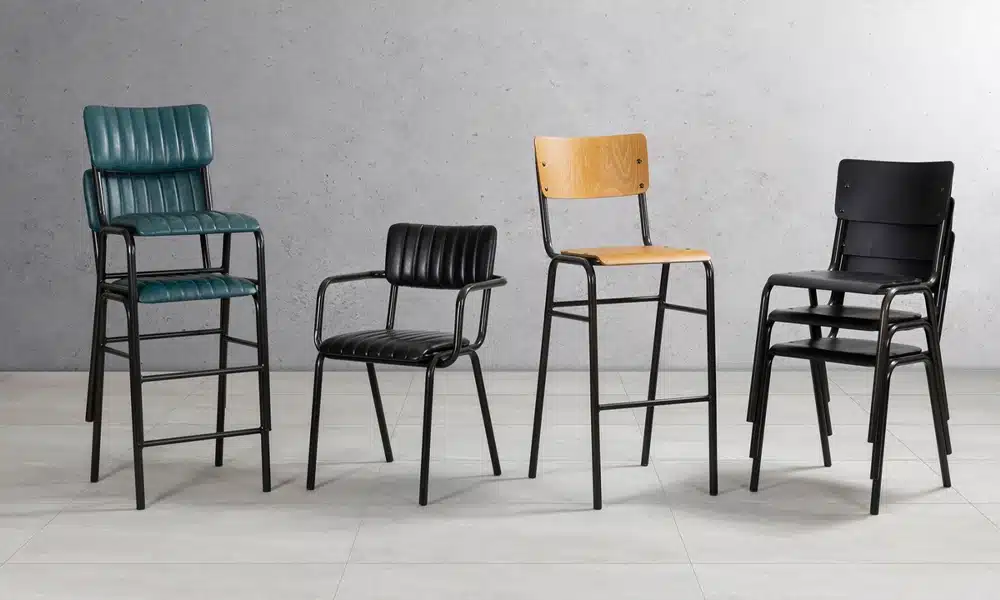
Metal restaurant chairs are ideal when you need robust, stackable chairs or a more industrial aesthetic. Powder-coated steel frames can be surprisingly lightweight, making them easy for staff to move while still shrugging off regular knocks. For cafés and all-day venues, combining metal café chairs with timber seats or backs creates a durable, easy-clean option that still feels warm.
Our metal framed chairs are all built to contract standards, with thicker gauge steel and reinforced welds designed for the realities of hospitality rather than occasional home use. Many can stack, which is invaluable if you regularly clear areas for events, large groups or deep cleaning.
Metal restaurant chairs also excel outdoors, especially when specified as aluminium frame chairs that resist rust and cope well with year-round UK weather. For terraces, pavements and pub gardens, these lightweight metal chairs offer the strength needed for commercial use while remaining easy for staff to move and store. Many of our outdoor-ready metal chairs are stackable commercial dining chairs, making setup and end-of-day collection quicker and safer. When paired with durable outdoor furniture, they create a cohesive look that can transition seamlessly from indoor dining to al fresco service without compromising on contract-grade performance.
Upholstered restaurant chairs
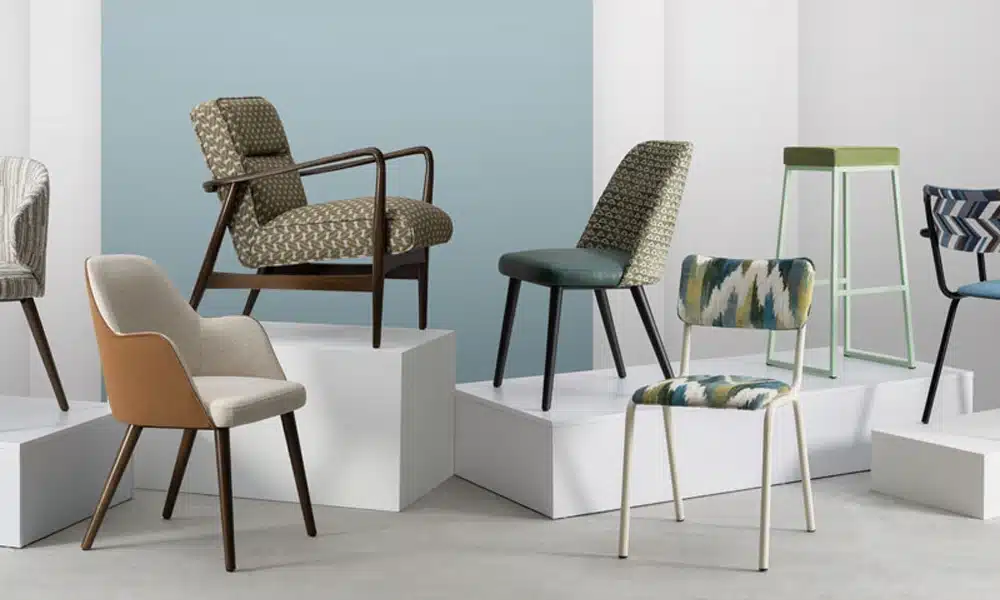
Upholstered restaurant chairs bring comfort and acoustic softness – ideal for longer sittings or more premium concepts. They’re often the answer when you’re wondering, “are upholstered chairs good for restaurants?” The key is to specify them correctly. Using Crib 5 foams and performance fabrics means you can enjoy the benefits of a plush seat without compromising on safety or cleanability.
Our made to order chairs range allows you to choose fabrics, stitch details and leg finishes that echo your brand palette. In busy dining rooms, you might use fully upholstered restaurant chairs in the centre and more wipeable timber or metal side chairs for restaurants on the edges, balancing softness with practicality.
Contract vs domestic: why specification matters in hospitality seating
On paper, a set of stylish domestic chairs can look very similar to commercial restaurant chairs. In reality, the difference between contract and domestic chairs becomes obvious once service starts. Domestic furniture is designed for a couple of uses a day; restaurant chairs might be sat on 20 – 30 times per cover over the course of a week.
Contract restaurant chairs use thicker section frames, stronger joints, higher-density foams and fabrics tested for high rub counts. All of that protects you against early failures – snapped stretchers, loose backs, stretched covers – that cost money and create safety risks.
Then there’s fire safety. UK hospitality venues must specify Crib 5-compliant upholstery. That’s why restaurant chairs need Crib 5 upholstery as standard: it’s not a “nice to have”, it’s a legal and safety requirement. As a manufacturer of chairs and stools, we only use Crib 5 foams and fabrics on our hospitality seating, so you’re not left trying to untangle test certificates at the end of a project.
If you’re wondering what Crib 5 actually means in practice, we break it down in more detail in our Fire Safety & Crib 5 Regulations for Hospitality Seating guide.
Planning your layout: side chairs, stacking options and booths
The right dining seating doesn’t just look good; it unlocks covers and smoother service. In tight floorplans, chairs for small restaurants need to earn their footprint. Armless side chairs for restaurants are often the most efficient choice, allowing you to push tables closer together without guests feeling cramped. They also make it easier for staff to move between tables with trays and plates.
Stackable restaurant chairs are particularly useful in flexible spaces – private dining rooms that double as meeting spaces, or café corners that transform into events in the evening. Being able to safely stack and store chairs gives you flexibility without resorting to plastic shell seating that doesn’t match the rest of your scheme.
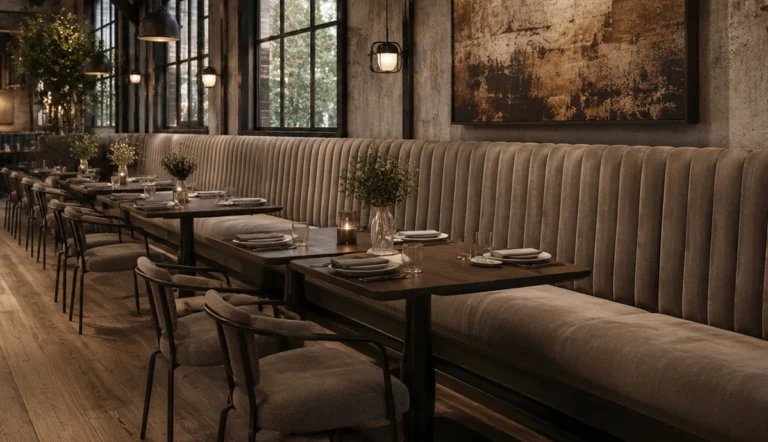
Many operators pair loose chairs with fixed booth and banquette seating. Banquettes along the wall maximise capacity, while loose restaurant dining chairs opposite give flexibility for different party sizes. In cafés, lightweight dining chairs for cafes and bistro chairs can be reconfigured quickly between solo laptop users and larger groups.
Practicalities: restaurant chair maintenance and cleaning
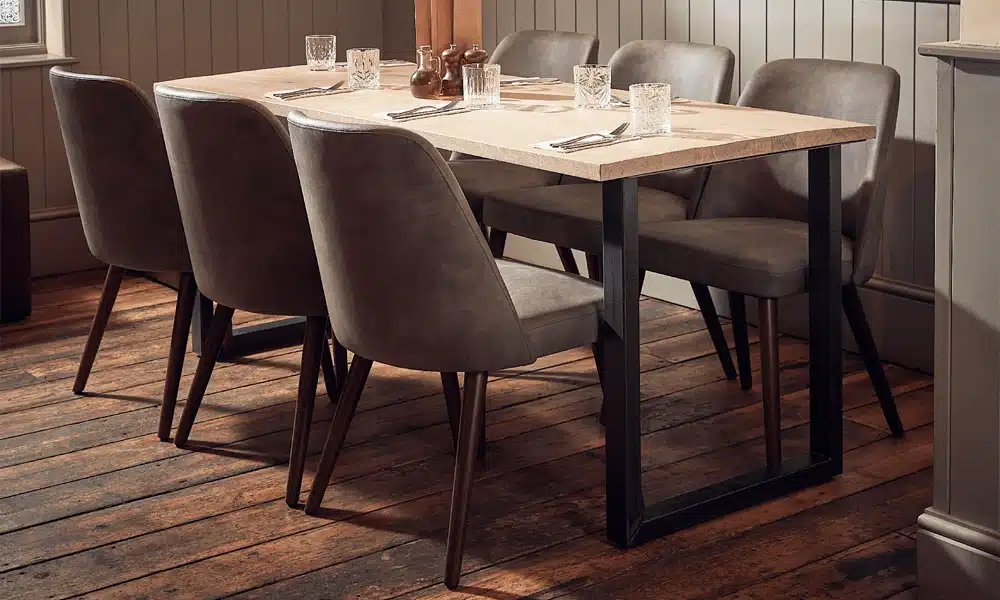
However good a chair looks in the brochure, it needs to cope with real life: red wine spills, food smears, denim rivets, takeaway spills and constant cleaning. Thinking about restaurant chair maintenance & cleaning early on will save you time and money later.
In high-spill areas, faux leathers and contract vinyls are often a better choice than textured weaves. They wipe clean quickly and don’t trap crumbs, which is invaluable in chairs for busy restaurants. For wooden restaurant chairs, a durable lacquer or stain with a clear topcoat makes it easier to remove marks without sanding back to bare timber.
Metal restaurant chairs with powder-coated frames are surprisingly forgiving; minor knocks are less visible and frames can be wiped down with standard cleaning products. We design our commercial restaurant chairs so that glides can be replaced, joints can be tightened and seat pads can be reupholstered – extending the life of your investment instead of forcing you into full replacement when fabrics start to date.
Mixing and matching chair styles without losing cohesion
Most modern dining rooms use a mix of seating types: a blend of contract restaurant chairs, café chairs, perhaps some upholstered feature pieces and, in some cases, bar stools or poseur tables. Mixing and matching chair styles keeps the room interesting and helps you create distinct zones for quick bites, long lunches and drinks.
The trick is to limit the “family” to a few well-chosen styles and repeat key elements. You might use one timber leg colour across several chair designs, or carry the same fabric from your upholstered restaurant chairs onto a row of bar stools. Repeating details like stitch lines or back shapes helps disparate pieces feel deliberate rather than thrown together.
For small independents, mixing wooden restaurant chairs with a few bistro chairs and some more generous upholstered options can be a cost-effective route to a layered look. Our restaurant furniture ranges are designed to sit together in this way, making it easier to curate a scheme that feels unique to your venue.
How HCF supports your restaurant chairs & dining seating project
Every venue has its own pressures: tight footprints, heritage buildings, upstairs dining rooms, outdoor seating or all of the above. Our job is to help you choose chairs and dining seating that work with those realities, not against them.
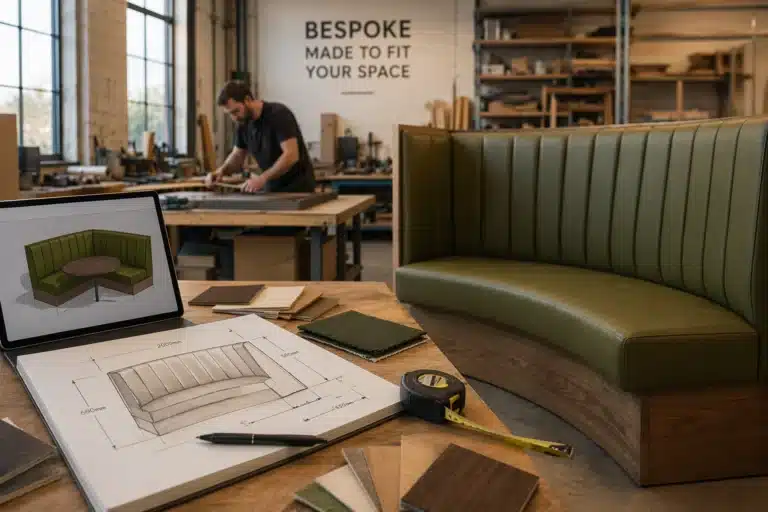
Because we manufacture in the UK, we can tweak standard designs to better suit your layout: adjusting restaurant chair heights slightly, changing leg finishes to match existing joinery or specifying fabrics that align with your brand palette and maintenance needs. For many clients, we combine loose contract chairs with our banquette seating, bar stools and café chairs to create a complete hospitality seating scheme that runs consistently from entrance to bar to dining room.
Whether you’re opening a new concept or quietly upgrading a few tired pieces, our team can guide you through frame options, upholstery choices, Crib 5 compliance and budget levels – all focused on creating comfortable, durable commercial seating that feels right for your guests.
Ready to find your perfect restaurant chairs?
Talk to our team about UK-made, contract-grade options tailored to your layout, or browse the collection online and start shaping a scheme that’s as hardworking as your service.
- sales@hcfcontract.co.uk
- 01708 331757
FAQs: Restaurant and Cafe Chairs
See Our Other Inspiration Posts and Guides