Hotel Restaurant Booth and Banquette Seating
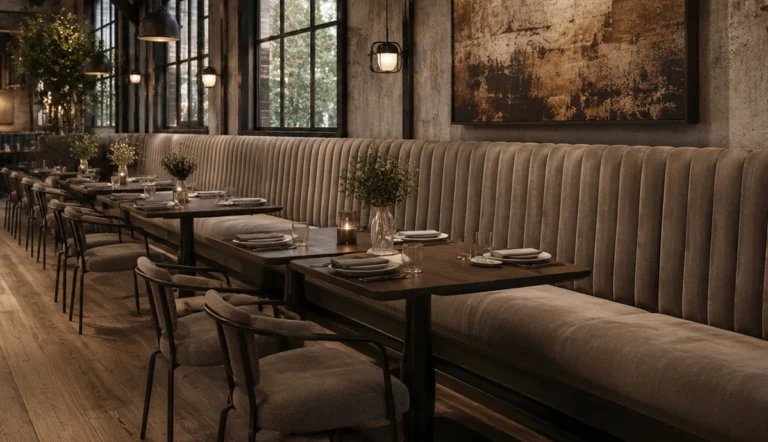
In a hotel restaurant, seating has to do more jobs than it does on the high street. At breakfast it needs to feel efficient and easy to reset. At lunch it might serve quick meetings and solo guests with laptops. By evening it has to deliver atmosphere, comfort and a sense of occasion that justifies the menu price. That’s why hotel restaurant booth seating and hotel restaurant banquette seating are such a reliable investment: they help you control the room, maximise covers, and keep the dining experience consistent across multiple services.
This page is a practical guide to booth seating for hotel restaurants and banquette seating for hotel restaurants, written for hotel owners, F&B teams, designers, contractors and procurement managers. We’ll look at hotel restaurant banquette layout ideas, the ergonomics that matter for dining (seat height, depth and back angle), shapes that work in real hotel footprints, and how to combine banquettes with dining chairs for flexibility. We’ll also cover durability, cleaning and upholstery decisions that stand up to breakfast, lunch and dinner service without losing their premium feel.
If you’re looking for non-hotel guidance, our companion guide on Restaurant Booth Seating covers restaurant-only considerations.
Why booths and banquettes work so well in hotel dining spaces
Hotel restaurant seating has to cope with constant turnover and a mixed guest profile: leisure guests, corporate travellers, families, walk-ins, and events. Fixed seating for hotel restaurants helps you keep layout discipline through all of that. Unlike loose chairs that drift into aisles and narrow circulation over a weekend, wall banquette seating stays put, protecting service lanes and reducing the daily “reset” effort.
Banquettes also make the room feel fuller, earlier. That matters for hotels where breakfast can start quietly but builds fast, and where early-evening diners should still feel like they’re entering a lively space. It’s one of the most practical reasons booths increase capacity: you can plan a consistent grid of two- and four-tops along the perimeter, then build your flexible centre around that. If you want to browse the broader category, start with Booth & Banquette Seating.
Best booth seating for hotel restaurants starts with service patterns
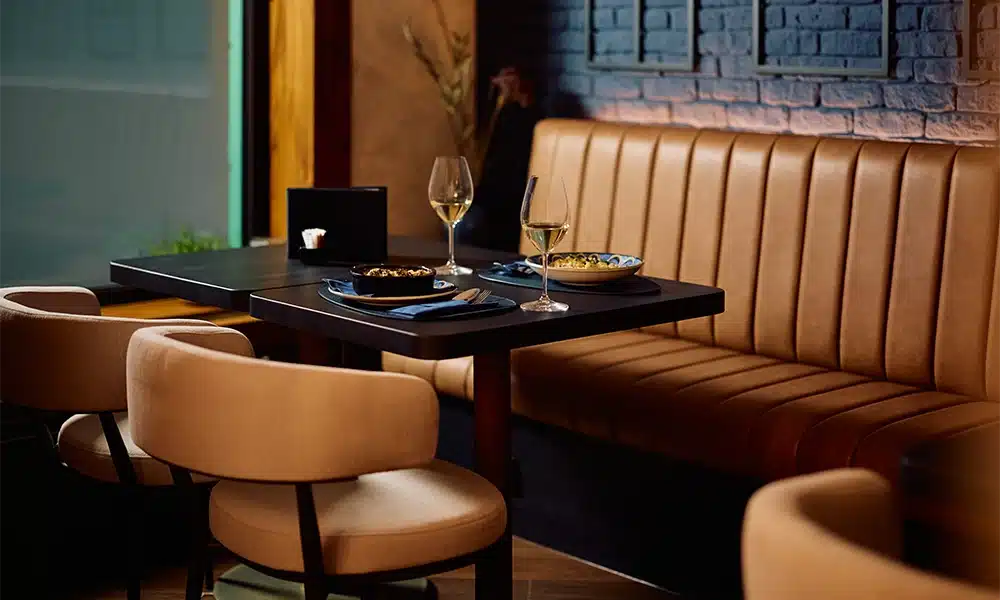
The best booth seating for hotel restaurants is rarely a single style repeated everywhere. It’s a seating strategy that acknowledges how guests behave across the day.
At breakfast, people tend to sit for shorter periods, often in pairs or small family groups. Clear access matters, as does wipeability and fast resets. At lunch, you may get business guests who want a quieter spot for a meeting, and solo diners who value comfort and a sense of privacy. In the evening, the bar may be busy and you’ll want seating that supports longer stays, relaxed posture and a more premium “occasion” feel.
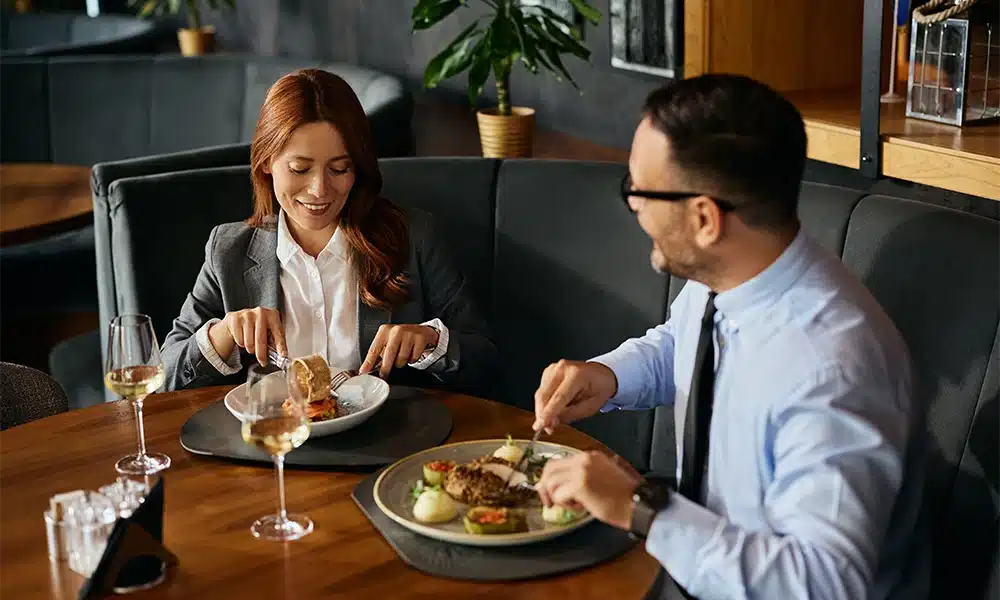
This is where hotel dining booth seating earns its keep: you can use perimeter banquettes for predictable cover counts and flow, then introduce a few feature booths (corner or L-shaped) as bookable “best tables” for lunch meetings and evening dining. When thinking about booth seating for hotel restaurants with mixed guest stays, aim for a layout that feels equally appropriate for a guest in sportswear at breakfast and a couple dressed up at 8pm.
How to design booth seating in a hotel restaurant
When teams ask how to design booth seating in a hotel restaurant, the biggest success factor is usually circulation. Hotels often have unusual constraints: routes to lifts, lobby sightlines, doors to terraces, buffet stations, or access to meeting rooms. Your banquette plan should work with those routes, not fight them.
A strong starting point is perimeter first. A run of wall banquette seating turns the edge of the room into productive covers while keeping the centre open for flexible tables. From there, look for corners and bays that can become higher-value areas. Corner banquette seating is particularly useful in hotel restaurants because it can create a quieter pocket without needing partitions, which is ideal for lunch meetings and evening dates.
If your hotel restaurant connects to a drinks-led lounge, keep the dining room clearly distinct. For contrast and continuity, it can be useful to reference the design language of Hotel Bar & Lounge Seating while still maintaining a dining-first posture and table relationship.
Hotel restaurant banquette layout ideas for real footprints
Hotel restaurants often need repeatability: a layout that can be rolled out across multiple sites, or refreshed in phases without the room feeling half-finished. That’s where “simple” banquette shapes shine.
Straight runs along a wall are the most efficient and easiest to maintain. They suit breakfast, lunch and dinner because they’re adaptable: two-tops can become four-tops, and table spacing can be tuned to suit your service style. L-shaped banquette seating works well for creating semi-private zones, especially in larger dining rooms where you want to break up the space without adding screens. Corner banquette seating is ideal in tighter footprints and helps you use awkward bays, columns and window returns effectively.
Modern hotel restaurant booths can also be used as visual anchors. A feature booth at the end of a banquette run, or a corner booth with slightly higher backs, can create a premium moment without overcomplicating the plan. The goal is a room that looks designed, but still cleans and resets quickly.
Ergonomics: ideal seat height, depth and back angle
Dining comfort in a hotel restaurant is different from lounge comfort. Guests need to sit upright enough to eat easily, while still feeling relaxed. That’s why ideal seat height for hotel restaurant booths matters: it should align naturally with standard dining table heights so diners aren’t hunching or reaching.
Seat depth is the next consideration. How deep should hotel restaurant banquette seating be? Deeper seats like our Serene Booth Seating range can feel luxurious and are great for longer relaxed stays, but if they’re too deep for dining posture, guests slide forward and lose back support. In a hotel environment where breakfast turnover matters and evening dwell times can be longer, a balanced depth with supportive back angle usually performs best across all services.
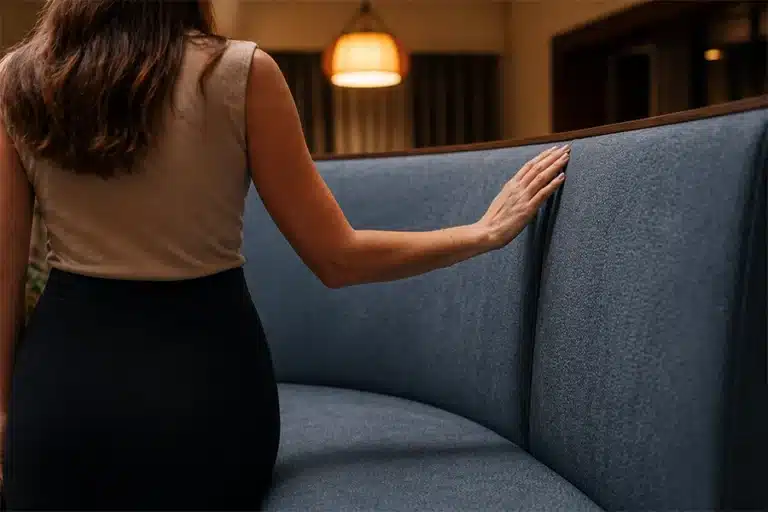
Back angle and lumbar support are often overlooked. A booth that looks great but pushes diners forward will feel uncomfortable by course two. In hotel restaurant seating, that translates into shorter dwell time, lower dessert and coffee uptake, and a room that doesn’t feel “premium” in practice.
Booth seating vs tables and chairs in hotel restaurants
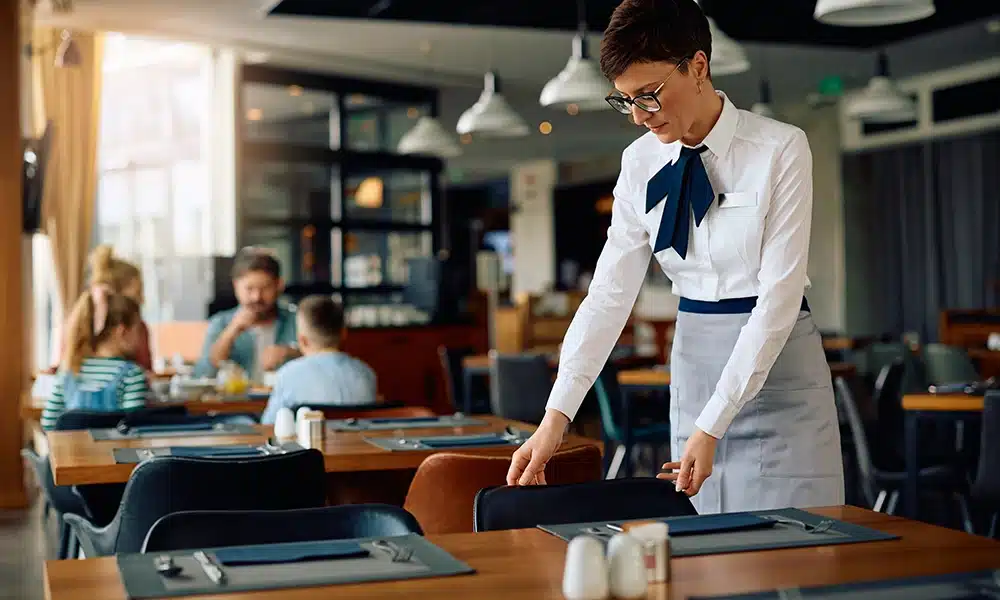
Booth seating vs tables and chairs in hotel restaurants isn’t a competition; it’s a pairing. Banquettes provide predictable capacity, zoning and a clean perimeter, while loose chairs provide flexibility for group sizes, events and changing service styles.
For many hotels, the most effective layout is perimeter banquettes plus loose tables and chairs in the centre. That approach also supports refurbishment cycles. If you refresh chair styles or table finishes over time, your fixed seating can remain the stable design backbone, keeping the room coherent through upgrades.
If you’re selecting loose seating to sit alongside banquettes, you’ll get the best results when chair upholstery or frame finishes reference the banquette palette. Our Restaurant Chairs & Dining Seating page is designed to help with that coordination without pulling you away from the hotel context.
Combining banquette seating with dining chairs in hotel restaurants
Combining banquette seating with dining chairs in hotel restaurants is where the room becomes flexible. A classic approach is banquettes along the wall with chairs opposite; it’s efficient, comfortable, and easy to reconfigure when you need to combine tables.
There are a few practical rules that keep this working smoothly. First, maintain consistent table heights so guests aren’t experiencing a different posture depending on where they sit. Second, keep chair styles aligned with your banquette detailing so the scheme reads as one design, not two procurement decisions. Third, pay attention to clearances: chairs need room to pull out without colliding with neighbouring tables, and staff need enough aisle width to serve without bumping shoulders.
If you want a light-touch table pairing reference, our page on Restaurant Tables & Table Bases covers footprints and stability at a practical level, without diving into technical engineering.
Upholstery choices for hotel restaurants: balancing durability and appearance
Hotel dining rooms see repeated daily use, spills, cleaning chemicals, and constant contact from luggage, coats and handbags. Upholstered banquette seating for hotels must be specified for that reality.
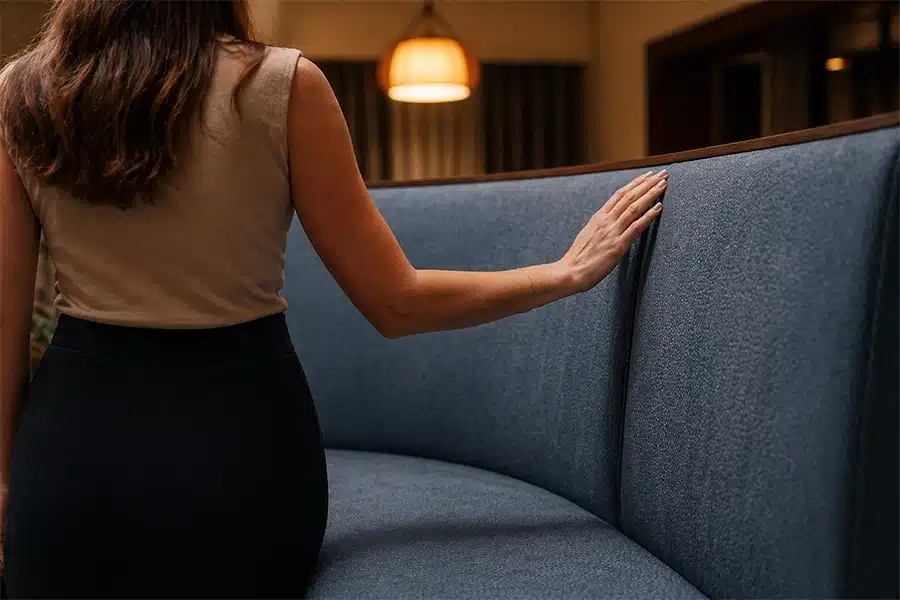
Faux leather and contract vinyls are popular because they’re wipeable and consistent across multiple sites, which helps brand consistency and procurement repeatability. Performance fabrics can look warmer and more premium, especially for evening dining, but they need careful selection to ensure stain resistance and abrasion performance suit breakfast and lunch realities.
For many hotels, the sweet spot is a zoned upholstery approach: more wipeable finishes in high-traffic breakfast areas and softer, more textured choices in quieter evening zones—while keeping the colour family consistent so the room still feels unified.
Crib 5 hotel restaurant seating should be treated as baseline. We won’t deep dive into regulations here, but the practical point is simple: foams and covers must be appropriate for hospitality use. Our pillar guide on Fire Safety & Crib 5 Regulations for Hospitality Seating explains what to look for when specifying upholstery and signing off projects.
Cleaning and maintenance: keeping booths looking “new” through three services a day
Hotel restaurant booth seating maintenance and cleaning is easiest when you design for it from the start. Wipeable surfaces reduce housekeeping time and keep the dining room looking consistent between services. Even with fabrics, choosing performance textiles and setting a clear cleaning routine prevents gradual greying and staining that can make a restaurant look tired.
Also consider the build details. Contract booth seating for hotels should be robust enough to handle guests leaning back, sliding in and out repeatedly, and staff moving tables for cleaning. Over time, a contract-grade build that allows refurbishment (reupholstery, panel replacement where appropriate) can significantly extend the life of the seating and keep refurbishment cycles cost-effective.
How to maximise covers in hotel restaurants with banquettes
How to maximise covers in hotel restaurants isn’t about squeezing tables closer until service becomes stressful. It’s about using space more intelligently.
Perimeter banquettes are the biggest lever: they remove the “dead strip” that walls often create and allow tables to be positioned more cleanly. They also reduce visual clutter by replacing multiple chairs with one continuous element, making the room feel calmer even when capacity is high.
For breakfast, a consistent run of two-tops and four-tops helps flow and speeds resets. For lunch and dinner, combining tables becomes easier when the perimeter spacing is predictable. If you’re wondering whether booths are good for hotel restaurant layouts, this is the core reason: they give you layout discipline without sacrificing comfort.
Bespoke hotel banquette seating and hotel refurbishment cycles
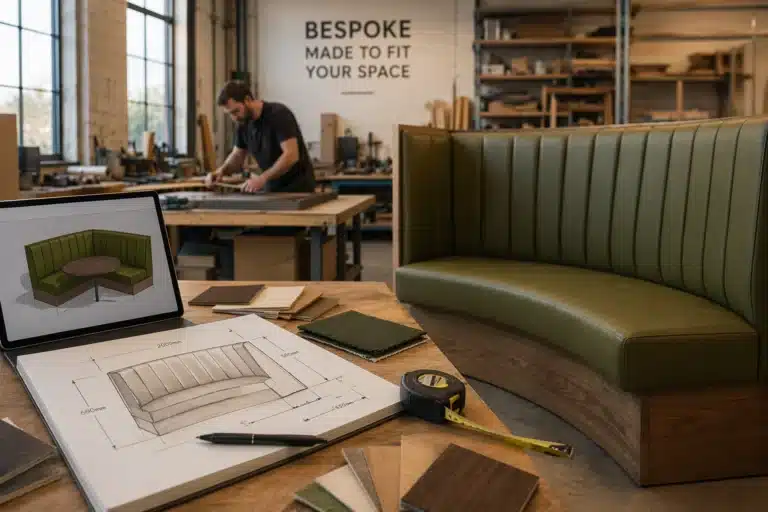
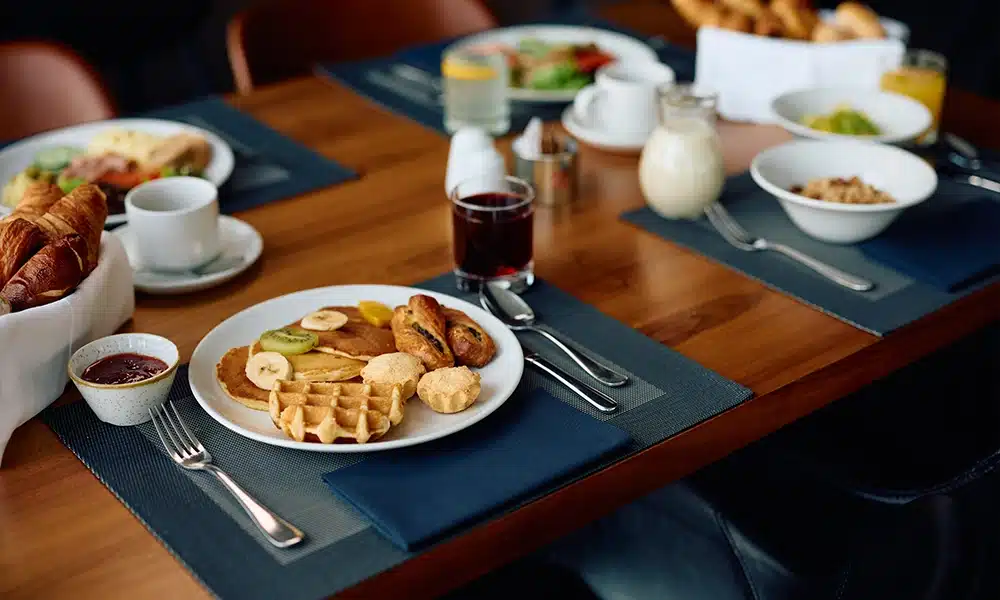
Hotels often need seating that’s repeatable across sites, but also adaptable to quirky building constraints. Bespoke hotel banquette seating lets you do both: keep a consistent design language while tailoring lengths, returns and corner solutions to the reality of each room.
This is particularly valuable during refurbishment cycles. If a property refreshes one dining room at a time, or phases upgrades across multiple hotels, having a banquette system that can be remade, extended or reupholstered helps you maintain brand consistency without starting from scratch each time.
If your project team is delivering multiple hospitality areas, it can also help to view the dining room as part of the wider building journey. When relevant, our arrivals-focused guide to Hotel Lobby Seating & Lounge Furniture can support a cohesive approach without mixing up the functional goals of each space.
Ready to plan booth and banquette seating for your hotel restaurant?
If you’re refurbishing a hotel dining room or rolling out a repeatable design across multiple sites, we can help you specify hotel restaurant banquette seating that balances covers, comfort and daily durability.
Explore our Booth & Banquette Seating collection, or speak to the HCF team about bespoke hotel banquette seating built around your footprint, service style and brand standards.
- sales@hcfcontract.co.uk
- 01708 331757
Hotel Restaurant Booth and Banquette Seating FAQs
See Our Other Inspiration Posts and Guides