Restaurant Booth Seating (UK-Made Banquette Seating for Restaurants)
The best restaurant interiors don’t just look good in photos — they work in service. They help you seat more covers without squeezing walkways, they make guests feel comfortable enough to stay for dessert, and they hold up to constant use without looking tired after six months. That’s exactly why restaurant booth and banquette seating remain two of the hardest-working choices for modern hospitality. Whether you call them restaurant booths, a banquette bench, fixed restaurant seating or restaurant bench seating, they create structure, maximise perimeter space and give your dining room a sense of identity.
At HCF Contract Furniture, we manufacture UK made booth seating and bespoke banquette seating in our own UK workshops, built for real dining spaces and restaurant life: contract-grade builds, made-to-measure layouts, and Crib 5-compliant upholstery. This guide focuses on restaurant dining layouts using booths and banquettes — including booth seating for two, four and six covers, ergonomics (seat height, depth and back angle), the shapes and configurations that work best, and how to combine booth seating with dining chairs and tables for a cohesive scheme.
Full structural guarantee on our manufactured frames for long-term commercial use.

Booth seating handcrafted in our UK workshop for consistent quality and reliable lead times.
Choose from our core Valencia C5 range or upgrade to premium fabrics.
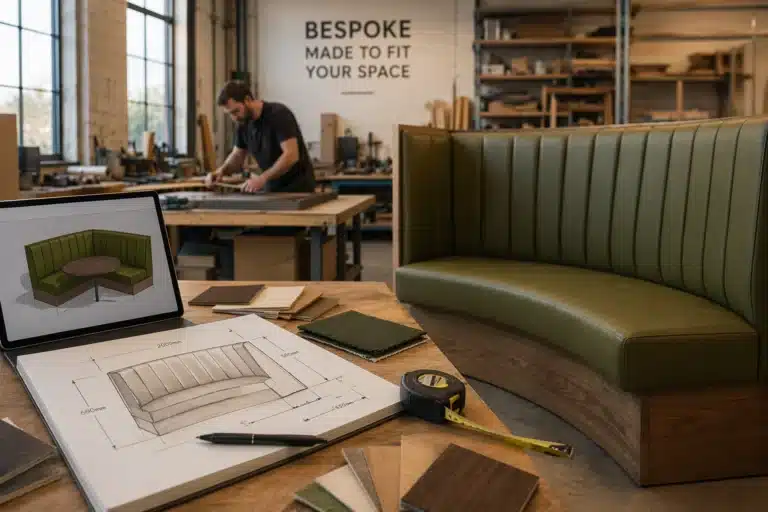
Every run, corner and booth set is tailored to your exact dimensions and floor plan.
All fabrics, vinyls and faux leathers are specified to Crib 5 standards for commercial interiors.
Why booth seating increases restaurant capacity (and feels better doing it)
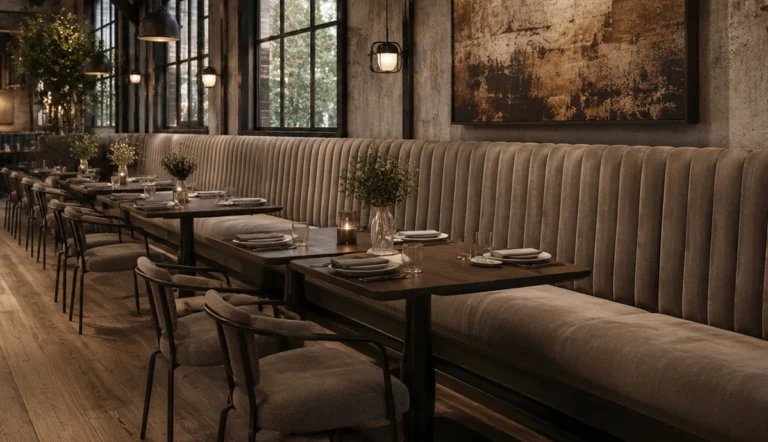
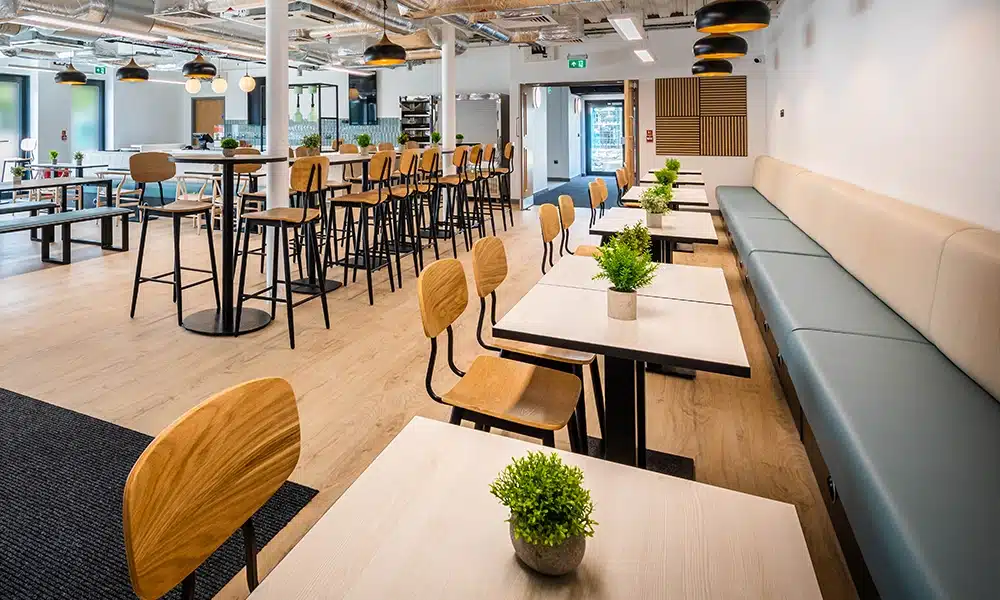
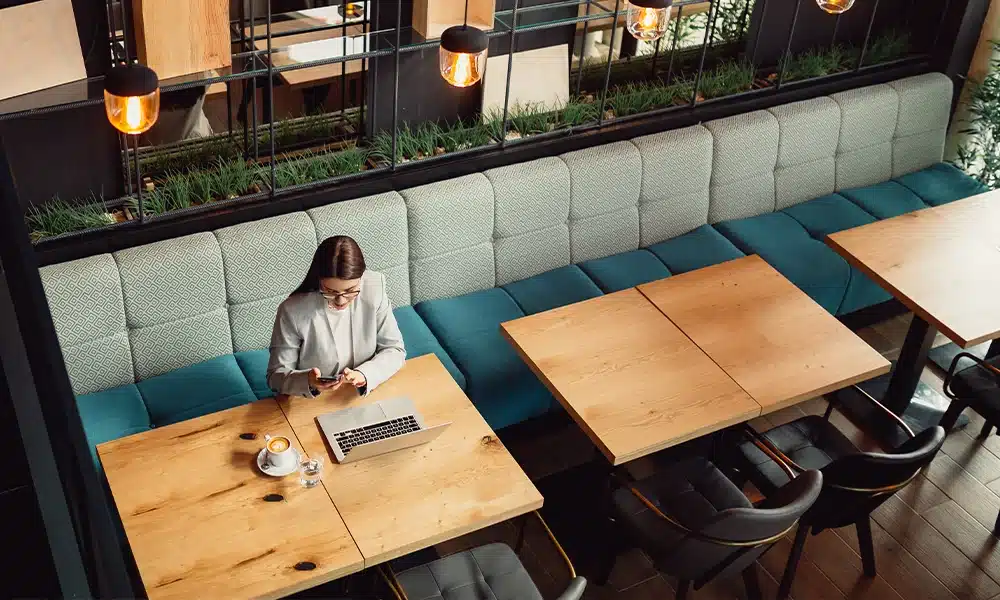
If you’ve ever struggled with “empty” space that can’t quite hold another table, booths are often the answer. Booth seating for restaurants uses the perimeter efficiently, turning walls, bays and corners into productive seating rather than dead zones. Unlike loose chairs that creep into walkways over a busy weekend, fixed seating for restaurants helps protect your circulation routes — which makes service calmer and safer.
There’s also a guest-perception benefit: a restaurant that’s anchored with banquettes tends to feel fuller and more atmosphere-led, even at quieter times. That matters for independent venues that need a room to feel inviting from first glance to last order. When people ask whether booth seating vs tables and chairs in restaurants is worth it, the best answer is usually “both”: perimeter banquettes for consistent capacity, and loose seating where you need flexibility.
Unlike bar and pub booth seating, which often prioritises snugs, noise control and late-night durability, restaurant booth seating is designed first around dining comfort, posture and service flow. The aim is to support guests through multiple courses without feeling rushed or cramped, while still protecting circulation routes for staff.
To explore the broader category, start with our core booth & banquette seating range.
How to choose booth seating for a restaurant
Choosing restaurant booth seating isn’t just about picking a style you like. The right specification depends on your menu, service pace, guest profile and how you want the room to behave at peak time.
Food-led dining rooms often benefit from supportive backs and a slightly more “upright comfortable” posture, so guests can enjoy multiple courses without slouching. All-day cafés usually want easier in-and-out access and wipeable finishes. Premium dining tends to favour deeper comfort, tailored upholstery and stronger visual detailing that reinforces the brand.
The simplest way to narrow choices is to start with your layout: where do you want guaranteed covers, where do you need flexibility, and what parts of the room are awkward to furnish with loose tables? That’s where custom restaurant booth seating and bespoke banquette seating can turn constraints into a design feature.
If you’re coordinating chairs in the same space, our restaurant chairs & dining seating collection is designed to sit alongside our booths without looking like two separate projects.Or you can view our full chairs and stools collection to see the different styles we offer at HCF.
Why Restaurants Choose HCF
Most venues don’t need “more choice” — they need confidence that what they buy will last, arrive as expected, and work in the space.
✔ Finishes and upholstery options to suit your interior concept (including Crib 5 options)
✔ A team that understands the practicalities: covers, flow, cleaning and maintenance
If you’ve got a mood board, floor plan or even a rough sketch, we can recommend suitable booth styles, chair types and table pairings that make sense for your service style.
Restaurant banquette seating layout ideas that work in service
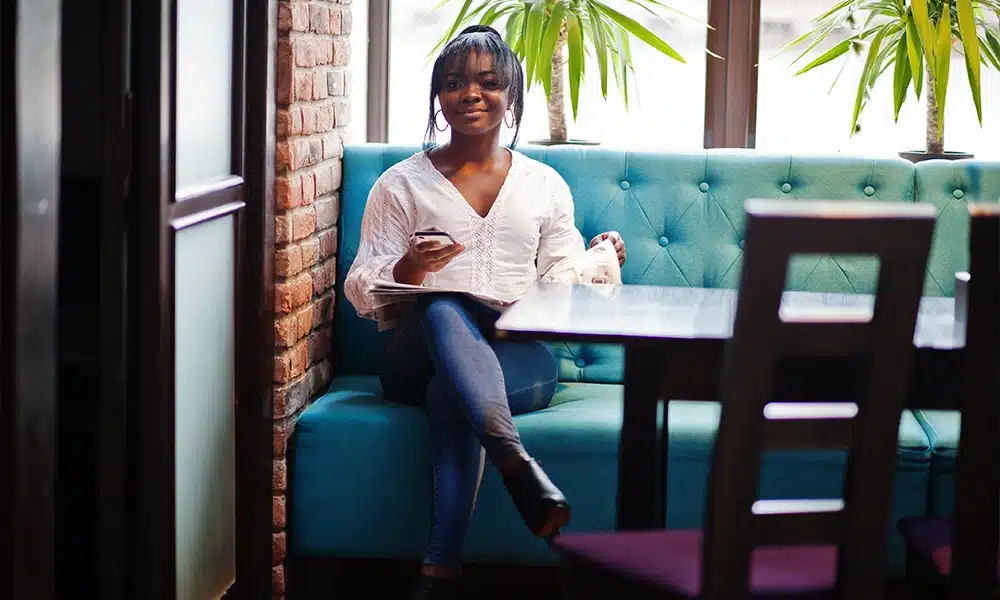
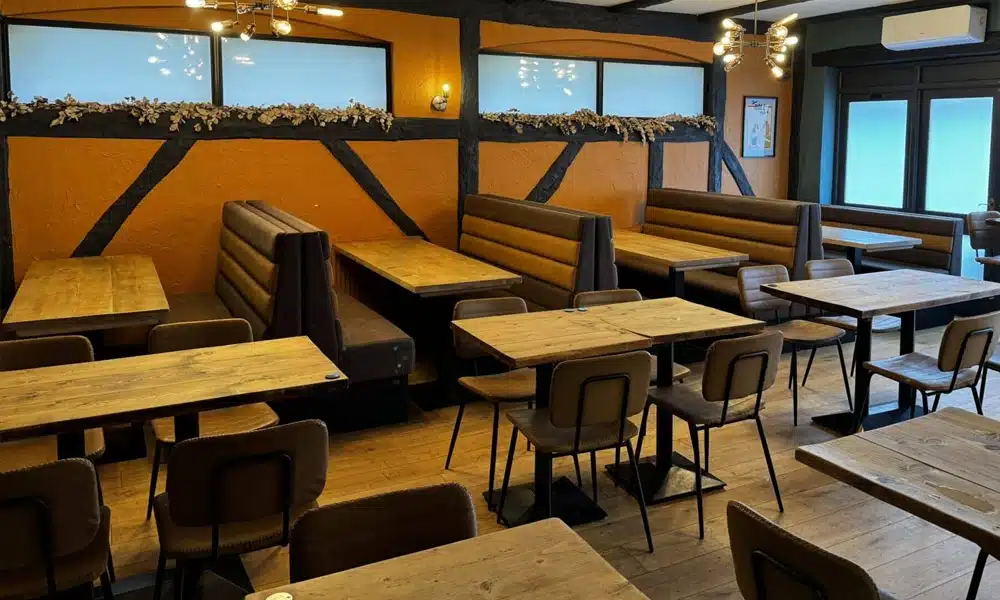
The most effective restaurant banquette seating layout ideas usually start at the perimeter. A long run of wall banquette seating gives you reliable two- and four-top spacing, keeps the centre of the room open, and creates clean service lanes.
From there, you can layer in shapes that suit your footprint:
Corner booth seating for restaurants is ideal for bay windows, chimney breasts and awkward angles. It makes a “problem” wall feel intentional and gives guests the feeling of a destination table. L-shaped banquette seating works beautifully when you want to define a zone — for example, separating a main dining area from a quieter side room without adding partitions. U-shaped booth seating is a strong option for group dining; it creates a social hub and can be a high-value bookable area when you position it well. For venues that want a more playful or premium statement, round booth seating creates a focal point in dining spaces and encourages conversation by facing guests inwards.
For some top tips on restaurant layout planning, see our 5 Captivating Booth Seating Layouts for Your New Restaurant.
If you’re working with tight footprints, a slimmer-depth banquette can help you add covers while still maintaining sensible aisle widths — one reason our Compact Booth Seating range is popular for booth seating for small restaurant spaces.
For restaurant projects where layouts may evolve, the Serene Range is a contemporary option that can be planned as modular banquette seating, allowing you to create runs, corners and zoning layouts with a consistent design language across hospitality spaces.
Are booths good for small restaurants?
Often, yes — provided they’re designed around circulation. When people ask “are booths good for small restaurants?”, they’re usually concerned about feeling cramped. In practice, perimeter banquettes can actually make a small room feel less cluttered by reducing the number of chair legs and keeping walkways clearer.
The key is proportion. For booth seating for small restaurant spaces, you want a careful relationship between table depth, banquette depth and aisle width. A good banquette makes it easy to tuck tables in neatly, while still giving guests enough space to sit comfortably and for staff to clear plates without bumping backs.
If you’re planning a smaller site or want layout ideas that maximise covers without cramping the room, read our guide: The Ultimate Guide to Banquette Seating for Small Spaces. Our restaurant tables & table bases guide also covers table sizing and base choices at a practical level.
Ergonomics: ideal seat height, depth and back angle for dining booths
Comfort is what keeps guests in the building — and in most restaurants, it’s also what drives repeat visits. For booths, three dimensions matter most:
Ideal seat height for restaurant booths typically sits in the same world as dining chairs, so guests can eat naturally at standard table heights. Too low and people hunch; too high and knees feel cramped. How deep should restaurant banquette seating be depends on the style of dining you offer. Shallow seats can work well for quick turnover cafés; deeper seats can feel luxurious, but only if the back angle and lumbar support prevent slouching.
Back angle is the silent deal-breaker. A booth that looks beautiful but pushes diners forward will feel tiring quickly. We build restaurant booth seating with proper support in mind, especially for venues that want guests to stay through multiple courses.
Where you’re combining banquettes with loose seating, keep the table-to-seat relationship consistent so diners don’t feel like they’re switching “postures” as they move around the room.
For a wider look at booth ergonomics, layout planning and the pros/cons of different booth styles in the hospitality industry, explore our Ultimate Guide to Commercial Booth & Banquette Seating.
Booth seating for two, four and six covers
Booths can be planned very precisely around real-world party sizes. Two-tops along a wall banquette are excellent for cafés and casual dining, while four-tops suit most mixed dining patterns. For six covers, you’ll typically get the best result with a longer run of banquette on one side and loose chairs on the other — or a dedicated U-shaped booth for group bookings.
This is also where how to maximise covers with banquette seating becomes practical rather than theoretical. With made-to-measure spacing, you can avoid odd gaps, keep your table grid consistent and prevent the “one table that never fits properly” problem that many operators live with.
Upholstery choices and fabric selection for restaurant environments
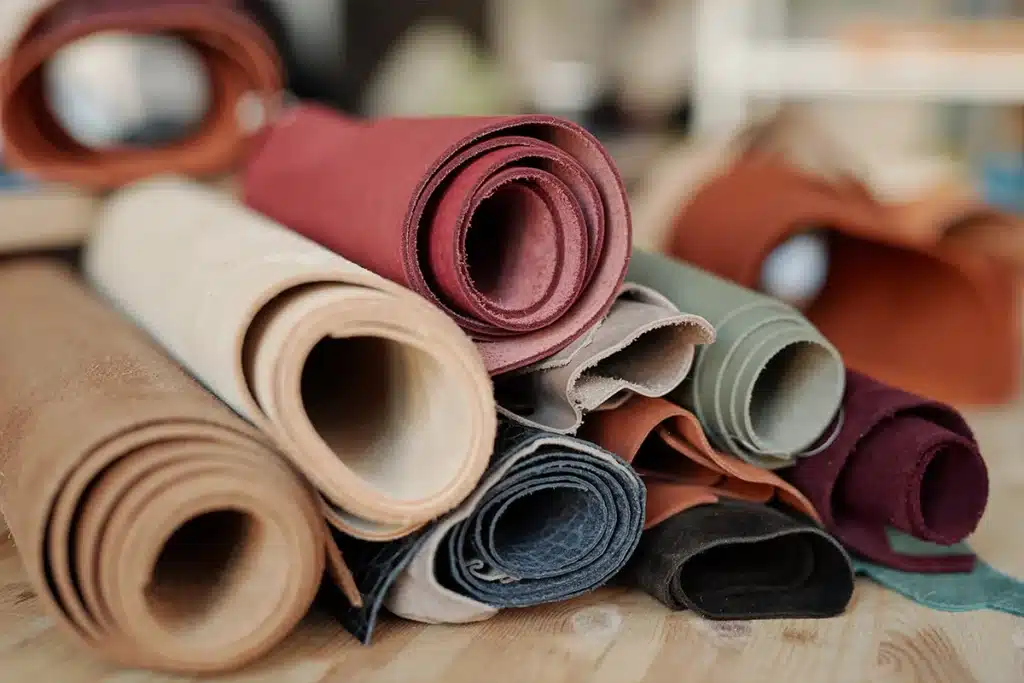
Most restaurant designers want two things that can feel at odds: upholstery fabric that looks premium and upholstery that survives daily cleaning. The good news is you don’t have to choose one or the other — you just need the right specification.
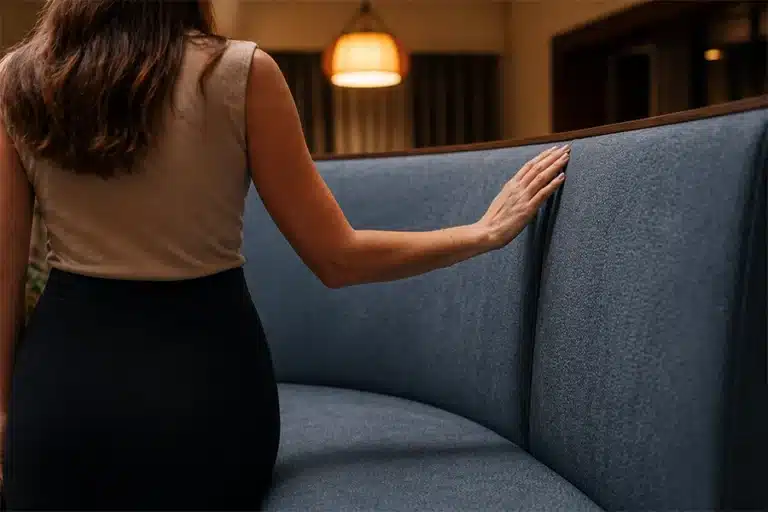
For upholstered restaurant booths, your options usually sit across three contract-grade material families: faux leather/vinyls (often the most wipeable), performance fabrics (great texture with the right protection), and statement fabrics used strategically in lower-risk areas. Many venues use a wipeable material on high-touch areas and a softer textile for feature backs, which keeps the scheme warm without creating maintenance headaches.
Your fabric upholstery should also support the brand. Colour blocking, piping, fluting and stitch detail can reinforce everything from “classic diner” to “modern bistro” to “premium grill”. We’ll help you navigate upholstery choices so your booths look intentional and still suit the way you trade.
If you’d like a brief explainer on compliance, we cover the essentials in our post on Crib 5 upholstery — the key takeaway is that Crib 5 restaurant seating is a must for UK hospitality environments, and we upholster accordingly.
Are upholstered benches practical in restaurants?
They can be extremely practical — when they’re specified properly. The question “are upholstered benches practical in restaurants?” usually comes down to cleaning and durability. A well-made restaurant bench seating run is easier to keep aligned than loose chairs, and it can be reupholstered over time rather than replaced.
For operators, restaurant bench seating also reduces clutter: fewer chair legs, fewer items to move for cleaning, and faster resets between sittings. In tighter venues, a banquette bench paired with compact tables can make the room feel cleaner and more spacious.
If you need a lighter visual footprint in parts of the room, upholstered benches (with a simpler back profile) can be a smart middle ground between full booths and loose seating.
Joining booth seating with restaurant tables and dining chairs
Booths only work if the table relationship is right. The table height needs to match the seat height so diners aren’t reaching up or leaning down, and the base placement needs to protect knee space. While we won’t get into table engineering here, the practical rule is simple: choose stable bases and position them so guests can slide in comfortably without fighting table legs.
If you’re wondering how to combine booth seating with dining chairs, the aim is cohesion. Repeat materials and tones (timber stains, metal finishes, upholstery colours) so the space reads as one design. Often, the most polished restaurant interiors use banquettes on the perimeter, then mix side chairs and occasional feature chairs in the centre.
To coordinate finishes across the scheme, it can help to choose tops and bases from our dedicated categories: table tops and table bases.
Maintenance: keeping restaurant booths looking sharp
Restaurant booth seating maintenance and cleaning starts with smart material selection. Wipeable faux leathers and contract vinyls are forgiving for high-turnover venues; performance fabrics can work brilliantly when they’re chosen for stain resistance and durability. Regardless of material, a simple routine helps: regular wipe-downs with appropriate products, quick attention to spills, and periodic checks on fixings and seams.
One of the biggest advantages of commercial restaurant booth seating is serviceability. A contract-built booth can often be refreshed with reupholstery or panel replacement, extending its lifespan and keeping the dining room looking consistent even as your concept evolves.
Why UK-made, made-to-order banquettes make restaurant projects easier
Restaurant fit-outs rarely run in straight lines. Buildings are imperfect, walls aren’t always square, and every operator has different priorities around covers, comfort and branding. That’s why bespoke banquette seating is often the smartest route for restaurants: it lets you use space precisely, keep circulation clean, and create a look that feels genuinely “yours”.
With UK made booth seating, you also get practical advantages: tighter control over build quality, clearer lead times and easier communication during specification. We’re family-run and manufacturing-led, so we’ll talk you through dimensions, layouts and upholstery in a way that supports your installer as well as your designer.
If you’re ready to start exploring options, our core booth & banquette seating category is the best place to begin.
Ready to plan restaurant booth seating that works in service?
If you’re designing a new dining room or upgrading tired seating, we can help you plan restaurant booth seating and restaurant banquette seating that maximises covers, supports comfort, and stays looking sharp under daily use.
With a UK workshop and an in-house design service, we can advise on layouts, proportions and finishes to suit your space. Explore our booth & banquette seating range, or speak to the HCF team about bespoke banquette seating built around your exact layout, branding and service flow.
- sales@hcfcontract.co.uk
- 01708 331757
Restaurant Booth Seating FAQs
The best booth seating for restaurants depends on your service style. Food-led venues often benefit from supportive backs and comfortable ergonomics, while cafés may prioritise wipeable finishes and easy access. In most layouts, a mix of perimeter banquettes and loose seating creates the best balance of capacity and flexibility.
See Our Other Inspiration Posts and Guides