Outdoor Booth & Banquette Seating for UK Hospitality
Outdoor trading areas are brilliant when they work — and unforgiving when they don’t. Wind funnels down side alleys, sudden downpours leave puddles under tables, and midday sun fades finishes faster than you expect. That’s why outdoor booth and banquette seating needs a different mindset to indoor booths. It’s not about plush comfort or “restaurant styling”; it’s about weather exposure, stability, drainage, and cleaning — while still giving guests a comfortable, premium-feeling place to sit.
This page is a practical guide to outdoor fixed seating for hospitality (not domestic garden furniture): pubs and beer gardens, cafés with pavements, hotel courtyards, terraces and rooftop edges. We’ll cover how outdoor booths differ from loose exterior seating, what to look for in materials and upholstery choices (where relevant), and how to plan layouts that protect service routes and maximise covers without turning your terrace into an obstacle course.
If you’re comparing fixed seating options across indoor and outdoor environments, our core Booth & banquette seating category is the best reference point for the wider product family and made-to-measure possibilities.
Is booth seating suitable for outdoor use?
Yes — but only when it’s designed for the outdoors. Indoor booth builds placed outside tend to fail quickly because the environment is harsher in every direction: moisture, UV, temperature swings, grit, and heavier cleaning. Outdoor banquette benches need frames and finishes that can cope with exposure, plus detailing that prevents water from collecting in the places it always collects (seams, corners, bases and kick plates).
The other reason outdoor booths work so well is behavioural: they give structure to outdoor spaces. People naturally understand where to sit, tables stay aligned, and staff aren’t constantly re-setting chairs blown out of place or dragged around by large groups. Done properly, outdoor fixed seating can make your terrace feel organised and “designed”, not temporary.
Outdoor booths vs loose outdoor seating: what changes operationally
Loose outdoor seating is flexible, but it carries ongoing operational costs: chairs drift into walkways, tables get pushed together unpredictably, and you lose service lanes at peak times. Outdoor fixed seating is the opposite: less flexible day-to-day, but far more controlled. Routes stay open, tables are easier to keep consistent, and the space feels calmer even when it’s busy.
For many venues, the best answer is a hybrid. Use fixed banquettes where you need structure — along walls, boundaries, planters, or perimeter rails — and use loose tables and chairs in the centre for seasonal reconfiguration. If you’re planning that mix, it’s worth browsing Outdoor tables & chairs for pubs & cafés alongside your banquette plan so table sizes, service access and cover counts line up naturally.
Weather exposure starts with material choice
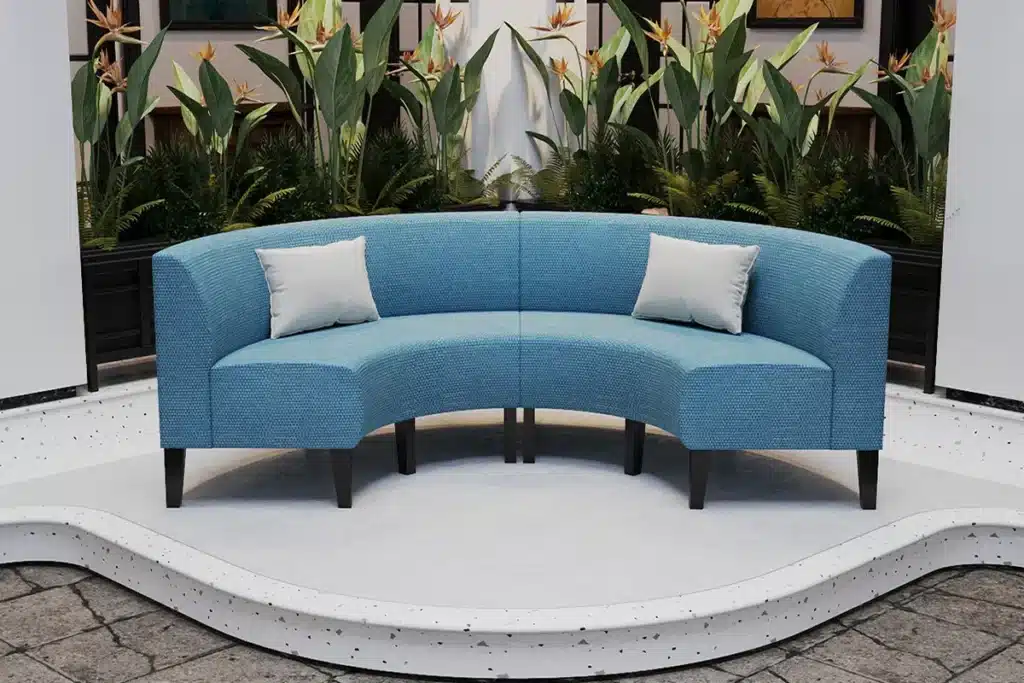
Outdoor seating fails when materials are asked to do the wrong job. If the terrace gets direct rain and sun, you need components that are stable, non-rot, and resistant to long-term weathering. That doesn’t mean everything must be “hard plastic”; it means choosing materials that won’t swell, split, rust, stain, or degrade under constant exposure.
A useful way to decide is to map your space into exposure levels:
- Fully exposed: open beer garden, pavement seating, rooftop edges
- Partially protected: awnings, pergolas, parasols, courtyard walls
- Mostly sheltered: covered terraces, winter garden-style spaces
Your booth specification should match the most punishing condition it will face, not the average. Outdoor reality check: if you plan for “nice days”, the furniture will still live through the worst days.
Drainage and water run-off: the detail that makes or breaks outdoor seating
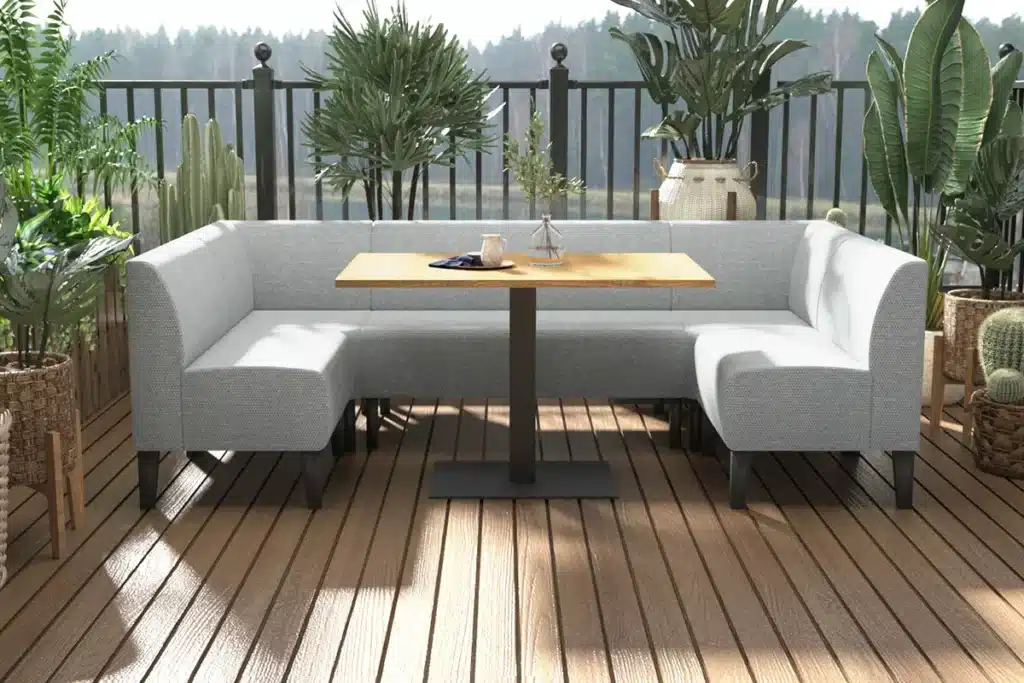
In outdoor banquettes, water always finds the same traps: flat seat surfaces, internal corners, low points under cushions, and enclosed plinths that don’t let moisture escape. The best outdoor fixed seating designs avoid creating bowls. They manage run-off deliberately, and they keep bases and legs from sitting in standing water for long periods.
When you’re evaluating outdoor booth seating, look for practical decisions that support drainage: minimal horizontal seams, base details that allow airflow, and designs that are easy to lift, wipe and dry. Even in sheltered areas, wind-driven rain can find its way in — so “covered” doesn’t mean “dry”.

UV resistance and colour fade: planning beyond opening season
Sunlight is a slow, steady force. The first sign of a weak outdoor spec is often fading: one side of the banquette looks newer, the backrest lightens unevenly, or darker colours shift over time. In hospitality, that’s more than an aesthetic problem — it makes the whole terrace feel tired.
The solution is to specify finishes intended for exterior use and to be sensible with colour placement. If you’re using bold colours, place them where they’re less exposed, or accept that your maintenance cycle may be shorter. If you want the terrace to stay consistent longer, mid-tones and textured finishes tend to hide the changes better than very light or very dark blocks.
Comfort expectations outdoors: keep it supportive, not fussy
Outdoor comfort is different from indoor comfort. People are wearing coats, sunglasses, and often sitting for shorter, more social periods. Outdoor booth seating should feel comfortable and supportive without relying on deep, domestic-style cushioning that becomes a maintenance burden.
In practice, the best outdoor banquette seating for restaurants and pubs tends to be structured and easy to clean. If you add softer elements, they should be chosen because they can survive the environment and the cleaning regime, not because they look “loungey” in a photo.
Stability, fixing and safety in exposed environments
Outdoor furniture needs to stay where you put it. Wind, uneven paving, crowds, and the regular movement of staff all put forces through seating. Fixed seating helps, but it still needs proper stability — especially on terraces and pavements where surfaces can be imperfect.
The right approach depends on the site. Sometimes it’s about weight and construction; sometimes it’s about how seating interfaces with the ground; sometimes it’s about placement (using walls, rails, or planters to shield the seating from direct gusts). What matters is that the banquette doesn’t rock, doesn’t creep over time, and doesn’t create new trip points when the area is busy.
For outdoor zones where wind and access are constant concerns — beer gardens, terraces, courtyards and pavements — it’s worth also reviewing Pub garden & terrace furniture so your wider layout and furniture mix is designed as one system.
How to plan outdoor booth seating layouts
Outdoor spaces feel bigger than they are — until service starts. The moment staff are carrying trays, guests are pulling chairs out, and people are queueing for the bar, circulation becomes the limiting factor.
A good outdoor booth layout protects three things:
1) Service lanes
Servers need a clear route that doesn’t force them through tight gaps behind seated guests.
2) Table access
Guests should be able to slide in and out without dragging tables into walkways.
3) Entry/exit flow
Outdoor areas often have pinch points: doorways, gates, steps, and bar access routes. Don’t place booths where they create congestion at these points.
Outdoor booth seating can be especially effective on small terraces because it lets you “draw” the edge of the space and keep the centre open. That’s often the difference between a terrace that feels calm and one that feels cluttered.

Outdoor booth seating for small terraces and pavements
Small terraces and pavement frontages are where fixed seating earns its keep. Loose chairs can quickly spill into pedestrian flow, and constantly re-setting them wastes time. A banquette line along the wall or frontage boundary keeps the footprint controlled and makes the space look intentional.
What to prioritise in small footprints: keep the central route open. It’s better to have slightly fewer covers that operate smoothly than more covers that create daily bottlenecks and unhappy guests.
Cleaning and maintenance under outdoor conditions
Outdoor seating gets dirt you don’t get indoors: grit, pollen, leaf residue, bird mess, and general urban grime. It also gets cleaned more aggressively — often with stronger products and more frequent wipe-downs, because outdoor areas need to look fresh quickly.
That’s why easy-clean design matters as much as the surface itself. Smooth profiles, sensible seams, and robust edges will stay presentable longer. Where cushions are used, think about how they’ll be managed: will they be brought in nightly, covered on-site, or left out? Your maintenance plan should drive the specification, not the other way around.
Seasonal use and cover strategies
Most outdoor hospitality spaces are seasonal — even if you trade year-round. Booth seating can extend your season because it creates defined, comfortable zones that feel more premium than scattered chairs. But only if you plan for weather and storage.
Common strategies include:
- Using fitted covers during closed hours
- Designing the layout so cushions can be removed and stored easily
- Choosing materials that tolerate being left out, but still cleaning well
The goal isn’t to make outdoor seating “maintenance free” (nothing is). It’s to make maintenance predictable, fast, and realistic for your team.
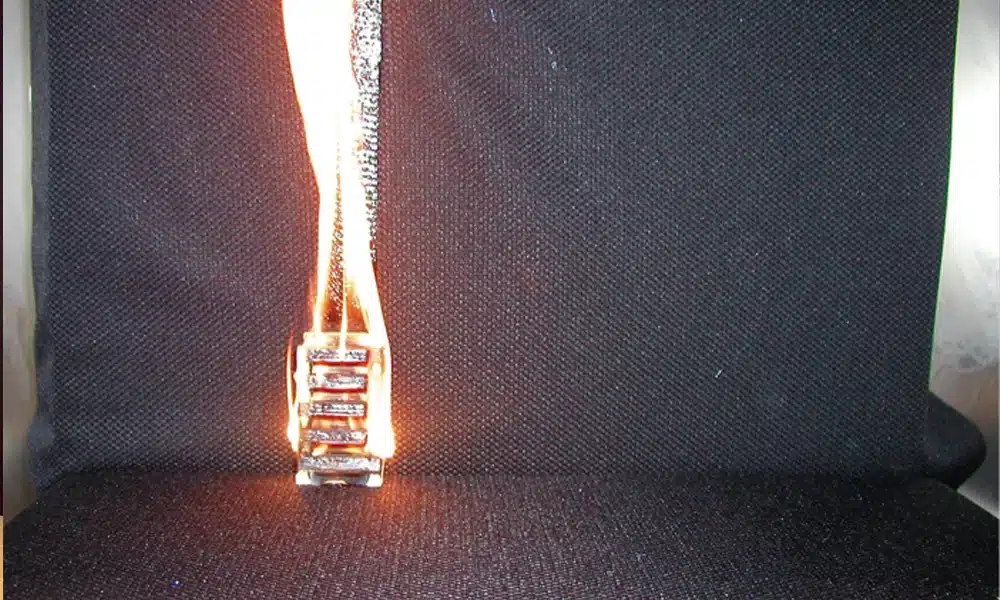
When fire safety and Crib 5 context is relevant outdoors
Most outdoor booths are specified with exterior-appropriate materials, but some venues have semi-covered terraces or winter garden areas where upholstered elements behave more like indoor furniture — especially if they’re enclosed and used year-round. In those cases, it’s sensible to keep broader contract upholstery expectations in view as part of your specification and documentation.
If you need high-level context on contract upholstery requirements and Crib 5, our Fire safety & Crib 5 regulations for hospitality seating page is the right reference point — particularly if you’re re-covering seating or standardising across multiple areas.
Outdoor vs indoor booths: where the spec needs to change
Outdoor fixed seating is not just “indoor booths outside”. The spec needs to change because the risks change: water run-off, UV fade, and exposure-driven wear. If you’re comparing design approaches between indoor dining booths and outdoor banquettes, keep the environments distinct in your planning.
For indoor-focused booth projects — where comfort and interior styling considerations have more weight — see Restaurant booth seating as a contrasting reference point. The design language can carry across, but the construction and materials need to be suited to the outdoor reality.
Talk to us about your outdoor booth seating plan
If you’re refurbishing a terrace, fitting out a beer garden, or trying to make a small outdoor area feel more structured and higher value, we can help you plan outdoor fixed seating that suits your exposure level, service routes and maintenance reality.
Start with Booth & banquette seating and share your outdoor dimensions, photos and typical cover targets for a clear, project-ready recommendation.
- sales@hcfcontract.co.uk
- 01708 331757
Outdoor Booth & Banquette Seating FAQs
See Our Other Inspiration Posts and Guides