UK Guide to Pub Garden & Terrace Furniture
A pub garden or terrace is one of the hardest-working parts of a hospitality business. It has to cope with sudden surges of customers, unpredictable weather, heavy daily use, and fast resets between services — all while staying safe, comfortable and visually appealing. Get it right and outdoor areas increase dwell time, spend per head and repeat visits. Get it wrong and they become a constant source of staff frustration, maintenance issues and lost covers.
This page looks at pub garden furniture and terrace furniture for pubs from an operational point of view. We’ll focus on durability, stability, layout planning, cleaning and storage, and how outdoor furniture choices affect flow, staffing and revenue — without drifting into product catalogues or domestic garden trends. For the wider category context, start with our Outdoor commercial furniture hub.
The reality of pub garden and terrace trading
Unlike restaurants, pubs don’t have a single, predictable trading pattern outdoors. A beer garden might host quick lunchtime drinks, families staying for hours, dog walkers stopping briefly, and evening groups settling in for a session — often all on the same day. That variety is what makes outdoor pub spaces valuable, but it’s also what makes furniture decisions more complex.
Furniture has to support different dwell times without constant reconfiguration. Tables need to feel stable for food, but flexible enough for drinks-led trade. Chairs get moved, stacked, dragged and wiped repeatedly. And layouts need to cope with prams, dogs, pushchairs, buggies and large groups without blocking service routes.
Best furniture for pub gardens starts with behaviour
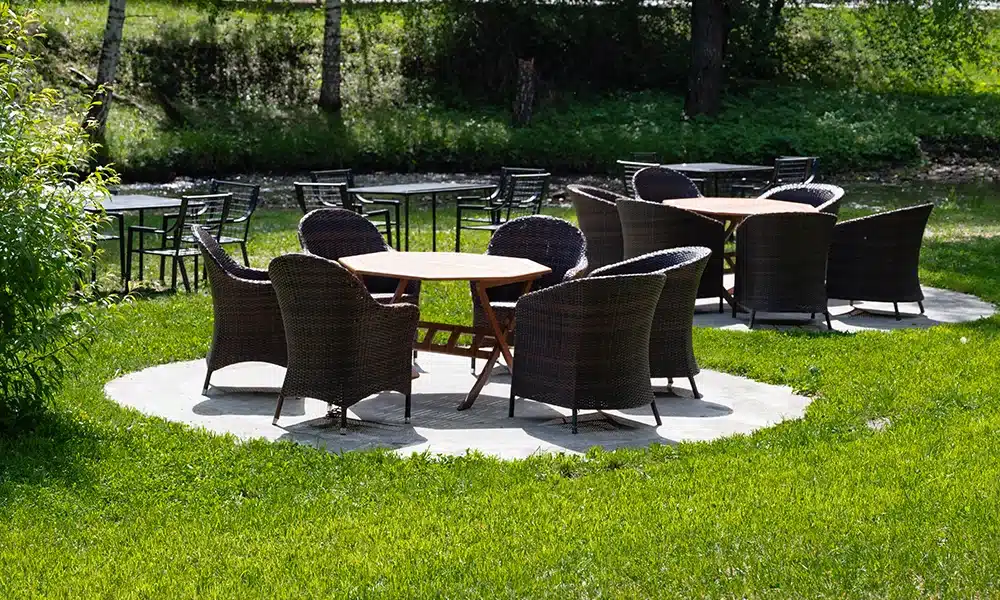
The most successful pub gardens aren’t the ones with the most furniture — they’re the ones where behaviour is gently guided by layout. People understand where to sit, where to queue, and how to move through the space without staff having to intervene.
Furniture plays a big role in that. Clear table groupings, consistent spacing and obvious circulation routes reduce congestion and make the garden feel calmer, even when it’s busy. This directly affects how long people stay and how much they spend: a space that feels organised encourages people to relax rather than rush.
Choosing pub garden furniture: what to prioritise first
When pub operators ask how to choose furniture for a beer garden or terrace, the answer usually isn’t about style — it’s about practicality.
Start with exposure. Is the area fully open, partially sheltered, or protected by walls, awnings or trees? Then consider surface conditions. Uneven paving, grass, decking and thresholds all affect stability. Finally, think about staffing reality. How quickly does the space need to reset? How often is furniture cleaned? Where does it go overnight or in winter?
Those answers should drive material choices, table sizes and whether fixed or loose seating makes sense.
Stability and safety on uneven surfaces
Uneven ground is one of the biggest challenges in pub gardens, particularly in older sites where surfaces have evolved over time. Wobbly tables aren’t just annoying — they increase spill risk, slow service and lead to constant guest complaints.
Stability comes from matching table size to base weight and footprint, and avoiding tall, narrow combinations that are easily destabilised by wind or leaning guests. Consistency also helps. Using a limited range of table sizes across the garden makes it easier to keep stability predictable, rather than having a few “problem tables” that staff dread.
Wind exposure and outdoor safety
Wind is often underestimated until something blows over. In exposed gardens, rooftops and coastal locations, wind affects everything: tables move, chairs topple, parasols become hazards. Furniture needs to stay where it’s placed, even when the weather turns.
Weighted tables, sensible proportions and thoughtful layout are the practical solutions. It’s also worth considering where wind funnels through the space — gates, corners and building edges are common trouble spots. Placing heavier furniture or fixed seating in those areas can dramatically reduce problems.
Zoning for drinks versus dining
Most pub gardens serve both drinks and food, but the two activities benefit from slightly different layouts. Drinks-led zones work well with tighter groupings, higher turnover and flexible seating. Dining zones need more space around tables, clearer service access and better stability.
You don’t need to separate these areas rigidly, but subtle zoning helps. Position dining-friendly tables closer to the kitchen or servery routes, and drinks-led seating nearer the bar access or garden edges. Furniture choice reinforces this: stable tables for food, lighter-touch seating where flexibility matters more.
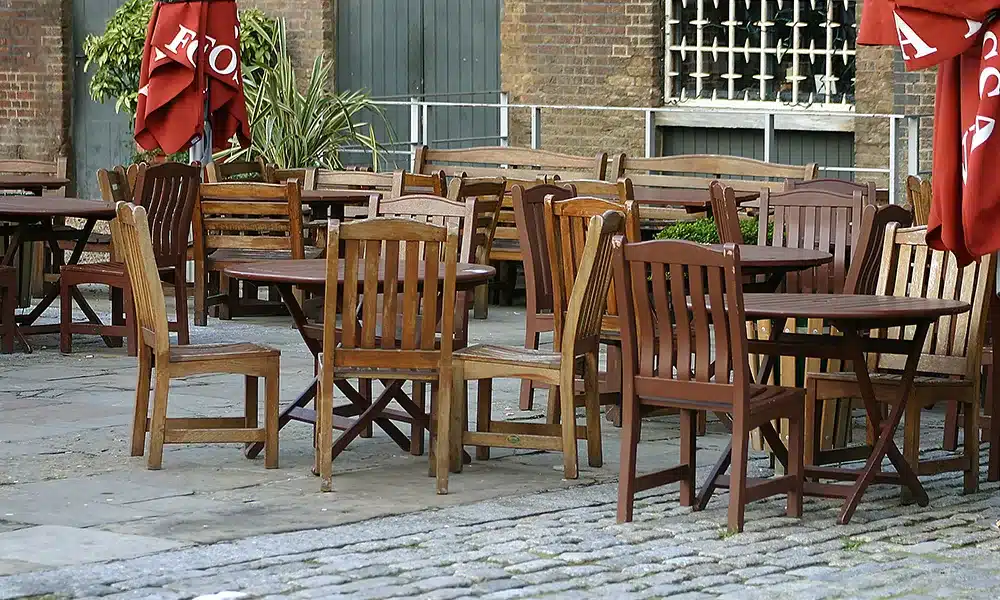
Table mix strategy and maximising covers
Maximising covers in a pub garden isn’t just about squeezing more furniture in. It’s about choosing the right mix. Smaller tables give flexibility and allow you to accommodate couples, pairs and small groups efficiently. Larger tables anchor group areas but reduce adaptability.
A common, effective approach is to use mostly smaller tables with a few larger ones placed deliberately in areas that can handle groups without blocking flow. This lets you adjust covers throughout the day without constantly re-laying the space.
If you want a deeper look at selecting and mixing loose furniture outdoors, our Outdoor tables and chairs for pubs and cafés page goes into more detail on table sizing and chair considerations.
Fixed seating vs loose furniture in pub gardens
Loose tables and chairs offer flexibility, but they also create ongoing work: chairs drift, tables get pushed together, and circulation routes slowly disappear. Fixed seating, such as banquettes or perimeter benches, reduces that chaos by defining edges and keeping furniture in place.
For pubs, fixed seating works particularly well along walls, fences and boundaries. It protects circulation space and gives groups a sense of ownership over their area, which can increase dwell time. Loose furniture can then be used in the centre of the space where flexibility is needed.
When you’re weighing up that balance, our Outdoor booth & banquette seating page explains how fixed outdoor seating changes maintenance, flow and capacity compared to fully loose layouts.
Durability for high footfall beer gardens
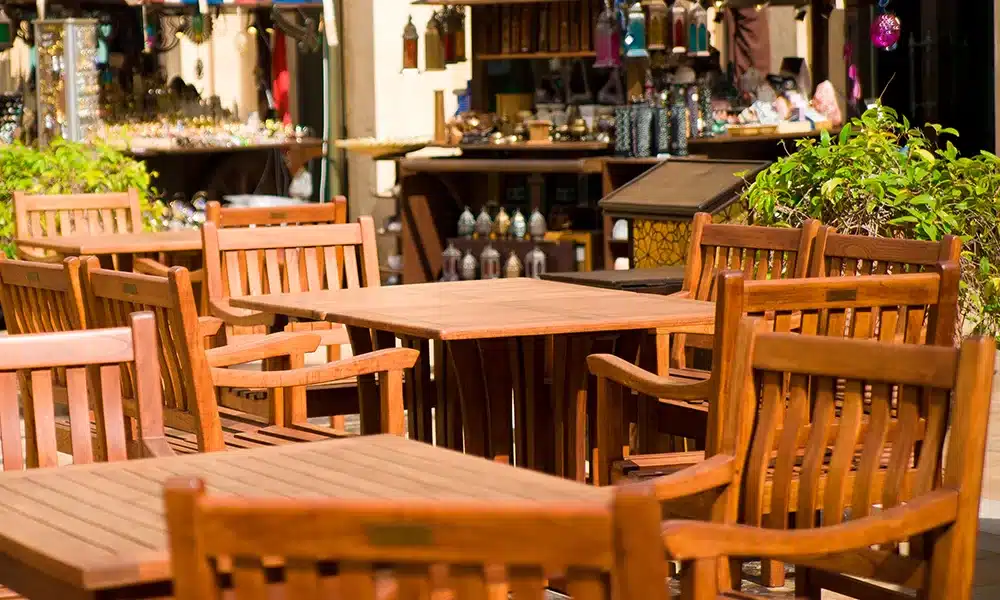
Pub gardens are punishing environments. Furniture gets knocked by bags, scraped across surfaces, leaned on by groups, and cleaned aggressively at the end of the day. Durability isn’t about surviving one season — it’s about looking acceptable after many.
Contract-grade outdoor furniture is designed for this reality. It holds its shape, resists scuffing and doesn’t feel flimsy after repeated movement. Importantly, it also ages predictably. When furniture wears evenly, the space still feels cared for. When it wears unevenly, the whole garden looks tired very quickly.
Materials that suit pub spills and cleaning routines
Beer, cider, soft drinks and food spills are part of daily life in a pub garden. Furniture materials need to cope with frequent wipe-downs and occasional deep cleans without degrading.
Easy-clean surfaces, sensible detailing and finishes that don’t show every mark make a huge difference to how the space looks during service. Materials that punish missed clean-downs or react badly to cleaning chemicals often cost more in the long run, even if they look good initially.
Drainage, water run-off and mould risk
Outdoor furniture fails fastest when water has nowhere to go. Flat surfaces, enclosed bases and deep crevices trap moisture, encouraging mould, staining and premature wear.
Good outdoor furniture design allows water to drain and air to circulate. That’s especially important in shaded gardens where surfaces stay damp longer. If your garden is heavily shaded or near planting, factor this in early — furniture that dries quickly will always look better than furniture that stays wet.
UV fade and colour choice
Sunlight gradually changes outdoor furniture, especially in south-facing gardens or open terraces. Dark colours can fade, light colours can discolour, and uneven exposure can leave furniture looking mismatched.
Choosing colours with this in mind helps. Mid-tones and textured finishes tend to age more gracefully than extremes. Where bold colours are important to your brand, placing them in partially sheltered zones or accepting a shorter refresh cycle is often the realistic approach.
Storage, stacking and winter strategy
Outdoor furniture lifespan is heavily influenced by what happens outside trading hours. Chairs that stack easily are faster to clear, easier to cover and simpler to store. Tables that can be moved without strain reduce wear on both furniture and staff.
Winter strategy matters too. Even if a garden stays open year-round, there will be quieter periods. Having a plan for stacking, covering or temporarily removing furniture can add seasons to its life and keep it looking sharper when peak trading returns.
Theft risk and practical deterrents
Unfortunately, outdoor furniture is more vulnerable to theft than indoor furniture, especially in public-facing gardens and terraces. While no solution is foolproof, practical measures help: heavier furniture, fixed seating elements, and layouts that keep pieces within sight of the building reduce risk.
Consistency also helps. A garden filled with uniform, purpose-designed furniture is less tempting than one with assorted loose pieces that look easy to remove.
Small pub terraces and tight footprints
Small terraces and courtyards benefit most from careful planning. In limited space, furniture choice directly affects comfort and safety. Oversized chairs or bulky tables can make a small terrace feel cramped and discourage guests from settling in.
In these spaces, clarity matters. Fewer, well-spaced tables with obvious circulation often outperform crowded layouts. Fixed seating along boundaries can free up the centre and make the area feel larger than it is.
If your site includes non-traditional outdoor footprints such as courtyards or pavement edges, our Rooftop, courtyard & pavement seating page provides additional planning context.
Linking layout to spend per head and repeat trade
Furniture doesn’t just fill space — it shapes behaviour. Comfortable, well-laid-out gardens encourage guests to stay longer and order again. Chaotic layouts with poor circulation do the opposite.
Clear zoning, stable tables and comfortable seating reduce friction. Less friction means fewer interruptions, smoother service and better guest experience. Over time, that translates into repeat visits and stronger outdoor trade, especially in competitive local markets.
Talk to us about your pub garden or terrace layout
If you’re upgrading a beer garden, refurbishing a terrace or expanding outdoor covers, we can help you plan furniture that works for your space, your service style and your maintenance routine — not just opening week.
Start at Outdoor Commercial Furniture and share your site details, photos and cover goals for a clear, practical recommendation.
- sales@hcfcontract.co.uk
- 01708 331757
FAQs: Commercial Outdoor Furniture for Pubs & Terraces
See Our Other Inspiration Posts and Guides