How to Maintain Booth & Banquette Seating in Restaurants, Bars & Hotels
Fixed seating takes a proper beating in hospitality. Booth and banquette seating gets used all day, every day; it absorbs spills, gets nudged by bags and prams, and takes the brunt of people sliding in and out. A solid maintenance routine isn’t about being precious — it’s about keeping your venue looking sharp, protecting your investment, and avoiding that “tired seating” feel that guests notice even if they can’t quite put their finger on why.
This guide is written for operators and teams who need practical booth seating maintenance that works in real life: quick daily care, sensible weekly deep-cleaning, and the early warning signs that tell you when maintenance is no longer enough. If you’re running multiple sites or you’ve inherited older banquettes, the principles are the same: consistency beats intensity, and catching issues early saves money later.
If you’re also weighing up replacement versus repair, it’s worth bookmarking the Booth & Banquette Seating category for reference while you read.

Why booth and banquette seating maintenance matters in busy venues
In restaurants, pubs and hotels, fixed seating is both functional and highly visible. When it’s clean, firm and well-presented, it signals quality and care. When it’s sticky, sagging or split, it drags down the whole space — even if your food, drinks and service are spot on.
Commercial booth seating maintenance also protects the parts you don’t want to replace: the frame, the foam structure, and the fit against walls and floors. A small tear becomes a wider split; a loose plinth becomes a wobble; repeated moisture on timber details leads to swelling or delamination. Most of the time, these problems start quietly, which is why routine checks are as important as cleaning.
Set the baseline: what “good condition” looks like
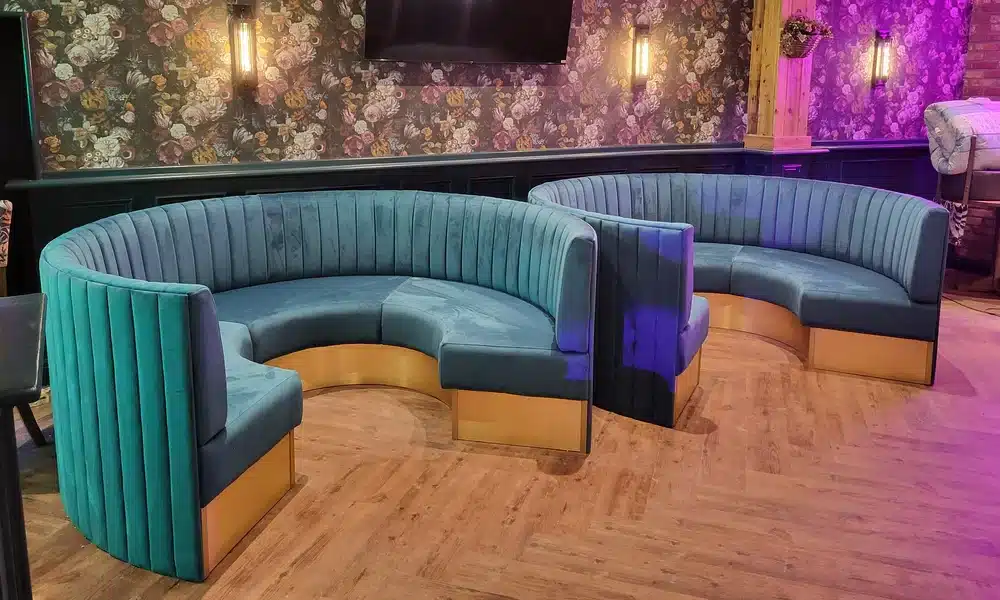
Before you tighten your routines, spend 30 minutes walking the venue when it’s quiet and look at your booths as a guest would. Check each run of banquette seating from a distance, then up close. You’re looking for visual cues (creases, shine patches, staining) and physical cues (soft spots, movement, squeaks).
A booth in good condition should feel supportive, look even across the run, and have seams that sit flat without pulling. Back panels should be secure, and the seat should rebound when you stand up. If you manage multiple sites, take a few “what good looks like” photos and share them with your team — it’s much easier to maintain a standard when everyone can see it.
Daily cleaning: the quickest wins for booth seating care
Daily cleaning is where most venues either protect their seating brilliantly or accidentally shorten its lifespan. The goal isn’t to scrub hard — it’s to remove the stuff that causes long-term damage: sugar residue, acidic spills, grease, and abrasive crumbs that work like sandpaper over time.
A practical daily routine for cleaning booth seating looks like this: lightly vacuum or brush the seat and back junctions (crumb traps), wipe down touchpoints (top edges, front nosings, ends), and spot-clean any spills immediately. The biggest upgrade you can make is speed: a fresh spill is simple; a dried stain becomes a project.
If you use any cleaning chemicals on upholstery, make sure they’re compatible with your materials and your fire-safety specification. For a clear overview of compliance context, keep the Fire Safety & Crib 5 Regulations for Hospitality Seating guide to hand.

Faux leather vs fabric: cleaning banquette seating properly for each finish
The biggest mistake we see is treating all upholstery the same. Faux leather booth maintenance and fabric booth seating care require different approaches — and when you use the wrong method, you can do damage that looks like wear but is actually chemical or abrasion-related.
Best way to clean faux leather booth seating
Faux leather is popular because it’s wipeable and forgiving — but it still needs the right touch. Use a mild cleaner, a soft cloth, and avoid harsh degreasers or bleach-based products unless the manufacturer specifically approves them. Regular gentle wipes prevent build-up, which is what causes shiny patches and premature cracking.
Pay attention to high-contact areas: the seat front edge where jeans rub, the back top where hands rest, and corners where staff tend to “quick wipe” more aggressively. Consistent, light cleaning is better than occasional heavy scrubbing.
How to clean fabric banquette seating
Fabric needs a different mindset: remove dry debris first, then treat marks carefully. Vacuuming is your friend — especially along seams and piping, where grit sits and abrades fibres. For spot cleaning, blot rather than rub and work from the outside of a stain inward to avoid spreading it.
In high-traffic zones, consider scheduling periodic professional fabric cleaning rather than escalating your in-house chemicals. If you’re unsure how to balance performance, comfort and compliance when specifying or replacing fabric, our guide on How to Choose Fabrics for Restaurant Booth Seating (Crib 5 Explained) is a useful reference.
Weekly and monthly deep cleaning that won’t wreck your upholstery
Deep cleaning is where teams sometimes overcorrect. A good deep clean is structured, not aggressive. Think “remove build-up” and “reset the finish”, rather than “scrub until it looks new”.
Weekly, focus on edges, corners and seams. These areas collect oils and grime that won’t shift with a daily wipe. Monthly, check under-seat junctions, skirting/plinth areas, and wall contact points — especially on wall banquettes where scuffing builds up over time. If your booths sit near entrances, also check for salt marks and grit in winter months (that’s one of the fastest ways to wear materials down).
If you’re running a cleaning contractor, give them material-specific instructions and a “do not use” list. It only takes one wrong product to dull a finish or pull colour.
Preventative maintenance: stop wear before it becomes damage
Most fixed seating damage is avoidable once you know what causes it. The usual culprits are friction, impact, moisture, and repeated stress on the same points.
Start with the layout behaviours. Are people sliding across seats because tables are too close? Are bags constantly catching the same corner? Is staff access forcing knocks during service? Small layout tweaks can reduce wear dramatically — and if you’re redesigning the space, it’s worth reading Fixed Booths vs Loose Chairs – What Works Best for Restaurants? to align seating strategy with real service patterns.
Then protect the hot spots. End panels and aisle corners are impact zones. Seat nosings are friction zones. Back tops are touch zones. Once you identify yours, you can adjust cleaning frequency, add discreet protection where appropriate, and train staff to avoid dragging items against upholstery.
Common causes of booth seating damage (and what to do first)
When something goes wrong, the first response should be containment, not cosmetic cover-ups.
Splits and tears should be stabilised quickly to stop spreading — even a temporary patch can buy you time until a proper repair. Loose seats and squeaks are often early signs of fixings working free. Wobbles at the base can come from floor movement, impacts, or repeated lateral stress when people push themselves out of the booth. And if a seat suddenly feels softer on one side, that’s often foam fatigue or a broken internal support point.
The key is speed: catch it early and you’re usually in “repair” territory; leave it and you drift into “refurbishment or replacement”.
How often should booth seating be cleaned?
There’s no one-size-fits-all answer, but there is a reliable rule: clean based on contact, not calendar. If a booth is in a high-turnover, family-heavy, drinks-led area, it needs more frequent attention than a quiet booth at the back used mostly for bookings.
For most venues, a solid baseline looks like: daily wipes and spot cleaning, weekly seam/edge focus, and monthly checks for movement, wear and staining. If you’re in a spill-heavy environment (cocktails, sauces, coffee, brunch), your “weekly” tasks might become “every other day” on the busiest sections. Wear patterns often reflect how the seating is used — something we see frequently in restaurant booth seating layouts where turnover is high.
How often should booth seating be cleaned?
Your seating lasts longest when staff know why the routine matters and what “done properly” looks like. Training doesn’t have to be formal — a quick walkthrough, a checklist of approved products, and a clear standard is enough.
Two practical tips make a big difference. First, show the team the common damage points so they understand what to protect. Second, define what “clean” means: not just visible marks, but also removing sticky residue, crumbs in seams, and grime along edges. This is how you turn booth seating care into a habit rather than a chore.
Maintenance vs refurbishment: when upkeep isn’t enough

Maintenance vs refurbishment: when upkeep isn’t enough
Even with brilliant upkeep, upholstered seating is a working surface. In UK hospitality environments, where seating must also meet ongoing fire-safety and Crib 5 requirements, maintenance routines should always consider compliance alongside appearance. Eventually, you’ll hit a point where cleaning can’t restore appearance or comfort because the issue is structural: foam fatigue, loosened fixings inside the seat, or upholstery that’s worn through. That’s when it’s time to choose between refurbishment and replacement.
If the frame is sound and the layout still works, re-upholstery is often a smart, cost-effective way to refresh the look and extend the life of your banquettes — especially during a wider venue refresh when downtime is planned. Our Booth & Banquette Seating Re-Upholstery Services page explains what’s involved and when it makes sense.
And if you’re planning bigger changes — capacity, layout, or a full brand update — you may be closer to replacement. In that case, a quick scan of The Ultimate Guide to Commercial Booth & Banquette Seating helps you think through shapes, heights and configurations without getting lost.
Ready to extend the life of your booth seating?
If you want your booths and banquettes to stay guest-ready for longer, start with a simple routine and tighten it where your venue works hardest. And if you’ve got sections that are looking tired, we can help you decide whether a refresh, repair or full re-upholstery is the best route. Explore our Booth & Banquette Seating range for replacement options, or speak to us about bringing your existing seating back up to standard.
- sales@hcfcontract.co.uk
- 01708 331757
FAQs On Booth Seating Maintenance
Keep it simple and consistent. A quick daily wipe plus immediate spill response prevents the heavy build-up that creates labour later. Then schedule one focused “edges and seams” clean each week — it’s a small time investment that pays back in appearance and lifespan.
See Our Other Inspirations and Guides