Library & Community Hub Seating Guide
Libraries and community hubs ask more of seating than almost any other public environment. On the same day you might host a quiet reader staying for an hour, a student group revising after school, a parent with a buggy in the children’s corner, and a community drop-in that fills the building for a short burst. Those mixed dwell times and mixed age groups are exactly why library seating and community hub seating needs a contract-grade approach: comfort for longer stays, durability for constant use, and layouts that guide behaviour without making the space feel policed.
This page covers how to choose library furniture seating and community centre seating for public-facing spaces in the UK: zoning, flexible layouts, easy maintenance, inclusive design, and lifecycle value across multi-site estates. If you’re planning across wider public settings, our Public & healthcare furniture hub gives the bigger picture of where these spaces sit within civic estates.
Why library seating is different from other public seating
A library isn’t just a waiting room and it isn’t a workplace breakout. People are there to concentrate, browse, study, meet informally and attend events. That means seating has to support both stillness and movement: the comfort to settle with a book, plus the robustness to withstand constant re-arranging, bag drops and heavy daily footfall.
It also needs to handle a wide range of users. In a single day, seating might serve older visitors who need arms for assisted sit-to-stand, teens who perch and swivel, parents managing children, and people who require clear wheelchair spaces. “One chair fits all” rarely works. The best results come from a small, intentional mix of seating types, chosen to create calm, readable zones.
Best seating for libraries starts with dwell time
When people ask for the best seating for libraries, they’re often really asking: “How do we make the space welcoming for longer stays without buying fragile lounge furniture?” Libraries need comfort that holds its shape and stays presentable—supportive backs, sensible seat heights, stable frames, and finishes that don’t look tired after repeated cleaning.
A useful rule of thumb is to match the chair “feel” to the expected dwell time. Short perches near catalogue points and quick-use areas can be simpler and more wipeable. Reading and study zones benefit from more supportive, slightly softer seating—still contract-grade, but designed for people to sit comfortably for longer periods without slumping or fidgeting.
Zoning: quiet reading, study, children’s corners and community use
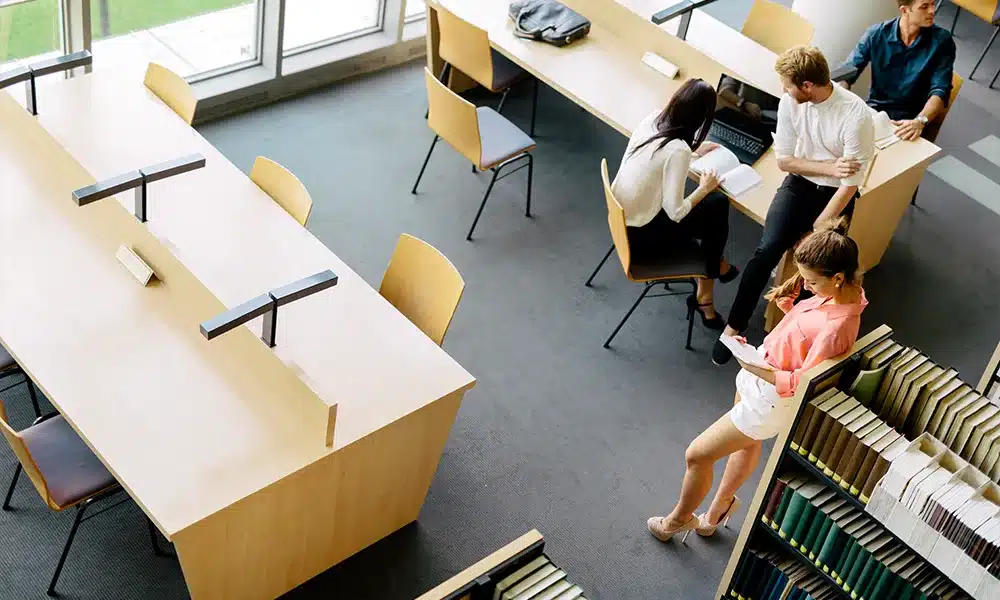
Good library seating layouts work because they make behaviour obvious. Quiet zones tend to succeed when seating is arranged in smaller clusters with natural spacing, rather than long continuous runs that invite conversation. Reading areas benefit from chairs that subtly orient people away from walkways, reducing distractions and keeping circulation clear.
Study zones need furniture that supports focus and repeat use. If you’re specifying tables for study or community learning areas, keep the decision high-level and practical: stable bases, easy-clean tops, and sizes that suit group work without overcrowding. Start broad with Table tops when you’re planning study tables across multiple sites.
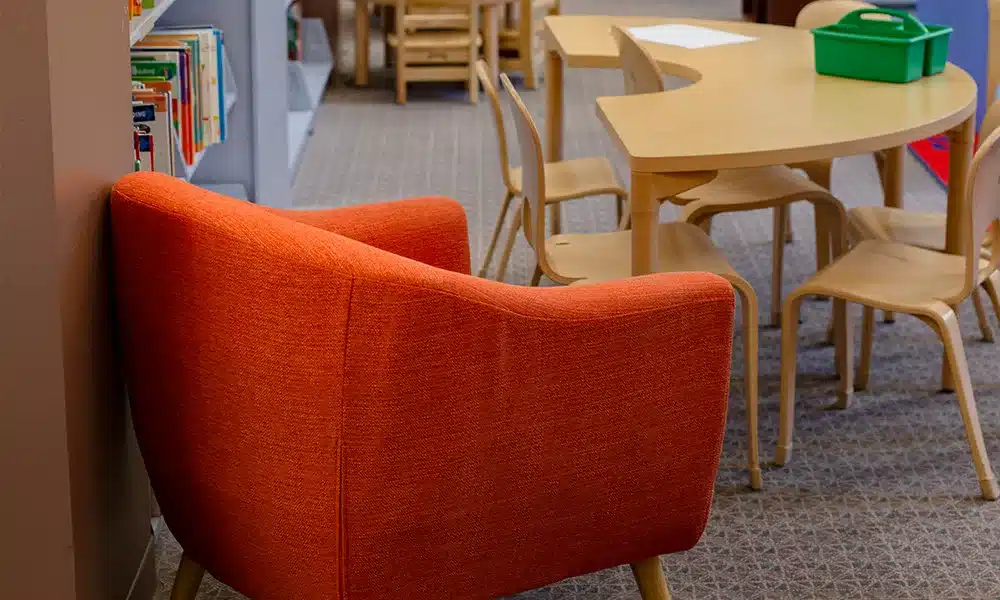
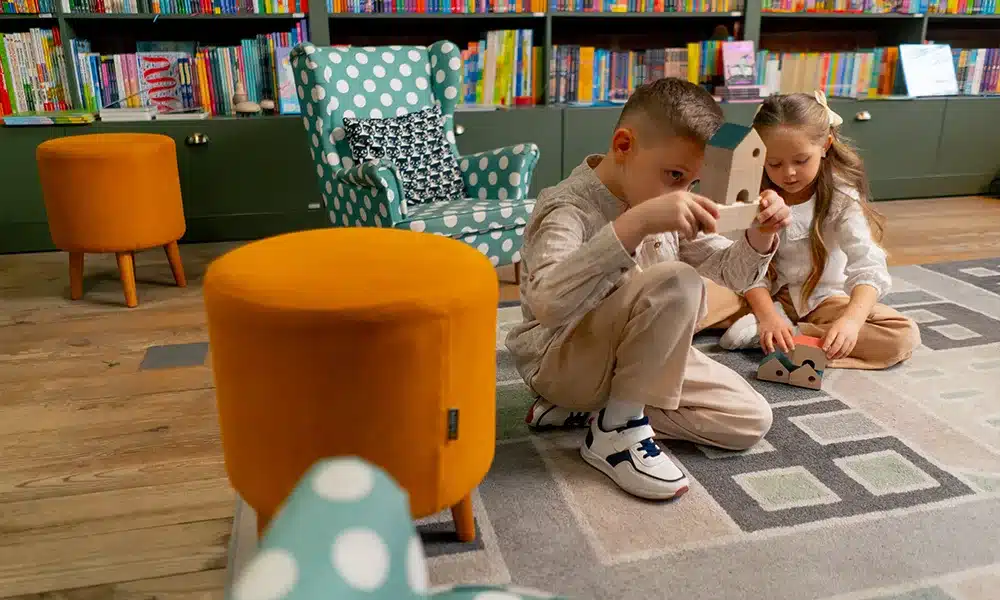
Children’s areas are a different rhythm altogether: higher movement, more spills, and more noise. The seating here needs to be robust and easy to clean, but also comfortable and friendly-looking so the space doesn’t feel like a “no touch” zone. The best children’s corners usually rely on layout—small clusters, clear routes for buggies, and seating that’s easy to re-set after activities.
Community events introduce flexibility requirements. If your hub runs classes, drop-ins, talks or group sessions, you’ll want some seating that stacks or moves easily, plus a “default” arrangement that looks tidy when the room returns to normal use.
Seating layouts for quiet zones: comfort without noise creep
Libraries often struggle with “noise creep” where quiet areas gradually become chat areas. Seating can help. Soft materials absorb some sound, but the bigger win is how seating is positioned: facing away from busy routes, breaking large areas into smaller pockets, and using spacing to discourage group clustering in zones intended for individual use.
Avoid placing the most comfortable lounge seating directly beside thoroughfares. People will stop there because it’s convenient, which increases foot traffic, conversation and disruption. Instead, place longer-dwell seating slightly back from main routes so the people who choose it are genuinely there to read or study.
Contract seating for public spaces: durability that stays welcoming
In public libraries, furniture doesn’t get a gentle life. Chairs are dragged, knocked, leaned on, and used by people carrying heavy bags. That’s why contract seating for public spaces is essential: stable frames, robust joints, and finishes that can handle regular cleaning without degrading.
For procurement teams, it helps to think in terms of “repeatable solutions” across sites. A small family of dependable chair types (with consistent finishes) makes future replacements easier and helps avoid the patchwork look that builds up over time. Our Chairs & stools category is a practical starting point when you’re comparing public-facing seating styles with contract performance.
Easy-clean seating for public libraries: what actually makes it easier
“Wipeable” is only half the story. Easy-clean seating is also about the details that reduce cleaning time: fewer deep seams, fewer dirt traps, and surfaces that don’t show every mark. Libraries are high-touch environments—arm tops, seat fronts and backs get constant contact—so those are the areas that need to stay resilient and presentable.
In heavy-use zones, hard-surface seating can be a smart part of the mix, particularly where dwell time is short and cleaning frequency is high. Options like polypropylene chairs can work well for flexible community rooms, activity spaces and quick-perch areas where wipe-clean practicality is the priority.
Comfort for longer stays without “domestic lounge” fragility
Many libraries want a more lounge-like feel to encourage dwell time and community use, but domestic-style furniture often struggles in public buildings. The better approach is “soft, but contract”: supportive seats designed for longer use, with robust upholstery and frames that won’t loosen or sag quickly.
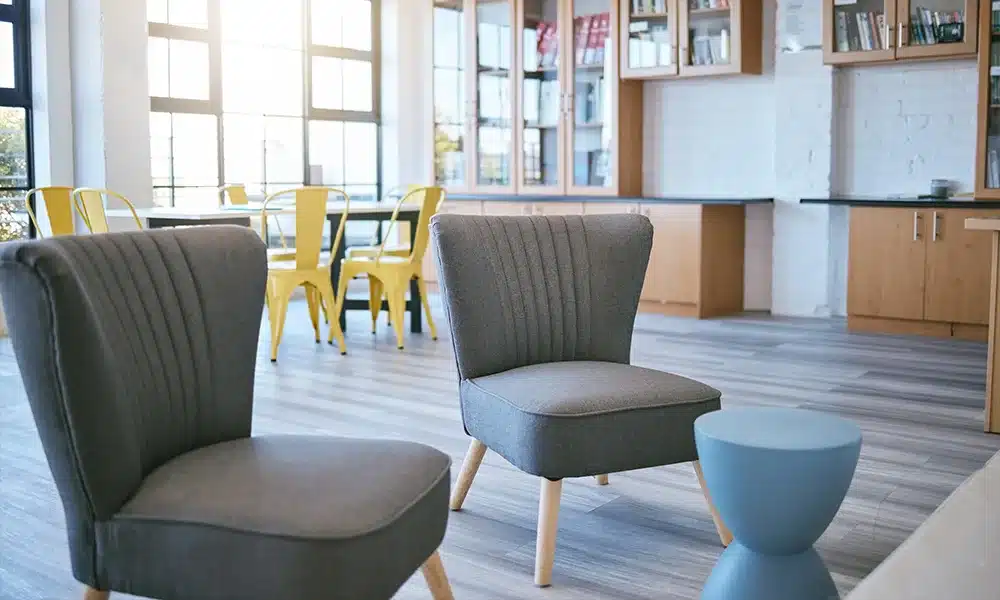
If you’re adding a small number of softer pieces to create a welcoming reading lounge, choose shapes that still feel structured and public-appropriate. Overly deep, low lounge seating can be difficult for some users to stand from and can look tired faster in heavy-use areas. For softer reception and reading lounge pieces within a contract context, sofas, tubs and armchairs can be a useful reference point—used selectively and positioned carefully.
Accessible seating for libraries and community centres
Inclusive design in libraries is about more than wheelchair bays. It’s also about seat heights and arms, which can make a major difference for people who need assisted sit-to-stand. A well-planned space offers choice without making anyone feel singled out: some chairs with arms, some without, a mix of seat heights, and clear, predictable circulation routes.
Layout matters as much as product choice. Protect turning space near key points (entrances, service desks, lifts), and avoid arranging seating so tightly that mobility aids become an afterthought. A library that feels easy to navigate feels calmer and more welcoming, especially for older visitors and carers.
Furniture for multi-use community spaces: flexibility that doesn’t look messy
Community hubs often need to switch modes quickly—from quiet browsing to a children’s activity, from drop-in advice to a community meeting. The challenge is keeping the space looking “deliberate” rather than constantly in flux.
The most successful multi-use spaces tend to have a clear home position for furniture, plus a simple storage plan for when layouts change. Choose some seating that’s light enough to move, but stable enough not to feel flimsy. For occasional community tables, pair practical tops with stable bases so furniture can be reconfigured without wobble; start with Table bases when you need reliable, repeatable choices across sites.
Fire safety and Crib 5 context for upholstery in public buildings
Public buildings commonly require clear documentation around upholstery performance, especially when seating is upholstered and used in areas with high public access. While we’re not going into detailed regulatory interpretation here, it’s wise to treat upholstery choice as part of the procurement record—particularly when you’re replacing covers, mixing new and existing seating, or refurbishing older pieces.
For practical context on Crib 5 and how upholstery decisions can affect compliance conversations, see Fire safety & Crib 5 regulations for hospitality seating. While written with hospitality in mind, the documentation and upholstery performance principles are relevant to contract seating in public buildings too.
Consistency across estates: standardising without making spaces identical
Local authorities and operators managing multiple libraries and hubs often want consistency, but not copy-and-paste interiors. The balance is to standardise the “performance layer” (chair types, materials, cleanability, heights, arm options) while allowing each site to express its local identity through colour choices, layout and small feature areas.
This approach makes life easier for procurement and maintenance. It also reduces the risk of a gradual patchwork of mismatched furniture as replacements happen over time. If you’re also managing civic reception environments alongside libraries, our Council & civic building furniture page is a useful companion for cross-site planning in other public settings.
Replacing worn seating in libraries: refurbish vs replace
Library seating often fails aesthetically before it fails structurally. Covers can split, stains build up, and foam can flatten—making the space look tired even if the frame is still sound. In those cases, refurbishment can be a cost-effective way to extend life and keep a consistent look during phased projects, especially across multi-site estates.
Replacement is usually the better option when stability is compromised, frames have loosened, or the furniture can’t realistically be brought back to a cleanable, presentable standard. Many refurbishments work best as a blended approach: refresh what’s structurally solid and replace the pieces that are beyond sensible maintenance. If you’re considering a lifecycle refresh, our Booth & banquette seating re-upholstery services page explains how we support re-covering projects and what to expect.
Talk to us about your library or community hub seating
If you’re refurbishing a single site or standardising seating across multiple libraries and community hubs, we can help you build a practical mix that supports quiet zones, study areas and flexible community use.
Browse Chairs & stools for public seating options, then share your floor plan, priority zones and cleaning requirements for a clear, project-ready recommendation. Tell us how you want to zone the space (quiet, study, children’s, flexible community) and we’ll recommend a practical seating mix to match.
- sales@hcfcontract.co.uk
- 01708 331757
Library & Community Hub Seating FAQs
See Our Other Inspiration Posts and Guides