GP Surgery Waiting Room Seating & Reception Furniture
A GP waiting room has to work harder than most public spaces. Footfall is high, patient needs are varied, and the emotional temperature can change by the minute—parents with prams, older patients with mobility aids, someone feeling unwell, someone anxious, someone frustrated about delays. Your seating and reception furniture can’t solve every operational challenge, but it can make the space feel calmer, move people through more smoothly, and stay hygienic and presentable under constant use.
This page focuses on GP waiting room seating, GP reception seating, and the practical realities of clinic waiting room seating in UK primary care. At HCF, we supply contract seating for UK public-sector and healthcare-adjacent environments, where cleanability, durability and documentation matter. We’ll cover what “good” looks like for short-to-medium dwell times, how to choose wipeable finishes without making the room feel harsh, and how to plan layouts that protect circulation and accessibility—without drifting into hospitality-lobby styling or treatment-room furniture.
For an overview of our wider healthcare ranges, start with Public & Healthcare Furniture.
Why GP waiting rooms behave differently (and why it affects seating)
Unlike many private clinics, GP surgeries often see steady, mixed-purpose traffic throughout the day—appointments, walk-ins, carers, prescription queries, and post-appointment waits. That creates two pressures on furniture: it must tolerate constant contact and cleaning, and it must support a wide range of bodies and abilities.
Dwell times are also unique. People may only sit for ten minutes, or they may wait longer due to clinic flow. That means seating needs to be comfortable enough to reduce agitation, but not so “sink-in” that it encourages people to settle for long periods or struggle to stand up when called. In primary care, the best seating quietly helps your room run.
Best seating for GP waiting rooms: what you’re really specifying
When you specify GP surgery waiting room furniture, you’re not just choosing “chairs”. You’re choosing how patients occupy space, how queues form, how easily the team can clean between busy periods, and how safe and confident the room feels for people with limited mobility.
In most surgeries, the sweet spot is a combination of supportive chairs (often with arms), a few higher-support options for assisted sit-to-stand, and clear zones that reduce friction: a check-in/queue area, a main seating area, and an accessibility space that stays usable even at peak times.
If you’re comparing contract-grade seating families, our Chairs & stools category is a useful starting point for high-traffic public seating options.
Infection control considerations for waiting room furniture
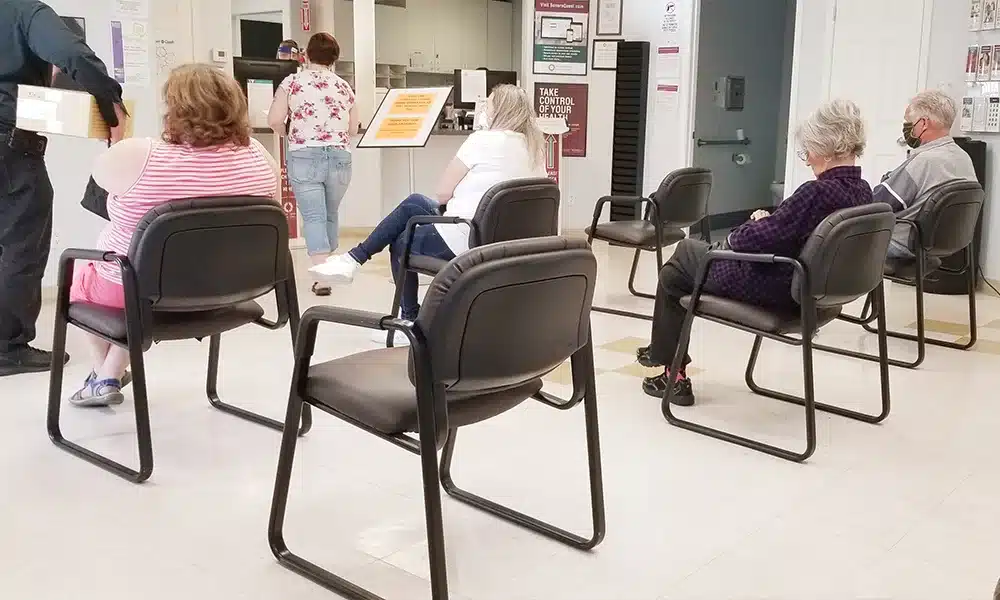
“Infection control seating for clinics” usually comes down to two things: surfaces that can be cleaned frequently, and designs that don’t collect grime. It’s easy to focus on upholstery alone, but chair detailing matters just as much. Deep seams, heavy tufting, exposed timber edges, and fiddly crevices may look attractive in other sectors, but in a GP waiting room they can become a daily frustration.
A practical GP chair profile tends to be simpler: smoother surfaces, minimal stitching, and sensible clearances around legs so floors can be cleaned thoroughly. If your cleaning regime relies on frequent wipe-downs, you want finishes that stay stable over time—so you’re not replacing furniture prematurely because it’s gone tacky, cracked, or permanently stained.
GP waiting room chairs that are easy to clean
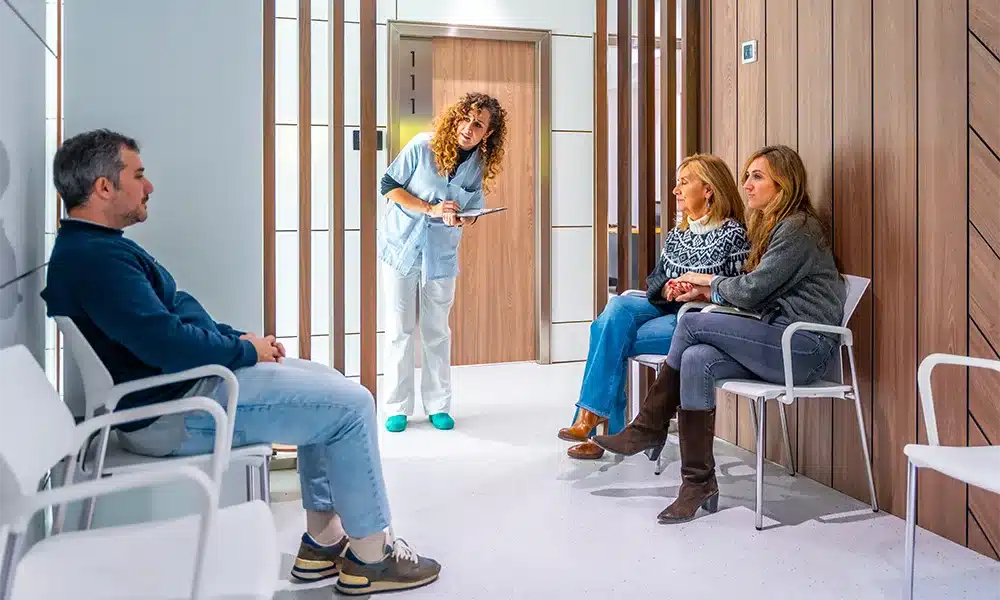
“Easy to clean” isn’t just a tick-box. It’s how quickly your team can restore the room between rushes without leaving visible marks or missed areas that undermine confidence. Patients notice when chairs look tired or difficult to keep clean—and in healthcare, visual reassurance matters.
Look for seating where the contact points are predictable and robust: seat faces, arm tops, and back panels that can handle repeated cleaning. In very high-use zones (or where quick turnaround is critical), hard-surface options can be a sensible part of the mix—especially if you’re balancing hygiene, budgets, and replacement cycles.

Upholstered vs wipeable seating for GP surgeries
Most GP practices want warmth: a waiting room that feels human, not institutional. Upholstery helps with that, but only if it performs in a healthcare cleaning environment. The question isn’t “fabric or vinyl?” so much as “how will this look after six months of real cleaning?”
For many surgeries, the best answer is wipeable upholstery chosen carefully—matte finishes, calming tones, and a feel that’s reassuring rather than shiny or slippery. Where you do use woven textiles, it’s usually in lower-risk zones or as limited accents, selected specifically for durability and maintenance. The goal is a room that looks calm and welcoming, while staying operationally realistic.
Crib 5 healthcare seating and compliance context
GP procurement often sits alongside wider public-sector expectations around fire safety and documentation—particularly when re-covering seats, mixing new and existing furniture, or refurbishing older pieces. We won’t get into detailed regulations here, but it’s worth being clear that upholstery choices can affect compliance conversations and replacement decisions.
For a practical overview of Crib 5 context and how materials and re-covering can intersect with compliance, see Fire safety & Crib 5 regulations for hospitality seating. While written for hospitality, the fire-safety and documentation principles are relevant to any contract upholstery specification.
Seating layouts for small GP waiting rooms (without blocking circulation)
Small waiting rooms aren’t just “small”. They’re dynamic spaces where people enter, queue, sit, stand, and move—often with prams, wheelchairs, walking frames, or carers at their side. If the layout doesn’t protect circulation, the room feels stressful even when it isn’t full.
A strong plan starts by protecting routes: entrance to reception, reception to clinical corridor, and a clear turning space that doesn’t become “temporary chair storage” when the room is busy. In tighter footprints, fewer seats can actually increase functional capacity, because you avoid bottlenecks and reduce the need for people to squeeze past each other. A waiting room that feels spacious tends to feel calmer.

How many chairs should a GP waiting room have?
This is one of the most common questions—and it’s often asked in the wrong way. The best number of chairs is the number you can support without collapsing circulation at peak time. If you over-pack seating, you increase noise, reduce accessibility, and make queues spill into the seating zone. In practice, that can create more complaints than having “one seat fewer”.
A practical approach is to base capacity on the busiest predictable part of your day (often morning peaks) and then build in flexibility: one or two spaces that can remain clear for wheelchairs/prams, and a layout that still works when one chair is temporarily removed for cleaning or maintenance. If you want to reduce crowding without losing perceived comfort, arms and spacing help define personal space and reduce “seat-hopping”.
Accessible seating for GP reception areas: arms, heights and confidence
Accessible seating in primary care is not a specialist add-on—it’s core. Arms can make a significant difference to patient confidence by supporting sit-to-stand, especially for older patients or anyone in discomfort. They also help with personal space in mixed-use waiting rooms, reducing the feeling of being “packed in” when the room is busy.
Seat height matters as well. Very low lounge seating can look stylish, but it can be challenging for mobility-limited patients and slows turnover when people struggle to rise quickly. In a GP setting, “upright comfortable” often wins: supportive posture, stable frames, and a seat height that feels easy and safe.
Practical reception-area planning and queue behaviour
Reception isn’t just a desk—it’s a behaviour magnet. Where you position seating affects where people stand, how they form queues, and whether patients can check in without feeling exposed. If seating creeps too close to the reception line, you’ll see awkward hovering, blocked pathways, and frustrated shuffling.
Good GP reception seating design supports a clear “standing zone” for check-in and a clear “sitting zone” for waiting. If your room regularly experiences queue spillover, consider placing a small number of robust chairs slightly away from the desk—enough that people don’t cluster right at reception, but close enough that those who need to sit while waiting to speak can do so without feeling stranded.
Durable seating for high footfall clinics
GP waiting rooms are hard on furniture. The wear pattern is predictable: the front seat edge, arm tops, and the seat nearest the entry points get hit first. That’s why domestic-grade furniture often fails quickly—frames loosen, joints rack, and upholstery shows every wipe.
Contract seating built for medical practices should prioritise stable frames, durable finishes, and upholstery that tolerates frequent cleaning without cracking or degrading. This is where the “true cost” of waiting room seating shows up: buying cheaper pieces that need replacing early is rarely cheaper once you factor disruption, procurement time, and the impact on the patient experience.
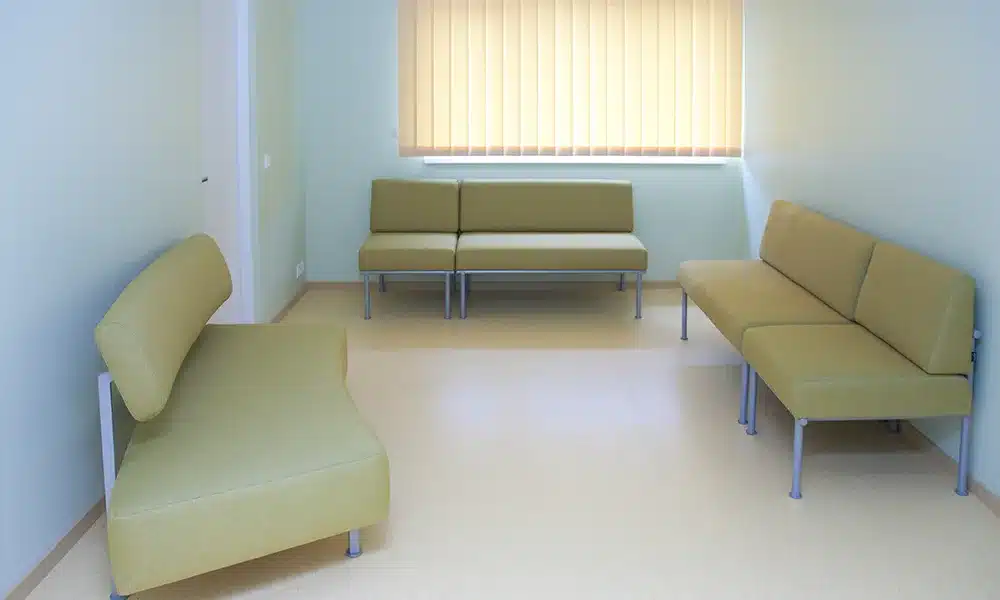
Calming waiting room seating for anxious patients (without turning it into a lounge)
Patients don’t just sit—they scan. They read the room for cues: is it clean, organised, welcoming, and professional? A calm aesthetic helps reduce perceived wait stress, but you don’t need hotel-lobby styling to get there.
In GP environments, calm usually comes from consistency and restraint: a limited palette, a small number of chair styles, and finishes that feel modern and well-kept. Comfort should be expressed through supportive shaping and quality materials, not deep cushions and sprawling layouts. The room should say “you’re looked after here” without encouraging lingering or turning the waiting area into an informal breakout lounge.
NHS waiting room seating: balancing budgets with lifecycle value
Whether you’re procuring for NHS estates or private primary care, budget pressure is real. The trick is to separate “unit price” from “lifecycle cost”. A chair that lasts and cleans well for years, looks presentable, and doesn’t wobble after heavy use can be a better financial decision than a cheaper chair that needs frequent replacement or repairs.
If you’re working across multiple sites, standardising a small range of dependable chair types (with a controlled set of finishes) can make maintenance and future top-ups easier. It also keeps the visual experience consistent for patients, which matters in community healthcare environments.
Refreshing worn seating: when re-upholstery makes sense
Sometimes you don’t need to rip everything out. If the frame is still sound but the covers are split, stained, or no longer cleanable to your standard, a planned refresh can be the most practical route—especially for phased upgrades or when you need to minimise disruption.
This approach works best when you’re upgrading to more appropriate wipeable finishes or restoring a consistent look across a reception that has gradually become a mix of mismatched seats. If you’re considering a lifecycle refresh, our Booth & banquette seating re-upholstery services page outlines how refurbishment can bring tired seating back up to spec.
Related healthcare environment: dental vs GP waiting rooms
GP and dental waiting rooms share hygiene requirements and patient anxiety considerations, but the behaviour patterns can differ—particularly around footfall intensity, mixed needs, and queue dynamics. If you’re specifying across multiple healthcare settings, it can help to compare the differences so you don’t copy-and-paste a solution that only works in one context.
You may also find our Dental practice waiting room furniture page useful as a related reference point.
Let’s plan seating that works like a GP waiting room should
Want GP waiting room seating that stays clean, feels calm, and keeps circulation clear at peak times?
Share your floor plan (or a few measurements), typical busy periods and the look you’re aiming for, and we’ll recommend practical contract seating options that suit primary care realities.
Start with our Public & healthcare furniture range, or browse Chairs & stools to see robust seating styles that work well in high-footfall clinics.
- sales@hcfcontract.co.uk
- 01708 331757
GP Clinic Waiting Room FAQs
See Our Other Inspiration Posts and Guides