Dental Practice Waiting Room Furniture for UK Clinics
A dental waiting room is its own environment. Dwell times are often short, but emotions can run high: patients arrive anxious, scan the room for cues, and want to feel looked after without feeling “settled in” for too long. That changes what “comfortable” means. The best dental practice waiting room furniture supports calm, quick turnover, easy cleaning, and clear circulation—without the loungey softness that encourages lingering.
This page focuses specifically on dental waiting room furniture and, in particular, dental practice waiting room seating: what to specify, how to plan layouts in small spaces, and how to balance infection control with a welcoming look that suits UK clinics. If you’re exploring broader options across public-sector environments, start with our Public & healthcare furniture range.
What makes dental waiting rooms different?
Dental practices typically operate in bursts—arrival, check-in, short wait, call through—so seating needs to be comfortable for minutes, not hours. In practical terms, that usually means supportive posture, sensible seat heights, and arm details that help patients sit down and stand up confidently, especially for older patients or those who are nervous and physically tense.
There’s also a behavioural layer. A waiting room that feels too “cosy” can increase dwell time and make congestion worse at peak periods. But a clinical-feeling room can amplify anxiety. The sweet spot is a calm, reassuring space where seating looks professional and warm, but is clearly built for healthcare practicality.
Best seating for dental waiting rooms: what to prioritise
When specifiers ask us about waiting room seating for dental practices, we usually start with five priorities: posture support, cleanability, durability, accessible layouts, and visual calm. The key is that each priority affects the others—particularly hygiene choices (materials) and the overall “feel” (comfort and aesthetics).
From a product standpoint, most clinics land on a mix of commercial chairs (often with arms) and a small amount of softer, welcoming pieces—chosen carefully so they don’t become maintenance magnets. If you’re comparing commercial categories, browse our Chairs & Stools options as a starting point for contract seating that’s built for daily footfall.
Upholstered vs wipeable seating for dental clinics
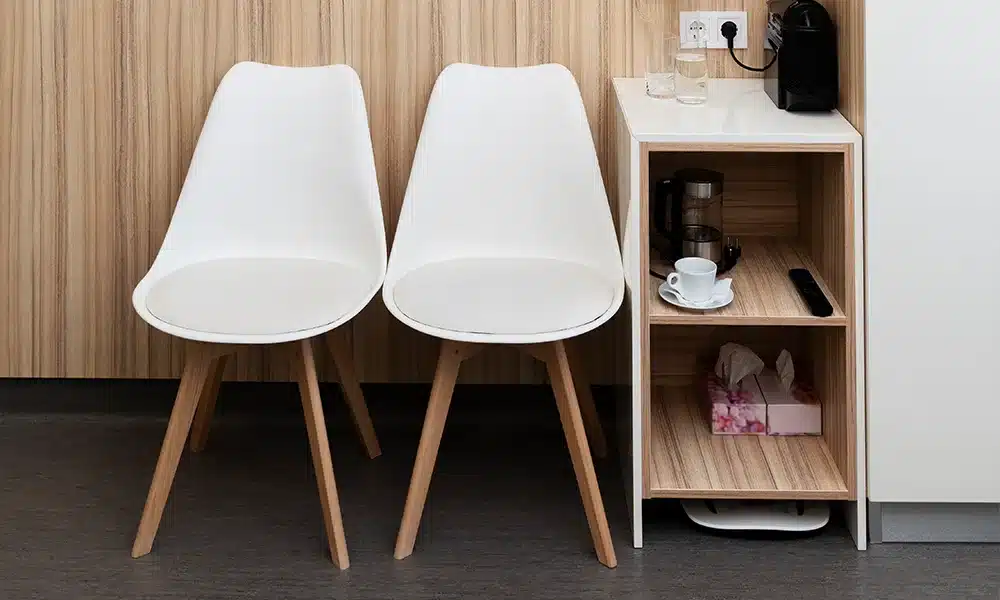
The “upholstered vs wipeable” question is where most dental reception seating decisions are won or lost. Upholstery can look warm and premium, but if it’s absorbent, textured, or prone to staining, it’s not the right fit for a high-clean environment. Conversely, fully wipeable seating can look harsh if it’s overly shiny, too “boardroom”, or colour-chosen without care.
For most UK clinics, the practical answer is wipeable upholstery that still feels soft—typically contract faux leather, vinyl, or performance-coated fabrics specified for healthcare use. If your scheme needs a softer aesthetic, it’s still possible: choose matte finishes, calm colours, and seats with considered shaping so the room feels welcoming without relying on plush, deep foam.
Dental waiting room seating that is easy to clean
“Infection control seating” isn’t just about the surface. It’s also about construction details that don’t trap debris and don’t punish your team during busy turnarounds. In real clinics, the biggest cleaning frustrations tend to be:
- deep seams/tufting that hold dust and crumbs
- open joins where dirt accumulates
- exposed timber edges that scuff and stain
- low seats that encourage “perching” on the edge (and wear the front fast)
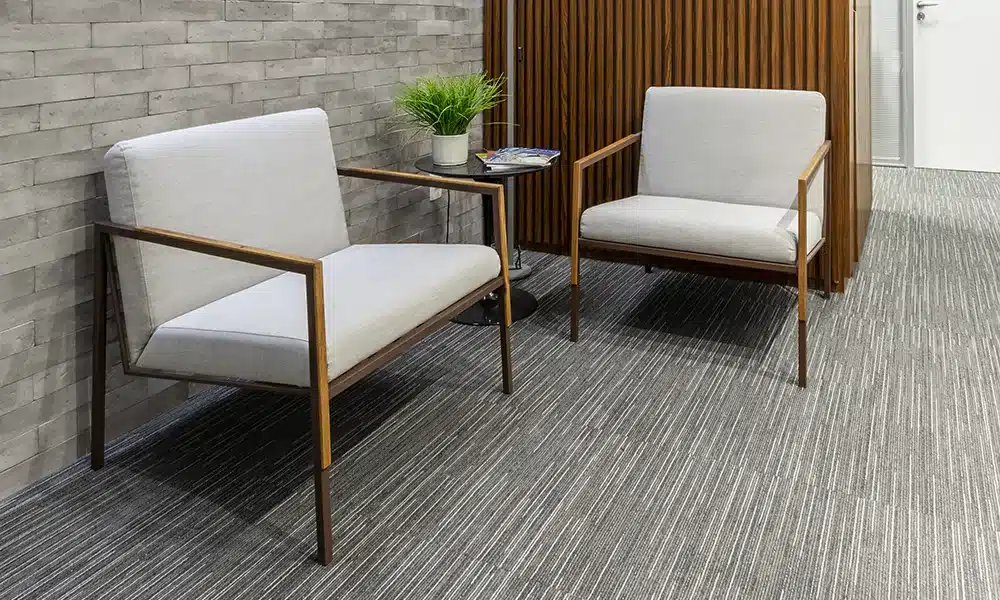
Easy-clean dental waiting room chairs typically have smoother profiles, minimal creases, and sensible clearances around legs so staff can mop without gymnastics. If you’re leaning toward hard-surface seating for maximum wipe-down speed, look at robust options like Polypropylene chairs for durable, low-maintenance performance in busy environments.

Crib 5 waiting room seating and fire safety context
Even in a dental setting, procurement teams often need clarity on fire performance—especially when replacing covers, reupholstering, or specifying seating that sits in reception routes. While we’re not diving into detailed regulations here, it’s sensible to align your finishes with contract expectations and document what’s been chosen.
If you’re reviewing materials, cleaning products, or considering cover replacement, our Fire safety & Crib 5 regulations for hospitality seating page gives practical context on Crib 5 and how specification choices can affect compliance conversations.
How to choose waiting room furniture for a dental practice
The easiest way to get the decision right is to work backwards from how your waiting room operates on a typical day:
Start with your peak-time flow. Where do patients queue? Where do buggies, wheelchairs, and coats go? Where does the door swing? You’re aiming for a layout that looks calm even when it’s busy—which usually means fewer “loose items” and more deliberate zones.
Then decide what you want your seating to do. In dentistry, the seating job is often: reduce visible anxiety, keep patients comfortable briefly, and keep the room moving. That leads to chairs that feel supportive and reassuring, but don’t invite sprawling or long stays.
Finally, pick finishes that match cleaning reality. If you know wipes are used multiple times a day, specify surfaces and edge details that won’t crack, peel, or go sticky over time.
Seating layouts for small dental waiting areas
Most dental receptions are tighter than people expect—especially once you factor in door clearances, a pushchair, and a patient who prefers personal space when anxious. In small rooms, “more chairs” can actually reduce capacity, because circulation collapses and the room feels chaotic.
A strong layout normally includes a clear main route from entrance to reception, plus a secondary route from seating to treatment corridor. Avoid creating bottlenecks that force patients to brush past each other, and keep at least one flexible space that can accommodate a wheelchair without having to drag furniture around.
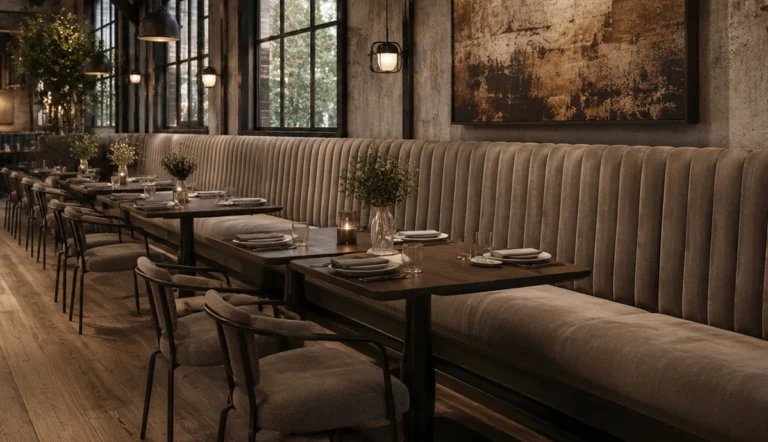
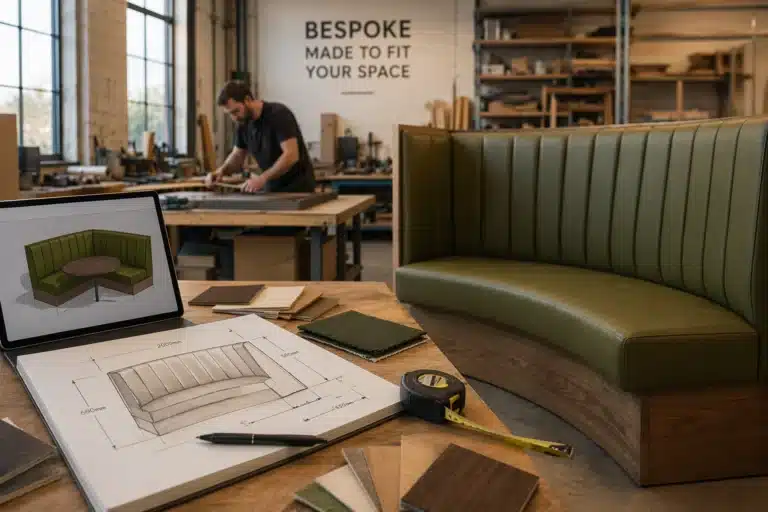
Where wall space allows, a fixed run can keep the middle of the room open. While many clinics prefer loose seating, there are situations where a fixed banquette-style run works well for maintaining a tidy footprint—especially in narrow rooms. If you’re exploring fixed seating as a replacement solution, our Booth & banquette seating category shows the type of contract-grade builds we manufacture and supply.

How many chairs should a dental waiting room have?
This is a capacity question and a comfort question. You want enough seats to handle your predictable peak (often early mornings, after school, and pre-lunch), but not so many that the room feels crowded, noisy, and stressful.
A practical approach is to plan for your “typical busiest 15 minutes” rather than your absolute worst case. If you oversupply seating, people sit closer together, anxiety rises, and you lose the calm you were trying to create. Many clinics do better with fewer, better-placed chairs and one or two “awkward scenario” spaces (wheelchair, buggy, patient who needs distance).
If you’d like, we can translate your appointment rhythm into a sensible seat count and a layout that protects circulation—because in dental receptions, the route matters just as much as the chair.
Dental waiting room chairs: arms, heights and patient confidence
For dental waiting area chairs, arm choice is more than style. Arms help people lower themselves and stand up without wobble—useful for older patients, those with mobility concerns, and anyone feeling tense. They also subtly define personal space, which can reduce fidgeting and improve perceived calm.
Seat height matters too. Very low lounge seating looks nice in brochures but can be a poor fit for quick turnover and accessibility. A supportive, “upright comfortable” sit is usually the target for dental reception seating: comfortable enough to reduce agitation, upright enough to keep people ready to move when called.
Durable seating for busy dental practices
Dental practices can see heavy daily use, and the wear pattern is predictable: front edges, arm tops, and the seat area closest to the entrance tend to go first. That’s why “domestic-looking” furniture often fails early—frames loosen, finishes scuff, and upholstery shows every wipe.
Contract seating should be specified with high-traffic reality in mind: robust frames, stable joinery, and covers that are designed to be cleaned repeatedly without degrading. If you’re sourcing upholstered options, categories like Made to order chairs can be useful when you need coordinated finishes, brand colours, or a specific look with contract performance expectations.
Comfort without encouraging overly long stays
It’s a subtle design goal, but it’s one of the most important in dentistry. You want patients to feel reassured, not rushed—yet the space should still communicate “efficient and organised”. That’s why we often recommend comfort through support and material quality, rather than deep, sink-in cushions.
Visually, calm comes from consistency: one main chair style, one or two accent pieces at most, and a limited colour palette. If you choose softer seating, pick shapes that still feel upright and “reception appropriate”. A small number of welcoming lounge-style seats can work in larger practices, particularly if you want a premium first impression; our sofas, tubs and armchairs category is one reference point for that style of reception soft seating in contract environments.

When to refurbish vs replace dental reception seating
If your existing dental practice furniture still has a sound frame but looks tired, refurbishment can be the most cost-effective, least disruptive route—especially when the room layout works and you simply need a reset on hygiene and appearance. Replacing covers can also be a smart way to align to wipeable performance or update the look during a phased fit-out.
When covers are split, foam is collapsing, or the surface is no longer cleanable to your standard, it’s usually time to act. In many cases, reupholstery restores the “new” feel without disposing of the whole unit, which can be a win for budgets and sustainability.
For clinics considering this route, our Booth & banquette seating re-upholstery services page explains how we handle worn or damaged seating and what to expect from the process.
A practical spec checklist for procurement and fit-out teams
When you’re procuring commercial seating for dental practices, align stakeholders early—practice manager, contractor, designer, and whoever owns infection control. A quick, shared spec avoids costly rework and “but we assumed…” moments.
- Confirm wipe-down frequency and products used (so finishes don’t degrade)
- Specify seat height/arms with accessibility in mind
- Protect circulation routes first, then add seats
- Choose calm, clinic-appropriate colours and textures
- Document fire performance expectations alongside finishes
If you’re refurbishing alongside buying new, it can help to consider the waiting room as a single package: new seats where performance is critical, refurbishment where frames are still strong, and a consistent finish that ties it together.
Related: GP and Clinic Waiting Rooms
If you’re planning across multiple sites or a mixed healthcare estate, you may also want to compare what changes (and what stays the same) in broader clinical settings. Our GP & clinic waiting room seating page is a useful companion for cross-setting considerations without losing the dental-specific focus here.
Need dental waiting room seating that looks calm, cleans fast, and stands up to daily footfall?
Tell us your room size, peak patient flow and preferred look, and we’ll recommend contract-grade options with wipeable finishes and practical layouts that keep circulation clear.
Get started: Enquire for a quote or share your plan and we’ll advise on the best approach — whether that’s replacement seating from our Booth & banquette seating range or refreshing existing units via our Booth & banquette seating re-upholstery services.
- sales@hcfcontract.co.uk
- 01708 331757
UK Clinic Waiting Room Furniture FAQs
See Our Other Inspiration Posts and Guides