Lounge & High Bar Furniture for Pubs Buying Guide
The pubs that perform best over long trading days rarely rely on one “type” of seating. They give guests choices: somewhere relaxed to settle in for a second drink, somewhere sociable to perch near the bar, and clear pathways so staff aren’t squeezing past knees all night. That’s exactly where lounge furniture for pubs and high bar furniture for pubs comes in. When you plan pub lounge seating alongside high bar seating for pubs, you create distinct zones that support different dwell times, group sizes and moods, without needing a bigger footprint.
This guide focuses on lounge seating areas in pubs (soft seating, armchairs, sofas and low tables) and poseur/high bar zones (bar-height tables and stools) and how to combine them into practical pub furniture layouts. We’ll cover high bar seating vs lounge seating in pubs, where to place high bar tables in a pub, what height are high bar tables in pubs, upholstery performance and cleaning, and how lounge seating differs from both fixed booth seating and dining seating.
Why lounge and high-bar zones work so well in modern pubs
Lounge and poseur areas do different jobs, and that’s the point. Pub lounge furniture supports slower, comfort-led occasions: catch-ups, pre-dinner drinks, a quiet pint after work, or cocktail rounds where guests linger. High-bar and poseur zones encourage a more social, flexible vibe — guests can stand, perch and move more freely, which keeps the room energetic on busy nights.
From an operator’s perspective, this mix also helps you manage “dwell time economics”. If you only offer dining-height seating, you’re often asking every guest to sit for longer than they intend, which can block circulation and slow service. Adding poseur furniture for pubs gives you a natural buffer zone near the bar for quicker stays, while your lounge area becomes a destination for longer, higher-value visits.
If you’re building an overall scheme, it helps to treat lounge + high bar as part of your wider bar & pub furniture plan rather than an afterthought.

Best lounge furniture for pubs: what “comfort” really means
When people search for the best lounge furniture for pubs, they often mean “soft”, but real comfort is about proportions and support. Seat height, seat depth and dining chair back angle all affect how long people are happy to stay. A pub chair that looks plush but forces guests into a slouch will feel tiring after 30 minutes; a well-shaped lounge chair keeps posture comfortable even when the pub gets busy and people are leaning in to talk.
For most pubs, the core pieces are pub lounge chairs, plus occasional pub armchairs and sofas for groups. These are the anchors of your lounge zone, and they work best when paired with low pub tables that make drinks and small plates feel easy, not awkward. HCF Contract Furniture’s Chairs & Stools include Luxurious Armchairs and Sofas, Tubs and Armchairs specifically positioned for lounges and premium hospitality settings.
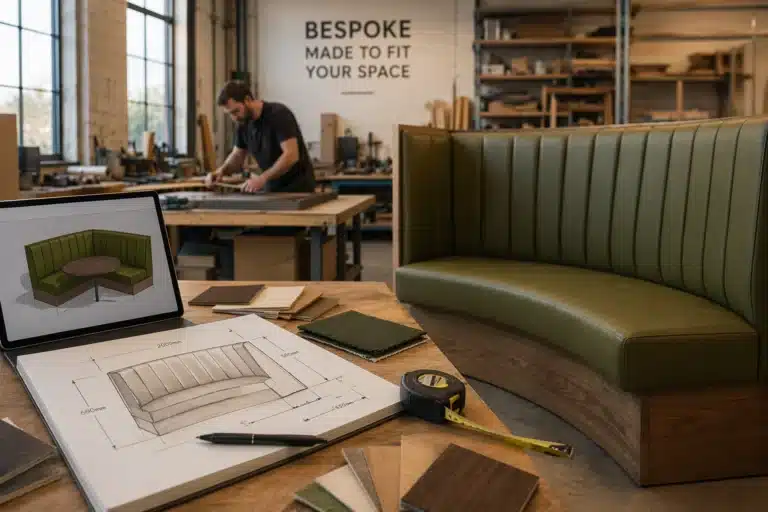
A good starting point is browsing our sofas, tubs and armchairs hospitality furniture category to get a feel for silhouettes that suit pubs — from compact bespoke tub chairs for smaller corners to more generous lounge seating for destination areas.
How to create a lounge area in a pub without losing covers
The most successful lounge seating areas in pubs aren’t huge — they’re carefully placed. If you’re planning pub lounge seating for small spaces, start with corners, window bays and quieter edges of the room. These spots already feel slightly sheltered, which makes them ideal for soft seating. The trick is to keep the footprint tight enough that you don’t choke circulation or block the flow to toilets, exits or the bar.
Think in clusters: one sofa or two armchairs, one low table, and clear space around the group so staff can pass without constantly apologising. If you’re converting former dining areas into lounge zones, be wary of pushing soft seating too close together; comfort collapses quickly when guests feel they’re sharing personal space with the next group.
Where a lounge area sits within your overall layout matters too. In a mixed pub, lounge zones usually perform best slightly away from the busiest bar pinch point, while still within sight of atmosphere. If you want the seating to support food service as well, keep your lounge zone close enough to staff routes that table checks feel natural — not like an afterthought.
High bar seating vs lounge seating in pubs
It’s helpful to be clear about what each zone is “for”. High bar seating for pubs is naturally more upright and social: it suits quick drinks, casual nibbling and high-energy times of day. Lounge seating is lower, softer and encourages longer stays. If you treat them as two sides of the same experience, you can guide guest behaviour without signage.
High bar and poseur zones often become your “waiting and overflow” areas at peak time—somewhere people can perch while they wait for a booth or table, or somewhere groups can land for a first round. Lounge areas, by contrast, tend to become your “second drink” zone—where people migrate once they’ve decided to stay.
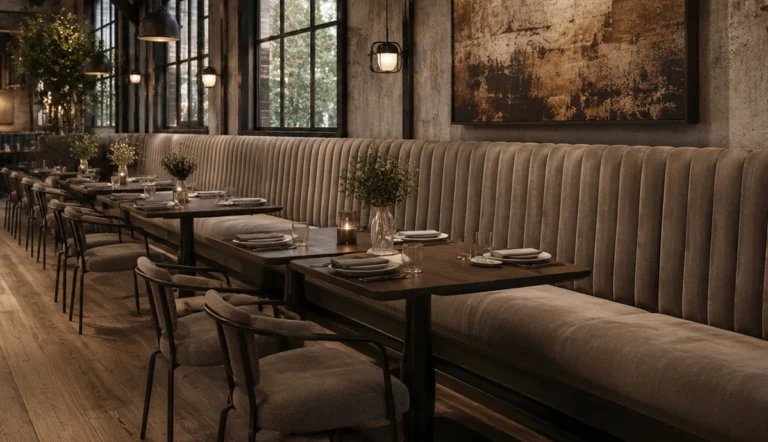
Unlike fixed booth seating, which is designed to anchor capacity, lounge and high bar contract furniture is about flexibility and mood. These zones are less about booking efficiency and more about how guests move, linger and socialise through a trading day.
For a deeper look at poseur planning, our guide on bar stools & poseur height seating is a useful companion piece.
Where to place high bar tables in a pub
If you’re asking where to place high bar tables in a pub, the short answer is: near energy, not in it. High tables work brilliantly along windows, perimeter walls, near the bar (but not blocking the ordering lane), and in transitional spots between zones. They’re especially effective in pubs with narrow floorplans, because they let you add perching capacity without forcing diners and drinkers into the same space.
A practical way to think about it is “edges and buffers”. Use high bar tables and high round pub tables on the edges to pick up spare metres, or use them as buffers between your main bar area and lounge seating so the room feels layered rather than flat. This also helps with circulation and flow between lounge and high bar areas, because guests naturally funnel into predictable routes instead of cutting between sofa clusters.

What height are high bar tables in pubs?
For most pubs, dining height sits around 730–750mm, while poseur or bar height is typically around 1050–1100mm. The important thing is to pair your table height with the right stool height and footrest position, so guests don’t feel like they’re climbing or dangling. For high poseur style layouts, aim for round tables instead of square tables.
At HCF Contract Furniture, our bases commonly come in three height families—coffee, dining and poseur—so you can keep your lounge tables low, your dining tables standard, and your high bar tables consistent across the scheme.
If you’re working across multiple zones, it’s worth choosing tops from the same family so finishes stay consistent; our table tops category includes easy-clean laminates, compact laminates and premium surfaces all in round tables and square tables, suited to pubs and bars.
Choosing stools and bar-height furniture that stays comfortable
In high-energy pubs, stools get a bad reputation for comfort—but that’s usually because they’re chosen for looks over ergonomics. The right stool has a supportive back (where needed), a usable footrest, and a stable frame that doesn’t feel like it’s sliding away when someone shifts their weight.
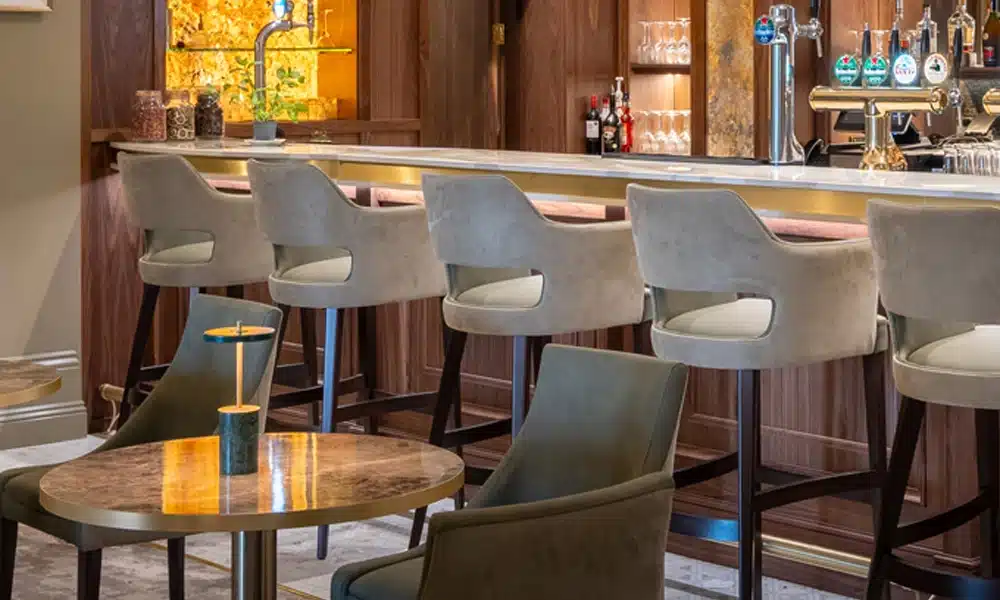
Our bar stools category covers commercial bar stools and counter stools designed for pubs, cafés and bar areas, with wood, metal and upholstered options. The best approach is to match stool type to dwell time: backless perches where you want movement and fast turnover, and backed stools where you want guests to stay and order more.
You can explore suitable models within our Bar Stools range to see options that work with both poseur zones and bar-front seating.
How to zone a pub using furniture without making it feel chopped up
When operators think about zoning, they sometimes worry it’ll make the room feel smaller. Done right, it does the opposite: it adds depth. To zone a pub using hospitality furniture, focus on a few clear “characters” in the space rather than lots of micro-zones.
A simple, high-performing mix is:
- A lounge zone (soft seating + low tables) for long dwell times
- A poseur zone (high bar tables for pubs + stools) for social flow
- A dining zone (standard height) for food-led service
The key is consistent finishes across zones—repeat timber tones, metal colours and upholstery so it feels cohesive even when the hospitality furniture types change.
If your pub is strongly food-led, it also helps to align dining furniture with your lounge choices, so guests don’t feel like they’re moving between two different venues. Our guides to restaurant chairs & dining seating and restaurant tables & table bases can help you keep proportions and finishes consistent.
Best seating for pubs with long dwell times
If your concept relies on cocktails, premium spirits, sport viewing or live music, you need best seating for pubs with long dwell times. That usually means more “proper” lounge seating: supportive armchairs, sofa seating for groups, and tables that fit the way guests actually drink and snack (not tiny perches that feel precarious with glassware).
It also means thinking about staff workflow. Lounge seating should still be serviceable. Choose table heights that work for clearing, and allow enough space around sofa clusters for staff to step in without interrupting the group.
In late-night venues, it’s also worth thinking about durability: strong frames, replaceable glides, and upholstery specified for commercial use so you’re not constantly patching scuffs and tears.
Best upholstery for pub lounge seating and how to maintain it
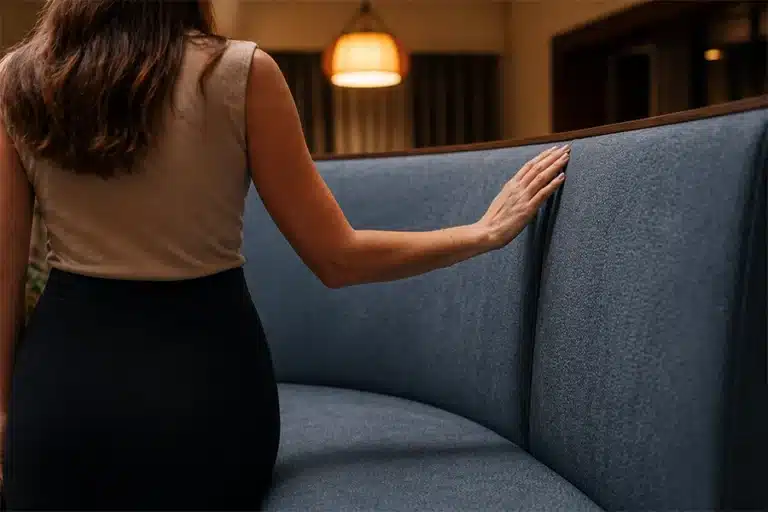
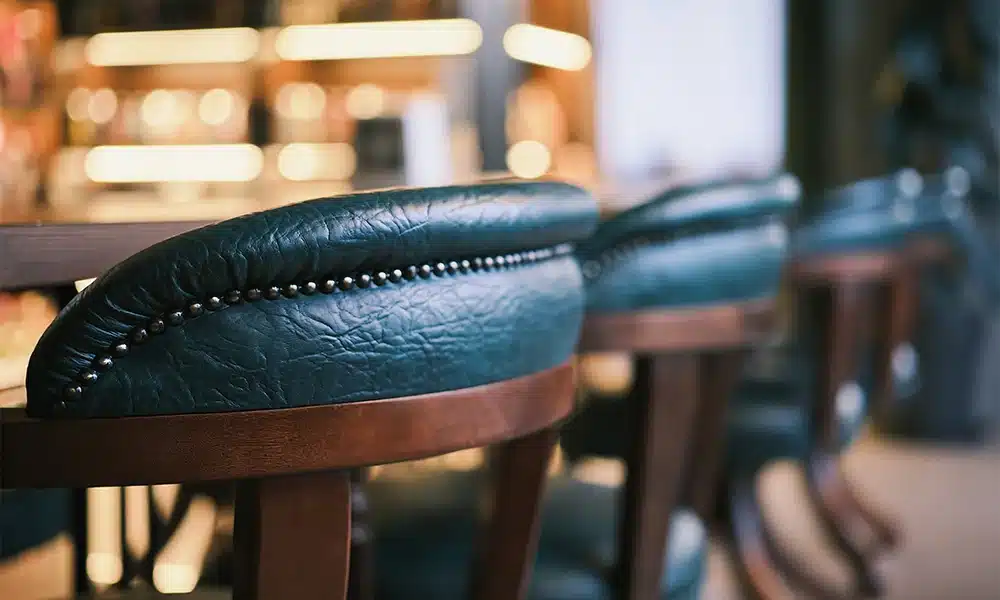
Best upholstery for pub lounge seating is always a balance between feel and cleanability. In high-spill pubs, wipeable contract faux leathers and contract vinyls are often the simplest option; in premium cocktail bars, textured performance fabrics can look fantastic while still being practical—provided they’re genuinely contract-rated.
Maintenance should be planned from day one. If you want to know how to maintain lounge furniture in pubs, build routines around quick daily wipe-downs, appropriate cleaning products for your chosen material, and regular checks for loose feet or fixings. A well-made piece can often be reupholstered or refreshed far more easily than a cheap domestic sofa, which is one reason contract specification pays off over time.
For fire compliance, we recommend reading our guide on fire safety & Crib 5 regulations for hospitality seating.
Lounge seating vs booth seating in pubs (and where each belongs)
Booth and banquette seating is brilliant for structure and capacity, but lounge seating does a different job. In simple terms, booths are great for defined, bookable “tables”; lounge seating is great for relaxed, unhurried drinking and socialising. Many pubs use both: booths around the perimeter to protect covers, and lounge seating in quieter corners to encourage longer stays.
If you’re actively comparing the two, our dedicated page on bar & pub booth seating explains when fixed banquette seating is the better backbone.
Bringing it outdoors: extending lounge and poseur zones outside
If you have a terrace, pavement licence or beer garden, extending your lounge and poseur thinking outdoors can lift revenue in shoulder seasons. Outdoor lounge zones need different specifications—weather-resistant frames, cushions and fabrics—and a layout that still feels “zoned” rather than scattered.
HCF’s outdoor collection includes sofa sets designed for bars and lounge areas, plus broader outdoor furniture options for complete terrace schemes.
Ready to plan your pub lounge and high bar zones?
If you’re redesigning a corner, refreshing tired seating or building a full scheme, we can help you plan lounge seating areas and poseur zones that look right, feel comfortable, and work in real service.
Explore our luxurious armchairs and bar seating ranges, or talk to the HCF team about a layout that balances long dwell-time comfort with the energy of high bar furniture.
- sales@hcfcontract.co.uk
- 01708 331757
Lounge and High Bar Furniture FAQs
See Our Other Inspiration Posts and Guides