Corner Booth Seating Layouts: Best Configurations for Restaurants & Cafés

Corners are one of the most underused areas in restaurant and café layouts. They’re often left as dead space or filled with awkward table arrangements that don’t quite work. Yet, when planned properly, corner booth seating can turn these overlooked areas into some of the most valuable seats in your venue.

Banquette and booth seating naturally lend themselves to corners. By wrapping seating around walls, you can unlock space that would otherwise go unused—while also creating comfortable, defined seating zones that guests are drawn to.

If you want a broader understanding of how booth seating works across layouts, start with The Ultimate Guide to Commercial Booth & Banquette Seating.

Why Corner Booth Seating Is So Space-Efficient

Corners are difficult to use with loose tables and chairs. Standard layouts often leave gaps, create awkward circulation routes, or result in underperforming seating areas.

Corner banquette seating solves this by working with the shape of the room rather than against it. By fixing seating along two adjoining walls, you eliminate wasted space and create a clean, efficient footprint.

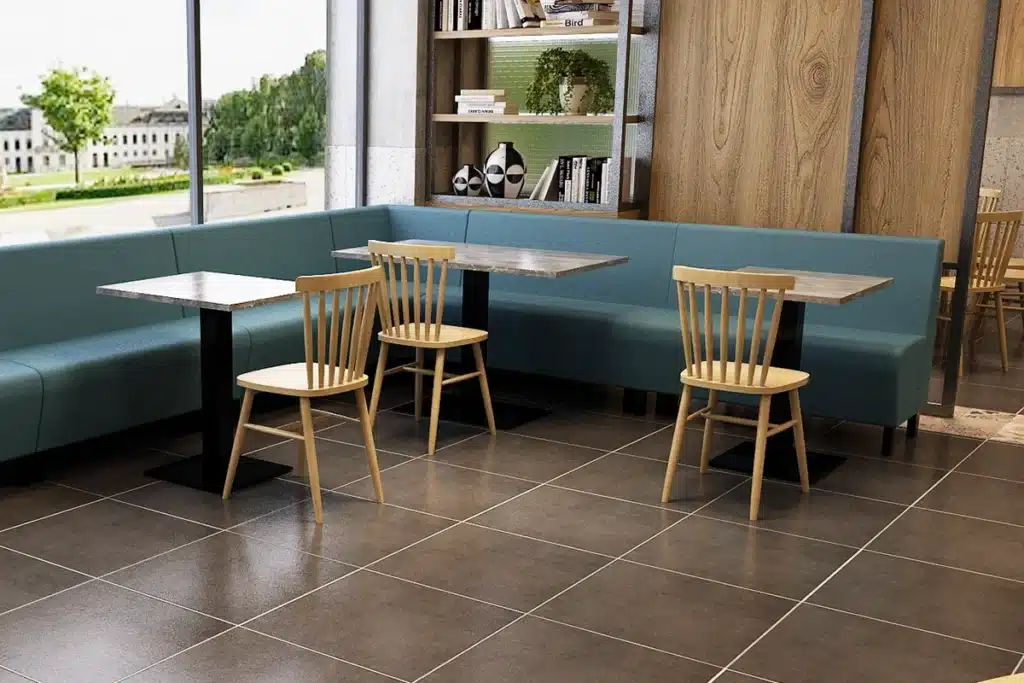
Compact corner booth seating run against a window with small dining tables and chairs opposite, showing a space-saving restaurant layout

This approach allows you to:

  • Turn unused corners into functional seating
  • Increase the number of covers without expanding the floorplan
  • Create more structured, predictable layouts


In many cases, corner seating becomes some of the most desirable space in the venue—particularly when it offers a slightly more private or enclosed feel.

L-Shaped Booth Seating: The Most Common Corner Configuration

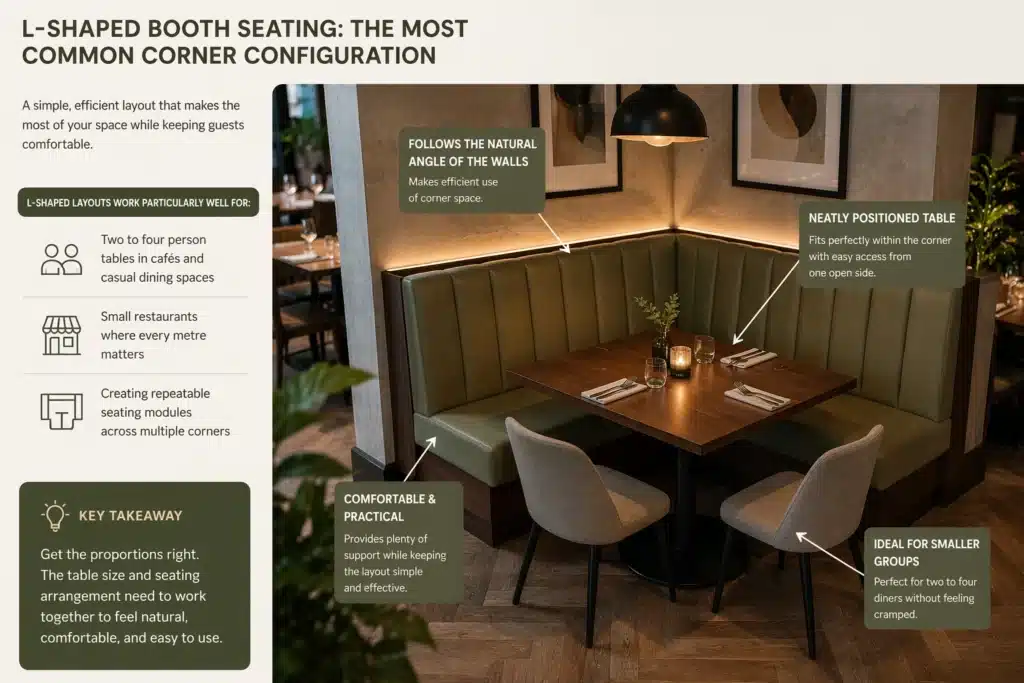
L-shaped booth seating is the most widely used corner solution. It follows the natural angle of the walls, creating a simple and effective seating arrangement.

From a layout perspective, this configuration is highly efficient. It allows you to position a table neatly within the corner while maintaining comfortable access from one open side.

Detailed annotated image on a corner booth set in a restaurant, showing a simple space efficient layout for banquette seating

L-shaped layouts work particularly well for:

  • Two to four person tables in cafés and casual dining spaces
  • Small restaurants where every metre matters
  • Creating repeatable seating modules across multiple corners


The key is ensuring the table size suits the seating arrangement. Oversized tables can make the space feel cramped, while undersized tables reduce usability. The relationship between seating and table is what determines whether the layout works in practice.

Continuous Banquette Runs Around Corners

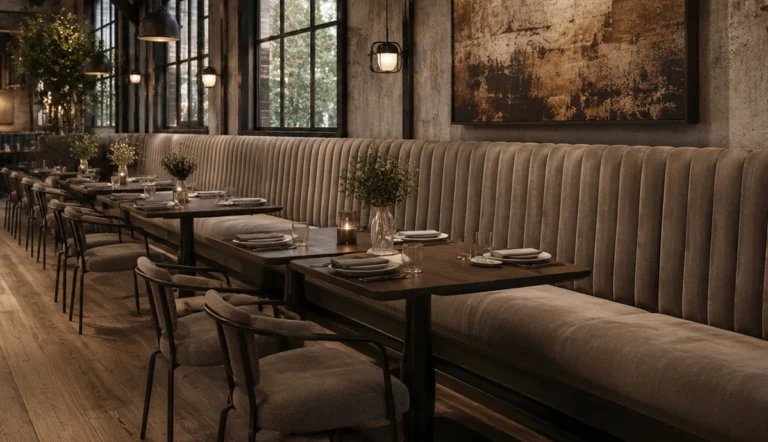
Another effective approach is to run banquette seating continuously along one wall and around the corner onto the next. This creates a seamless seating line rather than a defined “corner booth”.

This style works well in:

  • Long, narrow venues
  • Open-plan cafés
  • Spaces where you want a softer, less segmented look


Instead of treating the corner as a separate seating area, it becomes part of a larger run. This can help the space feel more open while still benefiting from the efficiency of banquette seating.

It also gives you more flexibility with table positioning. Smaller tables can be spaced along the run, allowing you to adjust the layout depending on demand.

For real-world examples of how continuous banquette layouts are used in restaurants, see Restaurant Booth Seating (UK-Made Banquette Seating for Restaurants).

Combining Corner Banquettes with Loose Chairs

Not every corner needs to be a fully enclosed booth. In many layouts, the most effective solution is a hybrid approach—corner banquette seating paired with loose chairs on the open side of the table.

This setup offers a balance between structure and flexibility. The banquette maximises space along the walls, while the chairs allow you to adapt seating for different group sizes.

It’s also one of the easiest ways to avoid a layout feeling too rigid or enclosed. The open side keeps the space visually lighter and improves accessibility for guests.

If you’re exploring this kind of mixed layout, how to mix banquette seating and loose chairs provides a deeper look at how hybrid seating works across an entire venue.

Choosing the Right Table Shape for Corner Layouts

Table shape plays a bigger role in corner seating than many people expect. The wrong choice can make even a well-designed booth feel awkward or cramped.

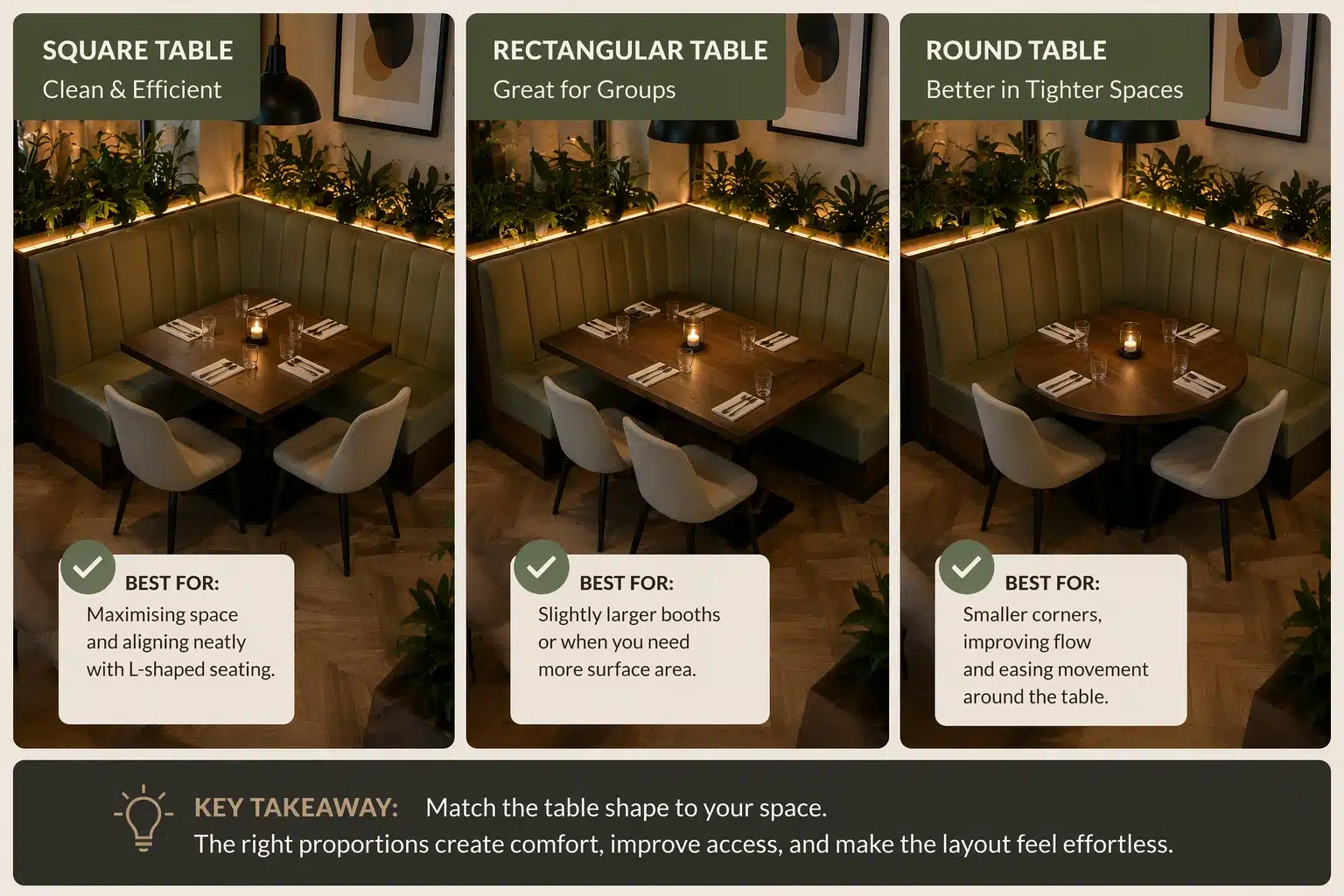
Square and rectangular tables are the most common options because they align neatly with L-shaped seating. They maximise usable surface area and fit cleanly within the corner footprint.

However, in tighter spaces, round tables can sometimes work better. They soften the layout and improve movement around the table, particularly where access is limited.

The key is to ensure there’s enough room for guests to sit comfortably without restricting access. A well-proportioned table will make the entire seating arrangement feel natural and easy to use.

Annotated image of three types of corner booth seating tables, round, rectangle or square, showing the differences of corner booth seating layouts

Avoiding Cramped or Impractical Corner Seating

While corner booth seating is efficient, it can quickly become uncomfortable if not planned carefully.

One of the most common mistakes is trying to fit too much into a small area. Overly tight layouts can make it difficult for guests to get in and out, particularly for the person seated deepest into the corner.

To avoid this, it’s important to think beyond just fitting the seating in. You also need to consider how it will be used during service.

Watch out for:

  • Tables that are too large for the available space
  • Insufficient access on the open side
  • Tight gaps that restrict movement


A slightly more generous layout often performs better in the long run, even if it means sacrificing one or two covers.

Planning for Circulation and Staff Access

Corners don’t just affect guests—they also impact how staff move through the space.

If a corner booth is positioned too tightly against a main walkway, it can create bottlenecks that slow down service. Similarly, if access to the table is restricted, clearing and serving becomes more difficult.

Good corner layouts maintain clear circulation paths around seating areas. This ensures staff can move efficiently while still allowing guests to access their seats comfortably.

It’s also worth considering how trays and plates will be handled in tighter areas. Even small adjustments to spacing can make a big difference to service flow.

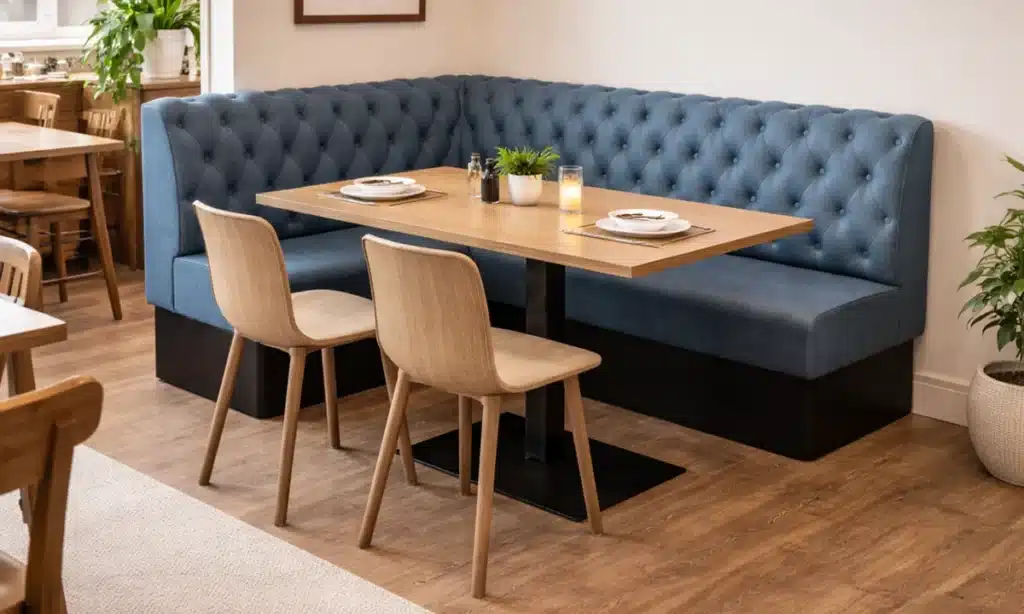
Commercial L-shaped booth seating with tufted upholstery and fixed café table in restaurant interior

Corner Booths as Premium or Private Seating Zones

One of the overlooked benefits of corner banquette seating is how it shapes the customer experience.

Because corner booths are naturally more enclosed, they often feel more private and comfortable. This makes them particularly appealing for small groups, couples or guests looking for a quieter dining experience.

In many venues, corner seating becomes some of the most requested space. Operators often use this to their advantage by positioning these areas as slightly more premium without needing to increase the physical footprint.

High-back designs or subtle zoning can enhance this effect further, helping create a more intimate atmosphere within the same layout.

Corner Seating for Small Restaurants and Cafés

In smaller venues, corner seating is rarely optional—it’s essential.

Every unused corner represents lost potential. By integrating banquette seating into these areas, you can significantly improve the efficiency of your layout without making the space feel overcrowded.

Slimline seating options are particularly useful here, as they reduce the depth of the seating while still maintaining comfort. This creates more room for circulation and additional tables.

If you’re working with a compact footprint, banquette seating for small spaces explores further ways to maximise tight layouts.

Finding the Right Corner Booth Configuration for Your Venue

There’s no single “best” corner booth seating layout. The right solution depends on your space, your service style, and how you want the venue to feel.

L-shaped booths offer structure and efficiency, continuous banquettes provide flexibility, and hybrid setups balance both.

The key is to think about how the space will actually be used. Consider how guests will access the seating, how staff will move around it, and how the layout fits into the overall flow of the venue.

When planned properly, corner booth seating doesn’t just fill an awkward gap—it becomes a valuable, high-performing part of your layout.

Planning a Corner Booth Seating Project?

Corners shouldn’t be an afterthought in restaurant design. With the right approach, they can become some of the most efficient and desirable seating areas in your venue.

By choosing the right configuration and balancing space, access and comfort, corner booth seating can help you unlock more covers, improve flow, and create a better overall dining experience.

Get in touch to discuss your drawings, timelines and budget, and we’ll help you decide which route is right for your venue.

Corner Booth Seating Layouts FAQs

What is the best corner booth seating layout?
L-shaped booth seating is the most common and efficient option, but continuous banquettes and hybrid layouts can also work depending on the space.
Is corner banquette seating good for small restaurants?
Yes, it’s one of the best ways to maximise space and use corners effectively without wasting floor area.
What table shape works best with corner seating?
Square and rectangular tables are most common, but round tables can work well in tighter spaces where movement is limited.
How do you make corner seating comfortable?
Ensure there’s enough access space, use appropriately sized tables, and avoid overfilling the area.
Can you combine corner booths with loose chairs?
Yes, this is a very effective approach. It keeps the layout flexible while still benefiting from the efficiency of banquette seating.

See Our Other Inspiration Posts and Guides

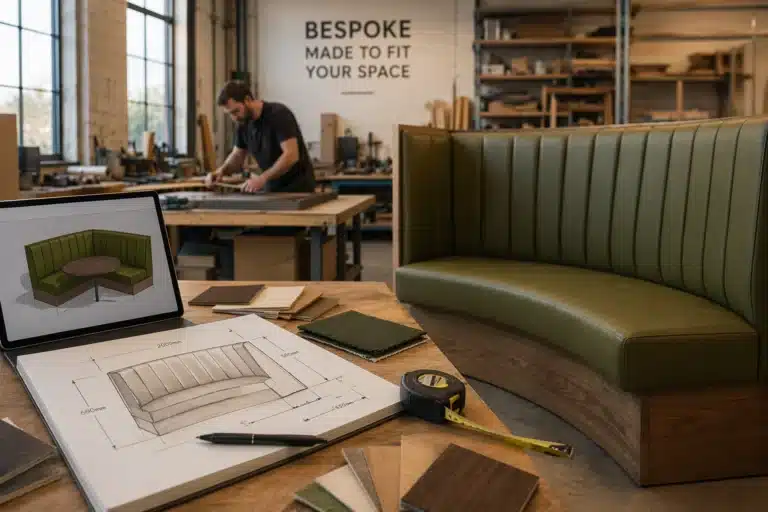
Bespoke banquette seating unit in a factory workshop, showing the breakdown of making a banquette unit
Read More
UK Cafe fixed seating run against a wall in a modern scandi style cafe, bespoke banquette manufactered by HCF Contract Furniture
Read More
A small restaurant interior with compact banquette seating and booth seating inside, showing how space can be saved with the right contract furniture
Read More
author avatar
HCF Editorial Team Editorial Team
The HCF Contract Furniture Editorial Team brings together decades of experience designing and manufacturing UK-made contract furniture for restaurants, bars, pubs, hotels and hospitality venues. All content is written and reviewed by our in-house team using real manufacturing knowledge, project experience and industry standards, including Crib 5 compliance and contract-grade specifications.

Leave a Reply

Your email address will not be published. Required fields are marked *

What are you looking for?