Booth Seating Dimensions Explained: Seat Height, Depth & Back Heights
Getting booth seating dimensions right is one of the most important, and most misunderstood, parts of planning a hospitality interior, particularly when designing commercial booth and banquette seating for restaurants and cafés.. Whether you’re specifying banquette seating for a new restaurant, refining layouts with an interior designer, or sense-checking drawings before manufacture, small dimensional decisions can have a big impact on comfort, table interaction and how long guests choose to stay.
This guide breaks down the key booth seating dimensions that matter most: seat height, seat depth and back height. Rather than focusing on buying decisions or specific models, it’s designed to give you practical sizing guidance you can apply to real projects, particularly commercial restaurant and café environments. For a broader overview of booth types, layouts and use cases, see The Ultimate Guide to Commercial Booth & Banquette Seating.
Understanding “Standard” Booth Seating Dimensions
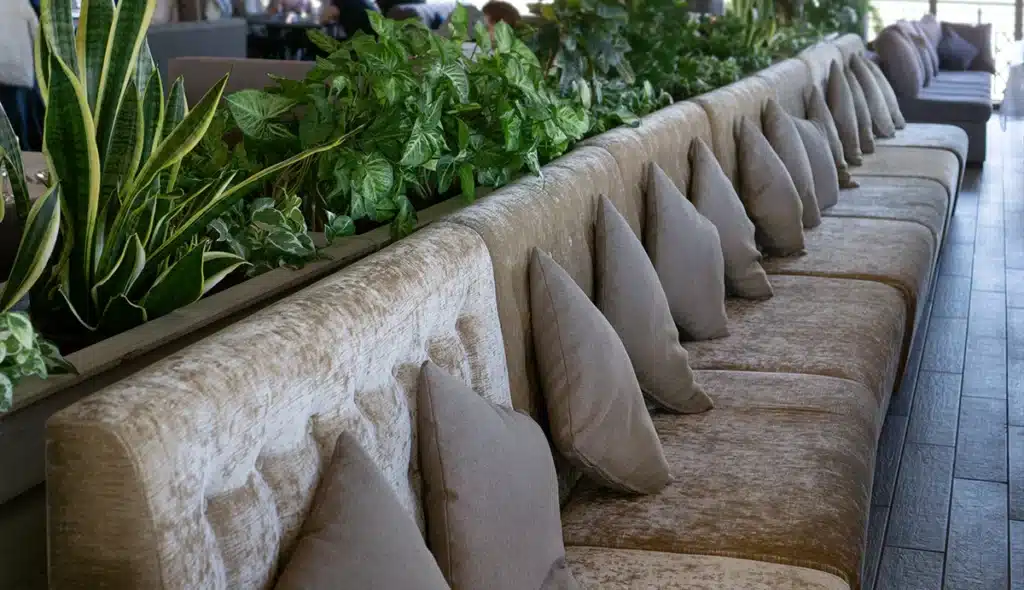
You’ll often see phrases like standard booth seating dimensions or restaurant booth seating measurements used loosely online. In reality, there’s no single fixed standard — but there are well-established dimensional ranges that work reliably with commercial dining furniture.
In most hospitality settings, booth seating is designed to pair with standard dining tables (typically around 730–750mm high). From that starting point, seat height, depth and back height are adjusted to balance posture, comfort, space efficiency and privacy. The sections below explain how each dimension works, and when it makes sense to deviate from the norm.
Booth Seat Height: Getting The Table Relationship Right
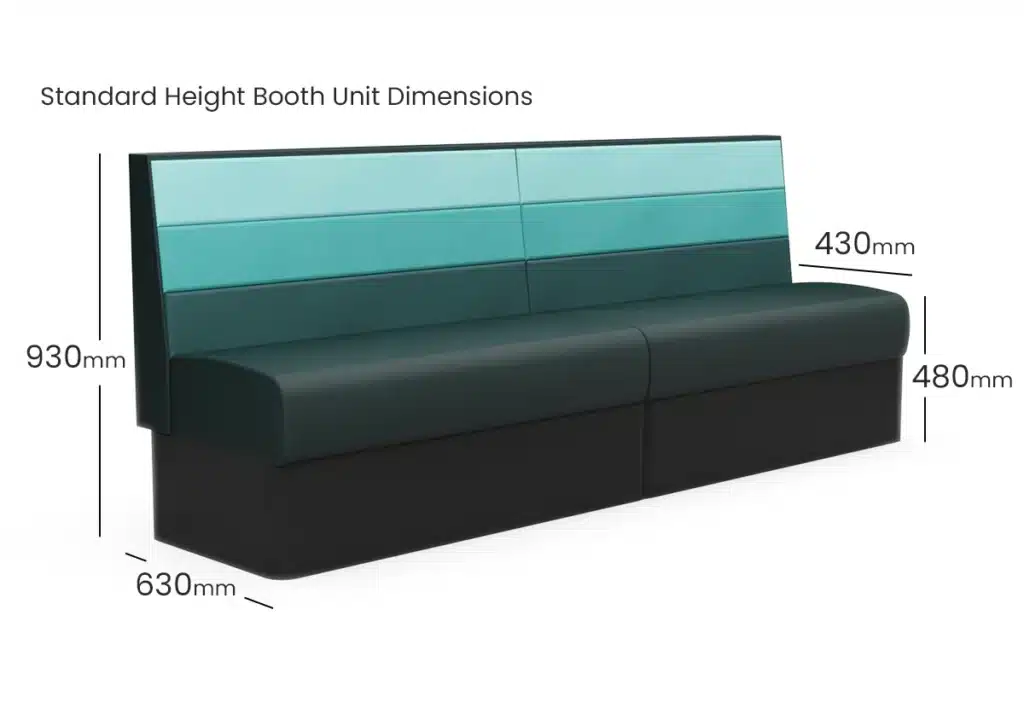
When people talk about booth seat height, they’re usually referring to the finished height from floor to the top of the upholstered seat. This dimension is critical because it directly affects how diners sit at the table.
For restaurant and café booths, the ideal seat height typically falls within the same range as a standard dining chair, usually around 450mm finished height. This allows diners’ arms to rest comfortably on the table edge without shoulders lifting or backs rounding.
If seat height is too low, guests tend to hunch forward to eat or drink, which becomes uncomfortable over time. If it’s too high, knees lift and circulation can be restricted, especially during longer dwell times. This is why seat height should always be considered in relation to table height, not in isolation.
When specifying booths for dining environments, it’s helpful to reference typical restaurant configurations such as those shown on Restaurant Booth Seating (UK-Made Banquette Seating for Restaurants). These examples demonstrate how consistent seat and table relationships support comfortable, repeatable layouts across a venue.
Seat Depth: Posture, Comfort and Dwell Time
Seat depth is one of the most influential, and frequently misjudged, booth seating dimensions. It affects how upright people sit, how easily they can stand up, and how long they’re comfortable remaining at the table.
In commercial environments, booth seat depth is typically shallower than domestic seating. A finished depth in the region of 450–500mm encourages an upright posture that works well for eating, drinking and conversation. This is often considered the sweet spot for restaurant booth seating ergonomics.
Deeper seats may feel inviting at first, but they can subtly undermine comfort at a dining table. Guests may slide forward to reach plates or lean excessively, putting pressure on the lower back. Over time, this can shorten dwell time rather than extend it.
That said, depth can be adjusted intentionally depending on the venue type, particularly in modern booth seating designs intended for longer dwell times.. Loungier cafés, hotel breakfast areas or relaxed dining concepts sometimes benefit from slightly deeper seating — provided table positioning is adjusted to suit. The key is understanding that seat depth directly influences posture, not just perceived softness.
How Deep Should Booth Seating Be In Small Spaces?
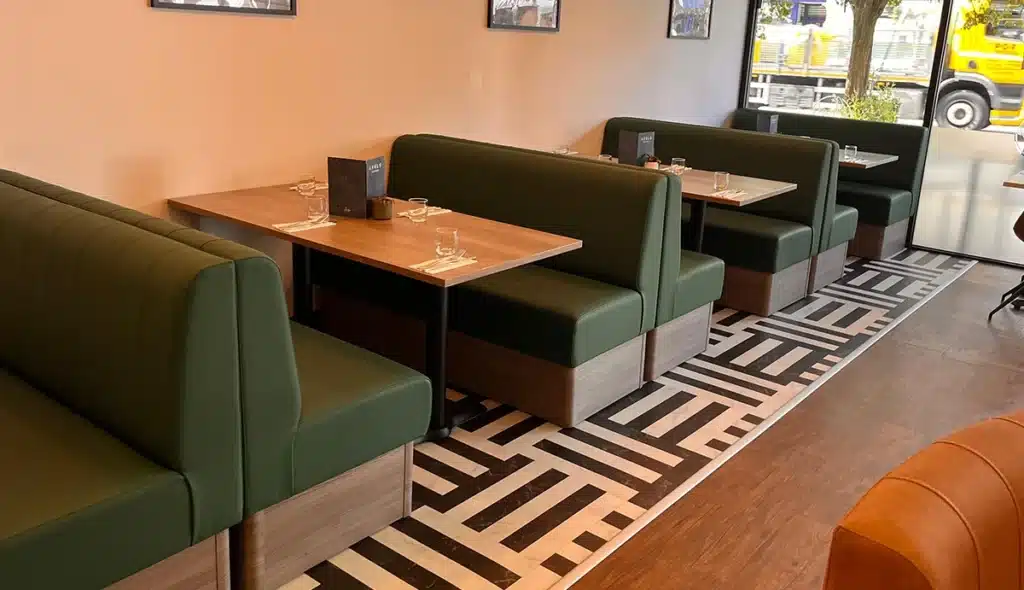
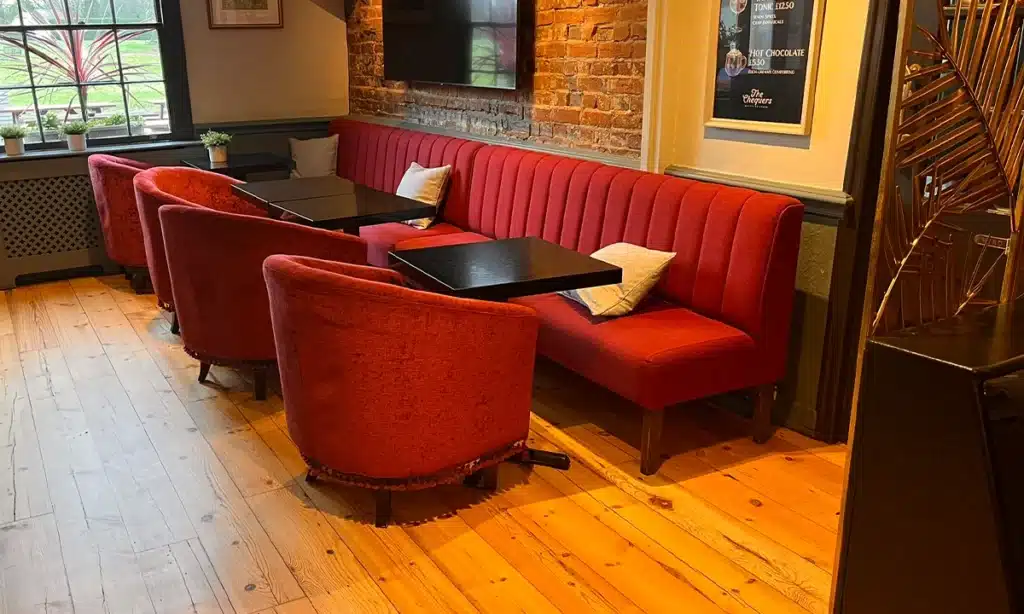
In compact venues, how deep should booth seating be becomes a critical design question. Reducing seat depth is one of the most effective ways to reclaim floor space without compromising usability. this approach is often used in space-saving booth seating designs created specifically for compact hospitality layouts..
Shallower booth seating — often in the 400–430mm range — can work well in tight layouts where aisle space or table clearance is limited. While this slightly firms up the sitting position, it often improves circulation routes and increases overall cover count.
This approach is explored in more detail on Banquette Seating for Small Spaces, which looks at how compact footprints and reduced depths can support efficient hospitality layouts without making guests feel cramped.
Booth Back Height: Low Back vs High Back Seating
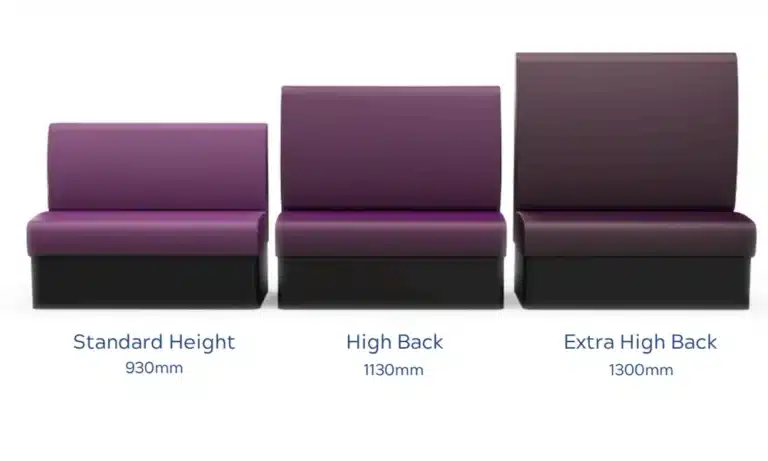
Booth back height plays a major role in comfort, visual zoning and perceived privacy. Unlike seat height and depth, which are closely tied to ergonomics, back height also affects how a space feels.
Low-back booths — typically around 800–900mm overall height — keep sightlines open and work well in smaller or more social environments. They’re often used along perimeter walls or where the aim is to maintain visual continuity across the dining room. Lower backs are also commonly used in round booth seating layouts, where maintaining openness is important.
High-back booth seating usually ranges from 1100mm up to 1300mm or more, depending on the level of separation required. Higher backs provide additional upper-back support and create a sense of enclosure, making them popular for intimate dining, zoning large spaces, or creating premium seating areas.
When choosing between high back vs low back booth seating, it’s important to balance privacy with openness. Taller backs can reduce visual noise and improve comfort, but they also introduce a stronger architectural element that needs to be planned into the overall design.
How Back Height Affects Comfort and Behaviour
Beyond aesthetics, back height subtly influences how guests use a space. Higher backs encourage people to settle in, linger longer and treat the booth as a semi-private zone. Lower backs promote quicker turnover and a more casual feel.
From an ergonomic perspective, taller backs provide more continuous support, particularly useful for longer dwell times. However, they also increase the physical footprint of the booth, which needs to be factored into circulation and sightlines.
The most successful commercial booth seating schemes use back height strategically, varying it across the venue to support different dining behaviours rather than applying a single height everywhere.
Booth Seating Ergonomics: Bringing the Dimensions Together
True booth seating ergonomics comes from how seat height, depth and back height work together. Changing one dimension often requires adjusting another to maintain comfort.
For example, a deeper seat may require a slightly reclined back angle or a higher table position to prevent guests from leaning forward. A higher back may benefit from a carefully positioned lumbar zone to avoid a rigid sitting posture. These relationships are especially important in commercial booth seating, where furniture must perform consistently across hundreds of daily uses.
Good ergonomic design isn’t about softness or luxury, it’s about supporting natural posture during dining. When done well, guests rarely notice it; they simply feel comfortable enough to stay.
Dimensional Trade-offs in Real-world Projects
In practice, booth seating dimensions are always a compromise between comfort, capacity and spatial constraints. Architects and fit-out contractors often need to balance ideal measurements against walls that aren’t square, columns that can’t move, or planning layouts that are already fixed.
Understanding the impact of each dimension makes these trade-offs more informed. Reducing depth may slightly firm up seating, but preserve a clear aisle. This is especially relevant in corner booth seating configurations, where circulation routes are often tight. Increasing back height may reduce openness, but improve zoning. Adjusting seat height by even 10–15mm can dramatically improve table interaction.
This is why early dimensional clarity is so valuable, long before final drawings are signed off or bespoke manufacture begins.
Designing With Confidence
Booth seating dimensions aren’t just technical details, they shape how people sit, interact and experience a venue. By understanding seat height, depth and back height in practical terms, you can make informed decisions that support comfort, efficiency and design intent.
If you’re working through early layouts or refining specifications, dimensional clarity at this stage can prevent costly compromises later, and ensure your booth seating performs as well in use as it does on paper.
Need Help Specifying Booth Seating Dimensions?
If you’re working through early layouts, reviewing drawings or sense-checking dimensions before manufacture, our team can help translate dimensional guidelines into practical, buildable booth seating solutions tailored to your space.
Explore our booth and banquette seating ranges, or get in touch to discuss layout planning, dimensional adjustments and bespoke manufacture for your project.
- sales@hcfcontract.co.uk
- 01708 331757