
School Dining Hall Booth Seating for UK Schools & Colleges
School dining halls work at a completely different pace to restaurants. You’ve got timetable-driven surges, fast turnover between sittings, and a daily level of wear that comes from bags, blazers, trays, spills and constant chair-dragging. That’s exactly why school dining hall booth seating has become such a practical option for UK schools and colleges: it helps you manage flow, increase capacity, and keep the room easier to supervise and clean—without turning the space into something fragile or “too loungey”.
In UK schools and colleges, dining furniture often sees more daily wear than almost any other space on site. This page covers what matters most when you’re specifying school canteen booth seating and school banquette seating: cleanability, durability, safeguarding sightlines, circulation for queues and tray return, and how fixed seating compares with loose chairs in real operational terms.
Why booth seating works for schools: capacity, flow and supervision
The biggest difference in an education dining space is rhythm. You’re not designing for relaxed dwell time—you’re designing for short, intense bursts of use. Fixed school canteen booth seating can improve the way a room “behaves” because it naturally defines where pupils sit, where bags go, and how people move around the perimeter.
Booths can also be a smart way to increase covers without widening aisles, because you’re not losing space to chairs pulled out at random angles. In the right layout, school dining hall seating can feel calmer simply because routes are clearer: queue to serving, circulation to seats, then a clean exit path to tray return.
For schools refurbishing dining halls as part of wider campus improvements, it often makes sense to plan booths alongside other student areas under an overall Office & School Furniture approach, so the same durability and maintenance expectations run through every space.
Fixed banquettes vs loose seating: what’s easier day-to-day?
A common question is whether fixed seating is “too permanent” for schools. In practice, the trade-off is simple: loose chairs give you maximum flexibility, but they also create daily unpredictability. Fixed dining hall banquettes reduce the variables that cost time—especially in busy canteens with limited staffing.
Loose chairs tend to drift, scrape floors, break over time, and create pinch points in aisles when pupils stand up quickly. Fixed seating, on the other hand, keeps circulation routes consistent, which helps with supervision and reduces those last-minute bottlenecks when a bell goes.
If you need a hybrid approach, we often see booths used around edges (where they improve flow and protect walls), with loose seating kept in the centre for occasional reconfiguration.
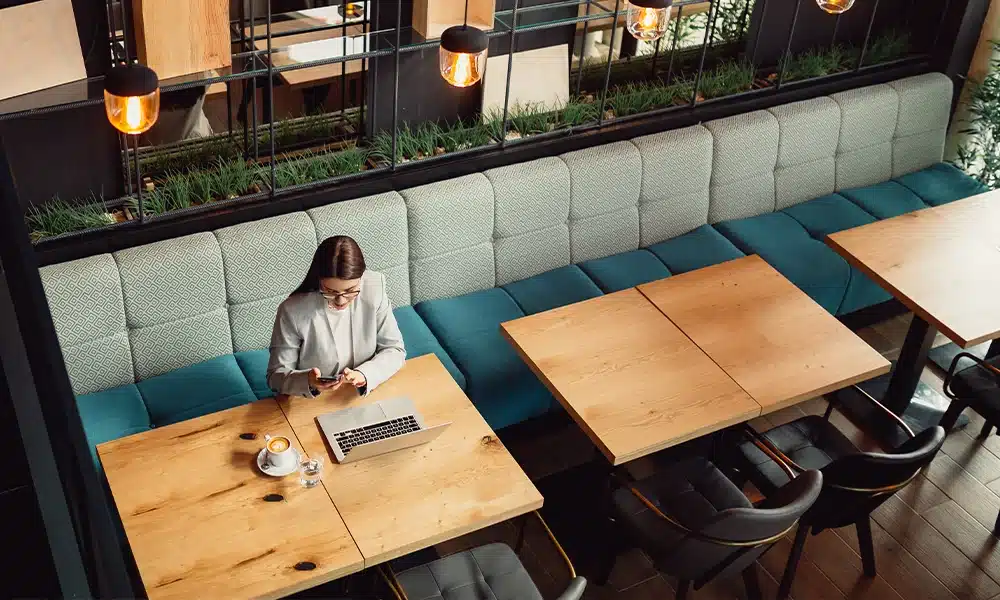
Cleanability and spill resistance in school dining areas
In a school canteen, “easy clean” isn’t a nice-to-have—it’s the difference between furniture that still looks professional in year three, and furniture that looks tired by half-term. The best booth seating for schools focuses on two things: surfaces that wipe down quickly, and detailing that doesn’t trap crumbs.
From a practical point of view, look for:
- Upholstery that suits frequent wiping and disinfecting
- Minimal seams in high-contact areas
- Simple junctions where the seat meets the back and base
- Hard-wearing kick panels and edges that can take impacts
This is where contract-grade build quality matters. Booth seating is a high-touch surface all day, every day, and it needs to stand up to repeated cleaning without the upholstery loosening or the frame working over time.
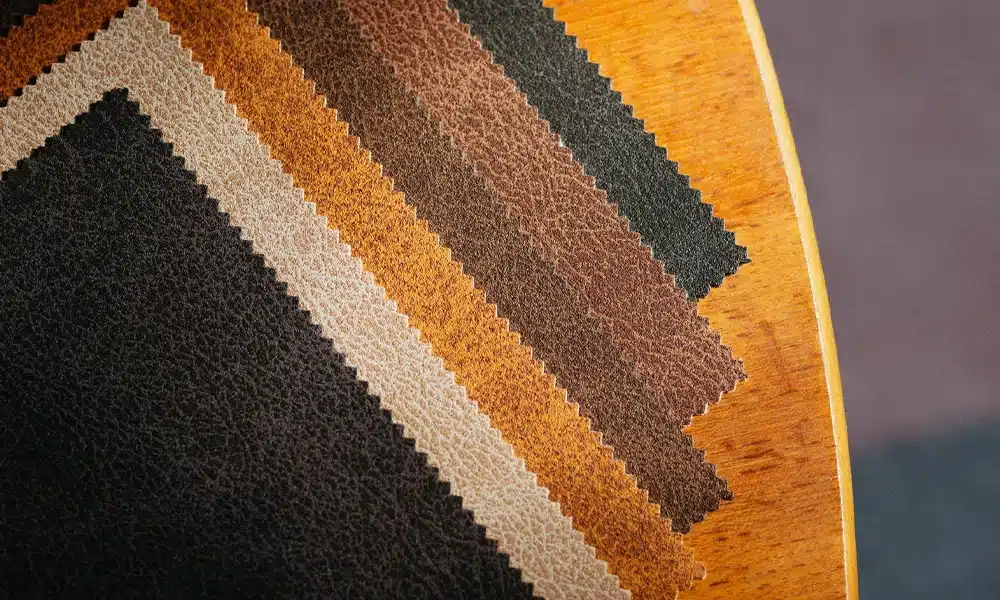
Choosing upholstery for schools: wipeable comfort without “luxury lounge” fragility
Schools want comfort, but they don’t want furniture that encourages slouching, lingering, or rough use in the way domestic-style sofas do. Good booth seating for colleges and secondary schools strikes a balance: supportive enough to sit through lunch, robust enough to take knocks, and wipeable enough to clean quickly.
In most canteens, the decision sits somewhere between upholstered finishes and more wipeable options such as contract vinyl. The key isn’t just the material—it’s also the build underneath it: the way the upholstery is tensioned, where seams are placed, and how exposed edges are protected.
If you’re weighing up durability and clean-down performance, it’s worth reviewing our Booth & Banquette Seating options first, then matching the upholstery specification to your cleaning routine and the age range using the cover choices and upholstery options that best fit your site.
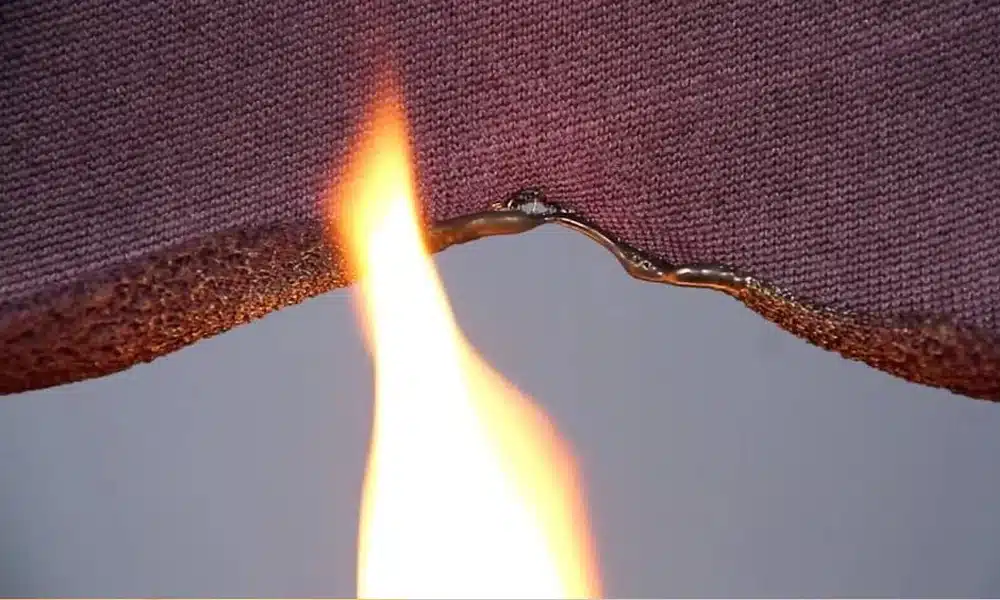
Fire safety and “contract upholstery requirements” in education settings
Even when you’re not specifying for a clinical environment, schools still need to treat upholstery properly—especially where furniture is fixed, high-use and installed at scale. Fire safety is part of responsible procurement, and it also affects replacement decisions later (for example, when re-covering older seating).
For a plain-English overview of what “Crib 5” means in the context of contract seating, start with our Fire Safety & Crib 5 Regulations for Hospitality Seating page. It’s written for real-world upholstery decisions rather than legal theory, which makes it useful for education projects too.
Layout planning: queues, tray return and clear circulation
The best school dining hall layouts aren’t just about fitting in more seats—they’re about reducing friction in the room. A layout that looks fine on a plan can fail in use if it creates cross-traffic between pupils queuing, pupils carrying trays, and pupils leaving their seats.
When we talk about seating layouts for school dining halls, we’re usually looking for:
- a clear “queue to serving” lane that doesn’t cut through seating
- a separate route from tables to tray return
- sightlines for staff (avoid hidden corners and blind spots)
- consistent aisle widths that don’t get narrowed by pulled-out chairs
Booths can help here because they act as a physical boundary. Where loose seating can gradually creep into circulation space, fixed banquettes hold the line—particularly valuable in narrow dining halls or older buildings where you don’t have generous square meterage to play with.
Safeguarding and behaviour management: avoid hidden corners
In education settings, furniture layout is part of safeguarding. Overly enclosed corners, high backs in the wrong place, or tight “nooks” that reduce visibility can create supervision challenges—even if they look tidy from a design perspective.
This doesn’t mean booth seating is risky. It means booth seating should be planned with intention:
- keep higher backs away from isolated corners
- avoid deep recesses and tight U-shapes in low-visibility zones
- use booths to support clear supervision lines, not block them
- align seating so staff can scan the room quickly during busy sittings
A well-planned booth layout can actually improve behaviour management because it reduces the chaos of constant chair movement and makes the room feel more structured.

Durability in high-footfall school canteens: frames, bases and repairability
School dining rooms punish furniture. The real test isn’t week one—it’s how it looks after thousands of sits, daily cleaning, and the occasional hard knock from trolleys or stacked trays.
For durable seating for school canteens, focus on:
- contract-grade internal frames (built for constant use)
- robust base designs that resist wobble over time
- materials and finishes that won’t look shabby after frequent wiping
- component choices that can be repaired or refreshed rather than replaced
This is also where fixed banquettes often win over loose chairs. Chair legs loosen, fixings fail, and the “fleet” becomes mismatched over time. A properly built banquette line keeps the space looking consistent and reduces ongoing maintenance headaches.
Acoustic comfort: booths help, but they don’t solve everything
Dining halls are noisy by nature. Booths can contribute to a better acoustic feel because upholstered surfaces absorb some harshness, and fixed layouts reduce the scrape-and-bang of chair movement. But it’s important to be realistic: booth seating doesn’t replace acoustic treatment, and it won’t turn a busy canteen into a quiet space.
Where booths help most is with “perceived chaos”. If circulation is clear and seating stays put, the room feels more controlled, which often reduces the behavioural noise that comes from congestion and last-minute rushing.
Planning for multi-use dining spaces
Many schools now use dining halls for more than lunch: after-school clubs, parents’ evenings, events, and exam overflow. Fixed seating can still work in multi-use spaces, as long as the layout keeps a flexible zone available.
A common approach is perimeter booth seating with a central area of loose tables/chairs that can be cleared. Done well, you get the everyday operational benefits of fixed seating without losing the ability to host community use.
If your dining space also doubles as a student social area at certain times, you might find it helpful to cross-reference our thinking on Breakout Area Furniture & Soft Seating—not for “lounge styling”, but for how shared spaces handle heavy use without becoming high-maintenance.
Extending life: maintenance and refurbishment for school booth seating
Even the toughest canteen seating will show wear eventually—usually on the highest-contact edges and seat tops. The good news is that fixed seating is often a strong candidate for refurbishment, because the frame can stay in place while the finish is refreshed in a phased way (helpful for schools managing budget across multiple years).
If you’re looking at a refresh rather than a full replacement, our Booth & Banquette Seating Maintenance Guide is a practical starting point for understanding what can be repaired, what should be replaced, and how to plan work around term time.
When upholstery is torn, stained beyond recovery, or no longer fits your cleaning routine, a professional recover can be the most cost-effective option—especially for long runs of seating. In that case, see our Booth & Banquette Seating Re-Upholstery Services page for what a contract-grade refresh typically involves.
Ready to plan your school dining hall layout?
If you’re working on a canteen refurbishment or new build, we can help you specify durable, easy-clean school dining hall booth seating that fits your room, protects circulation routes, and stands up to daily use. Share your rough plan (or just dimensions and photos), and we’ll come back with practical layout guidance and made-to-measure options—UK-made, contract-grade, and designed for real school life.
- sales@hcfcontract.co.uk
- 01708 331757
School Dining Hall Booth Seating FAQs
Yes—school dining hall booth seating is often very suitable because it supports fast turnover, keeps circulation predictable, and reduces chair movement. The key is specifying contract-grade construction and planning layouts with supervision sightlines in mind.