


Acoustic Meeting Pods & Office Booths UK Guide
Open-plan offices have unlocked flexibility, collaboration and better use of space — but they’ve also made one problem impossible to ignore: acoustic privacy. When teams are taking video calls, handling sensitive conversations, or simply trying to focus, “good intentions” and quiet zones rarely hold up for long. That’s where acoustic meeting pods, office meeting pods and office booths earn their place: they create predictable, bookable privacy without the disruption, cost and permanence of building new rooms.
This page is a practical guide to acoustic office pods and office booths for open plan spaces: what they are, when you need them, how to choose the right type (phone booths vs meeting pods), and how to place them so they work with circulation and hybrid working — not against it. If you want the deeper, more comprehensive overview, our pillar guide, The Ultimate Guide to Acoustic Meeting Pods & Booths, goes further into the wider planning and specification context.
What are acoustic meeting pods?
Acoustic meeting pods are enclosed, self-contained “rooms within a room” designed to reduce noise transfer in and out of the space. They’re typically used for focused work, video calls, confidential conversations and small meetings in open-plan layouts where traditional meeting rooms are oversubscribed or too far from where people actually work.
It’s helpful to think of them less as luxury add-ons and more as operational tools. In modern workplaces — especially those built around hybrid working — pods support the everyday moments that don’t justify a formal meeting room: a one-to-one, a quick client call, a private HR chat, or a focused sprint away from distractions.
When do offices need meeting pods?
Most offices don’t need pods because they’re trendy. They need them because certain friction points keep repeating:
Noise becomes a performance issue. Meetings spill into desks. People hesitate to make calls because they feel exposed. Teams “camp out” in meeting rooms for quick calls because there’s nowhere else to go. Those behaviours are all signals that an open plan is missing a privacy layer.
A good indicator is the knock-on effect: if meeting rooms are constantly blocked for calls, or if staff are seeking quiet by working from home more often than planned, meeting pods for offices can be a practical way to restore balance — without re-planning the whole floor.
Acoustic pods vs meeting rooms: the real difference
The simplest distinction is purpose. Meeting rooms are destinations: longer sessions, more people, and higher expectations around presentation. Acoustic meeting booths and pods are closer to a utility layer: quick privacy, short meetings, and focused work.
That’s why pods are often at their best when they’re placed close to where work happens. When people can step into an office privacy pod for a 10–20 minute call and return to their desk, the whole office becomes more fluid. Meeting rooms stay available for the sessions that genuinely need them.
The three main types of office pod (and what each is for)
If you’re planning a pod strategy, start with the use cases. Most workplaces benefit from a blend of these types rather than one “do-everything” solution.
Office phone booths for open plan spaces
Office phone booths (sometimes called acoustic phone booths) are designed for one person: private calls, quick video meetings and focused tasks. They’re especially valuable in hybrid offices where the number of calls has increased — and where people need somewhere to speak without broadcasting to the floor.
Phone booths also tend to be the easiest to adopt culturally. Teams understand what they’re for, they can be used in short bursts, and they reduce the temptation to take calls at the desk.
Small acoustic meeting pods
Small pods usually support 2–4 people for quick meetings, one-to-ones and collaborative huddles. They’re ideal when teams need to talk, but you don’t want them occupying formal meeting rooms. They also work well for confidential conversations that need privacy without feeling overly formal.
In practice, these pods become the “pressure release valve” for open plan: they prevent short meetings from becoming a floor-wide distraction.
Larger team pods
Larger pods are used more selectively. They can be helpful where there’s a constant shortage of rooms, or where teams need a semi-enclosed project space that still sits within the open plan. The key is to be honest about your meeting culture: if your team sessions regularly run long, you may still need proper rooms; pods are strongest when they’re supporting short-to-medium meeting patterns.
Are office pods soundproof?
This is the question everyone asks — and the answer is usually: they’re designed to reduce noise and improve privacy, rather than create absolute “recording studio” silence. In real offices, the goal isn’t perfection. It’s confidence: people should feel comfortable discussing sensitive topics, and teams outside the pod shouldn’t be disrupted by the call.
That’s why acoustic performance should be considered alongside placement and behaviour. A pod placed directly beside a high-traffic pinch point will never feel as private as one placed in a calmer pocket of the floor. The most successful installations treat pods as part of a wider layout strategy, not standalone objects dropped into leftover space.
How acoustic office pods improve privacy (and why it matters for hybrid working)
Hybrid working has increased the number of calls, especially video calls. In many offices, the acoustic environment wasn’t designed for that volume of voice. Pods help by providing predictable settings where people can speak naturally, stay on-camera comfortably and avoid disrupting colleagues.
They also reduce the “social tax” of open plan. When people feel exposed, they either speak quietly (and struggle to communicate), book meeting rooms for solo calls, or default to taking calls from home. Office pods for hybrid working support a healthier rhythm: calls happen in the office without friction, and focused work doesn’t require headphones all day.
Placement and circulation: where pods work best
Pods succeed or fail on placement. A few principles usually make the difference:
Pods need breathing room. They should be accessible without forcing people to brush past seated colleagues, and without blocking routes to collaboration areas, kitchens or exits. They also benefit from being visually “findable” — so people don’t feel awkward hunting for a private space.
At the same time, pods shouldn’t sit in the noisiest, most chaotic part of the floor. If you place a pod where conversations, footsteps and queueing are constant, people won’t perceive it as a calm, private place — even if the pod itself performs well. A quieter edge, a transitional zone, or a dedicated “privacy strip” often works better.
Power, ventilation and lighting: what to consider (non-technical)
Most teams take these features for granted until they’re missing. If pods are going to support real work, users need to feel comfortable and functional inside them: enough light to be on video without looking like a silhouette, fresh airflow that doesn’t feel stuffy, and easy access to power for laptops and devices.
The best way to think about it is usability. If a pod feels hot, dim or awkward to plug into, people will avoid it — and your investment becomes underused. Even without getting into technical detail, it’s worth agreeing internally what “a good pod experience” looks like for your team before you specify.
Durability and contract-grade construction
Office and education crossover: pods for schools, colleges and universities
Education estates teams increasingly need quiet spaces that don’t require construction: staff rooms that need privacy for calls, pastoral conversations that benefit from discretion, and study environments where students can focus without disrupting open learning spaces.
The key difference in education is behavioural: pods often need to handle heavier use, more varied users, and a more dynamic environment. That makes robustness and easy maintenance even more important, and it reinforces the case for using pods as part of a broader furniture strategy. For the wider sector view, the parent cluster Office & school furniture is the best jumping-off point.
Choosing the right pod style: privacy, openness and “feel”
Not all pods create the same experience. Some feel enclosed and cocooned; others feel more open and social. In many workplaces, the best solution is to mix the “feels” across the floor: more enclosed options for confidential calls, and more open options for quick catch-ups.
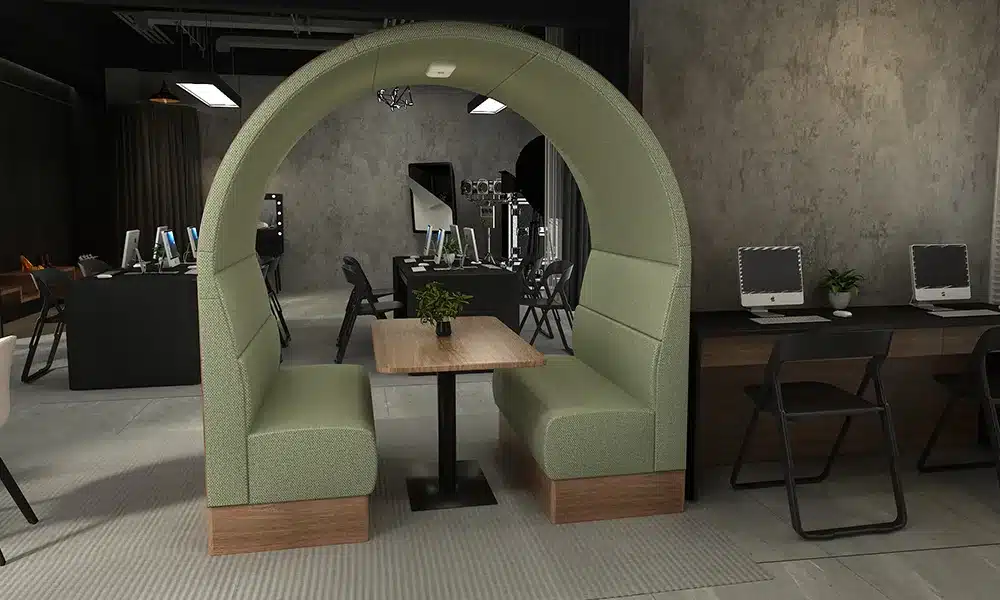
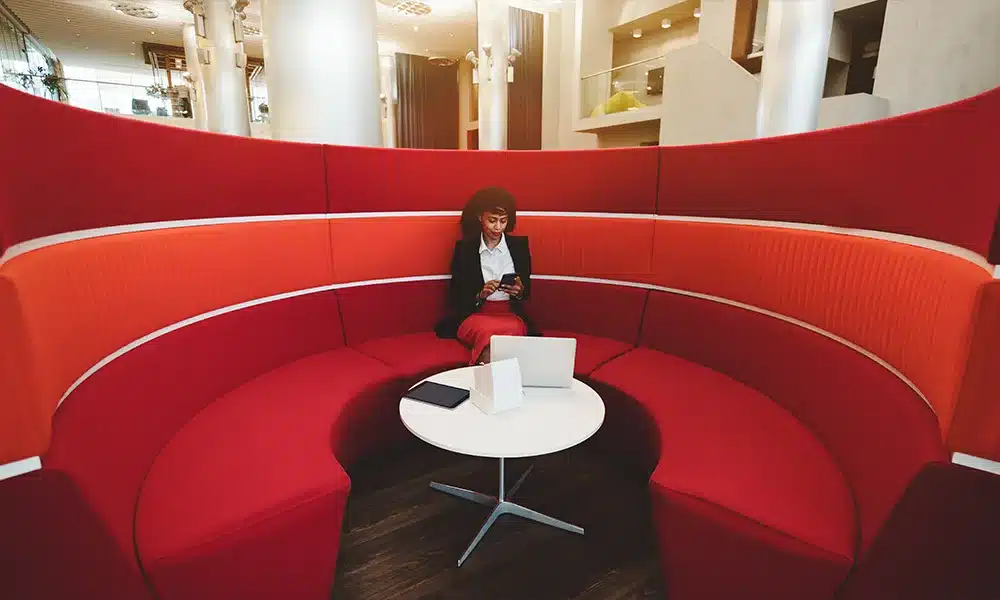
Within HCF’s office meeting pod range, styles can vary from curved, welcoming shapes to more architectural forms, depending on the scheme. Some pod designs feel more enclosed and cocooned, while others are more open and architectural.
The right choice depends less on trends and more on what you’re trying to enable: confidential conversations, quick collaboration, or a mix of both.
Upholstery and compliance: when Crib 5 context matters
Many pods are upholstered and sit within busy commercial environments, which means upholstery performance and documentation can matter — especially where procurement teams are aligning to broader fire safety expectations across a building.
We’re keeping this high level here, but if you need context on Crib 5 and what it means when specifying or re-covering upholstered items, our Fire safety & Crib 5 regulations for hospitality seating pillar is a useful reference point.
Talk to us about meeting pods for your space
If you’re planning an open-plan refresh, adding privacy for hybrid calls, or creating quiet zones in workplaces or education settings, we can help you choose the right mix of phone booths and acoustic office pods — and plan placement that supports circulation and day-to-day use.
Start at Office & School Furniture and share your floor plan and key use cases for a clear, project-ready recommendation.
- sales@hcfcontract.co.uk
- 01708 331757
Acoustic Meeting Pods & Office Booths FAQs
See Our Other Inspiration Posts and Guides