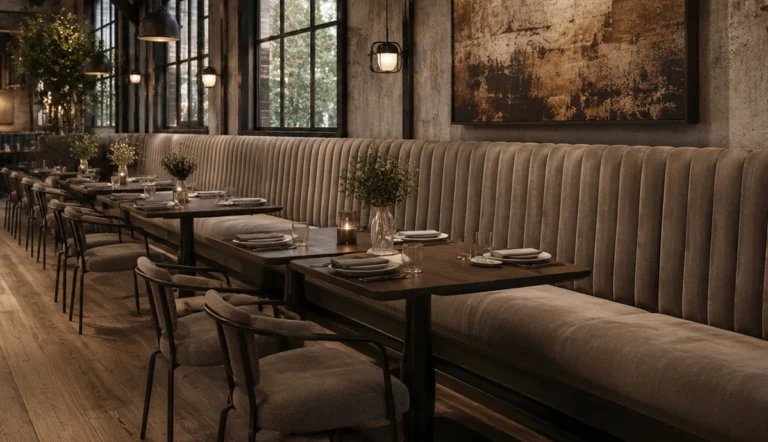
How Contract Fabrics Are Used in Real Hospitality Settings

In hospitality environments, fabrics are not just a design choice, they are a working material. Every day, restaurant seating is exposed to spills, repeated cleaning, constant movement and sustained pressure from guests. Understanding how contract fabrics behave in real-world conditions is what separates a scheme that looks good on opening day from one that still performs years later.

This guide explores how contract fabrics are actually used across restaurants, pubs and cafés, focusing on performance, durability and day-to-day practicality. If you’re specifying seating or planning a refurbishment, this is the reality behind the materials.

What Contract Fabrics Really Do in Hospitality Spaces

Contract fabrics are designed specifically for commercial use, where seating must withstand far more than occasional domestic wear. In a busy venue, a single booth might be used hundreds of times per week, often with quick turnaround cleaning in between.

Rather than focusing on technical specifications alone, it helps to think about how these fabrics function in context. On a run of booth and banquette seating, for example, the upholstery must cope with:

  • Repeated sliding in and out of seats
  • Food and drink spills throughout service
  • Frequent wiping with cleaning chemicals
  • Pressure on seams, stitching and cushion tops
Deep fluted banquette seating for restaurants in a furniture showroom, made by HCF Contract Furniture for the trade, bright clean modern showroom

These are the conditions that define contract-grade performance, as explored in What “Contract Grade Furniture” Really Means.

In practice, the fabric becomes part of the seating’s structure—not just its surface—contributing to comfort, longevity and the overall feel of the space.

How Contract Fabrics Are Used in Restaurants Day-to-Day

In real restaurant settings, upholstery fabrics are constantly working in the background. Their success is often invisible—noticed only when something goes wrong.

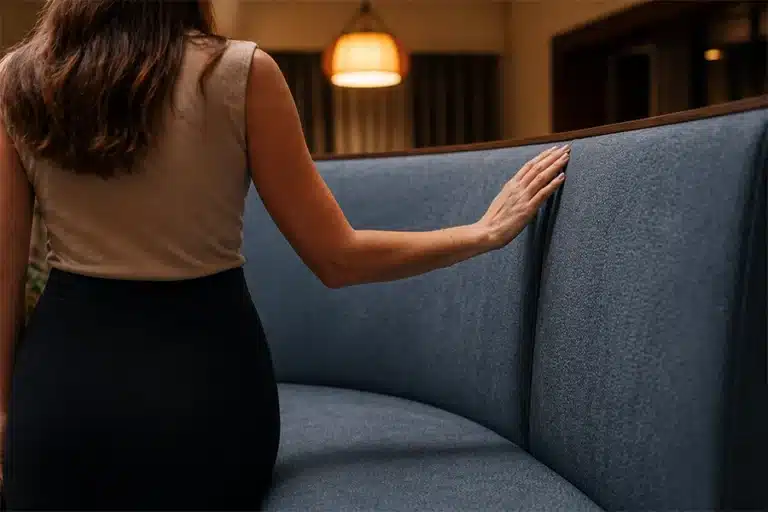
Spills are the most obvious challenge. Coffee, wine, sauces and oils all interact differently with fabric surfaces. In fast-paced environments, staff rarely have time for deep cleaning during service, so fabrics must resist immediate absorption and allow for quick wipe-downs between covers.

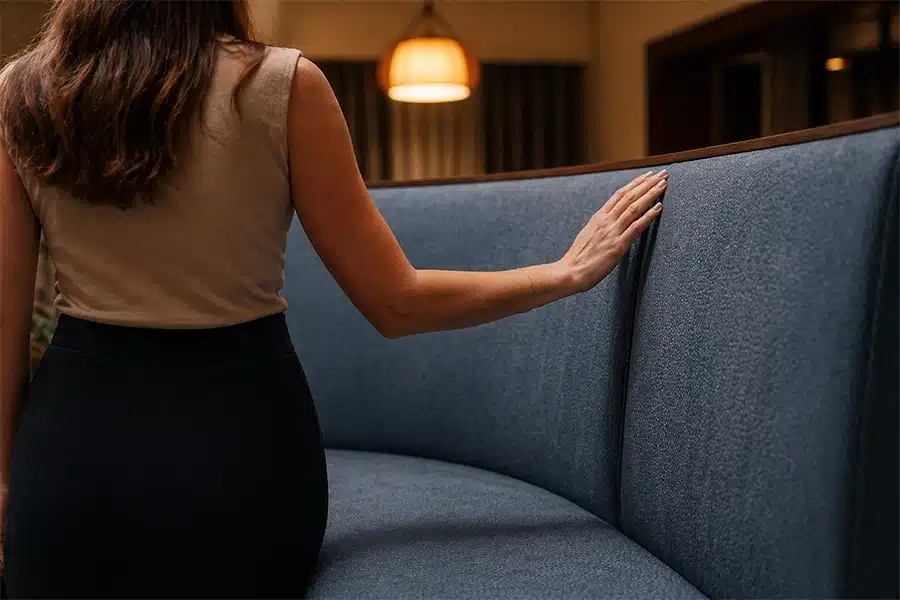
closeup on upholstered fabric on a Hotel Banquette Seat, a woman touches the soft fabric

Equally important is abrasion. Guests sliding in and out of seats, particularly on fixed seating like banquettes, gradually wear down fibres. Over time, lower-quality fabrics begin to flatten, fade or show visible wear paths. In contrast, well-specified contract upholstery fabrics maintain their structure and colour far longer, even in high-turnover venues.

Cleaning routines also shape fabric performance. In many cafés and casual dining spaces, seating is wiped dozens of times per day with antibacterial sprays. Fabrics that cannot tolerate this level of cleaning quickly degrade, either losing their finish or becoming patchy in appearance.

Durable Fabrics for Restaurant Booths and Banquette Seating

Booth seating presents a unique set of demands because it combines fixed positioning with high-frequency use. Unlike loose chairs, booths cannot be rotated or redistributed, meaning certain seats absorb the majority of wear.

On upholstered runs such as booth and banquette seating, fabrics must handle concentrated pressure on seat pads and consistent contact along backrests. This is particularly noticeable in popular areas—window seats, corner booths or high-privacy high-back units.

For deeper insight into how these seating formats perform structurally over time, see The Ultimate Guide to Commercial Booth & Banquette Seating .

In practice, durable fabrics for restaurant booths tend to share a few characteristics:

  • They resist flattening under repeated compression
  • They hold colour evenly, even in areas of heavy use
  • They clean consistently without leaving marks or halos

These qualities become especially important in long, continuous seating runs where visual consistency matters just as much as durability.

Stain Resistance and Easy Cleaning in Real Environments

In hospitality, stain resistance is not about preventing every mark—it’s about managing how fabrics respond when spills happen.

In busy pubs or family dining environments, spills are frequent and varied. Sugary drinks, greasy foods and acidic liquids all behave differently. The best-performing fabrics allow liquids to sit on the surface long enough to be wiped away, rather than soaking in immediately.

Equally, ease of cleaning is about repeatability. A fabric might clean well once, but if it begins to show watermarks or dull patches after repeated wiping, it quickly becomes impractical.

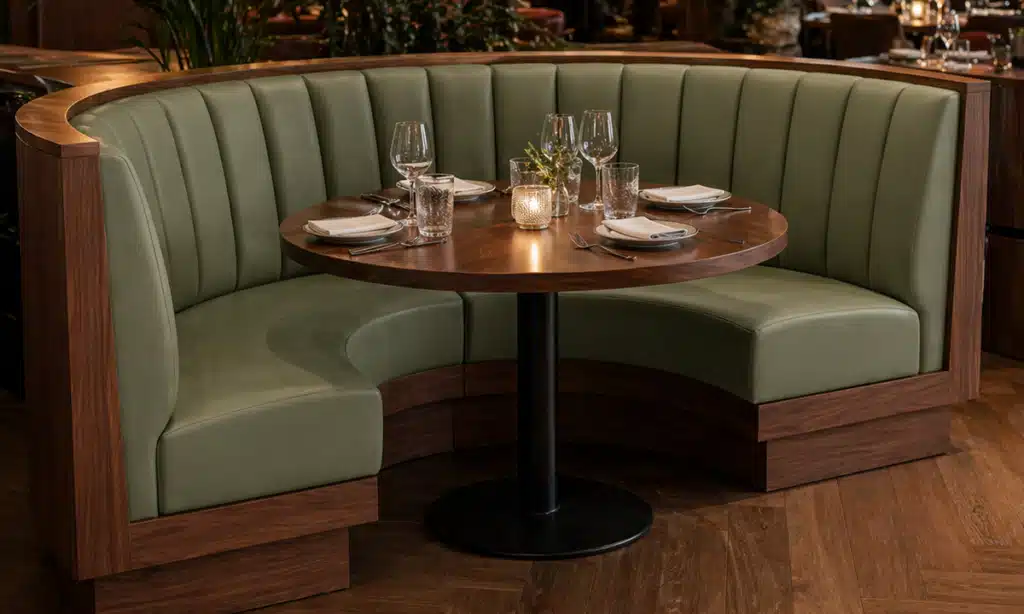
Round Booth set and banquette seating in a modern restaurant interior, showing hardwood plinths and luxurious fabric upholstery, made for UK commercial restaurants

This is why many operators prioritise easy-clean upholstery fabrics in hospitality settings. These materials are designed to:

  • Release stains without aggressive scrubbing
  • Maintain a consistent finish after frequent cleaning
  • Avoid visible “cleaning zones” or discolouration

Over time, this consistency has a direct impact on how well a venue maintains its overall appearance, particularly in daylight or under strong interior lighting.

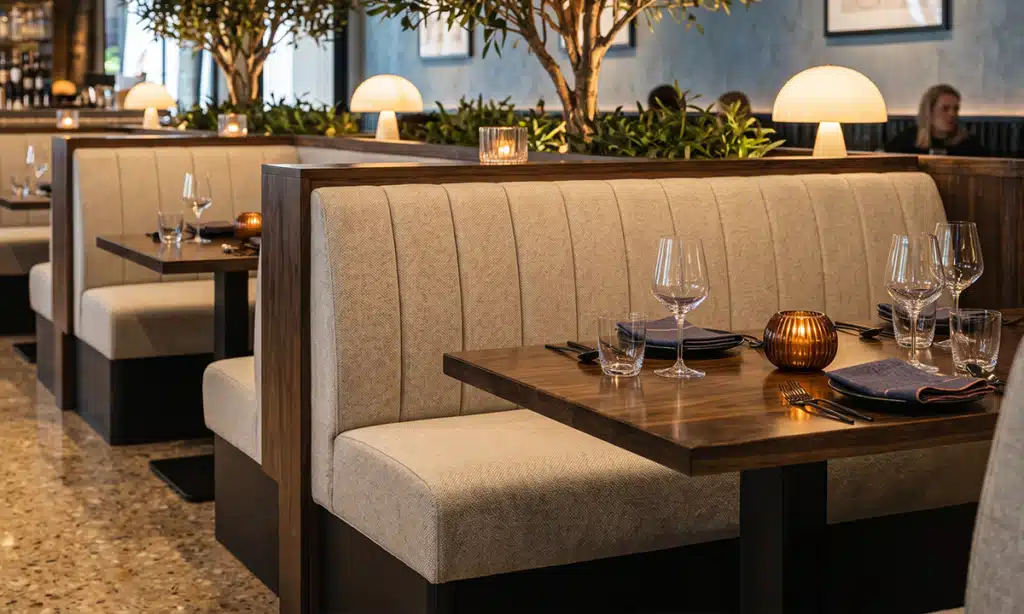
banquette and booth seating in a Luxurious restaurant at night, bespoke banquette seating made by HCF Contract Furniture for commercial hospitality use

How Different Hospitality Venues Influence Fabric Choice

Not all hospitality spaces place the same demands on upholstery. Fabric selection often varies significantly depending on the type of venue and its service style.

Busy pubs and high-turnover cafés

In pubs and casual cafés, fabrics need to prioritise durability above all else. Seating is used continuously, often by guests wearing heavier clothing or outdoor wear, and cleaning tends to be quick and frequent.

Here, practical finishes and darker tones are commonly used to mask minor wear and maintain a consistent look throughout the day.

Mid-range restaurants

Restaurants with a balanced mix of turnover and dwell time often require fabrics that combine durability with a more refined aesthetic. Texture becomes more important, but still needs to perform under regular cleaning.

Banquette seating fabrics in these environments often aim for a middle ground—comfortable, visually appealing, but still robust enough for daily use.

Premium dining and boutique venues

In higher-end environments, the visual and tactile qualities of fabric play a bigger role. Guests spend longer periods seated, and the seating becomes part of the overall experience.

However, even here, performance cannot be compromised. Fabrics must still handle spills and cleaning routines—just with a greater emphasis on texture, finish and long-term visual ageing.

How Fabrics Age Over Time in Commercial Settings

One of the most overlooked aspects of contract fabrics is how they age. Even the most durable materials will change over time—it’s how they change that matters.

In real hospitality settings, ageing typically shows in three ways:

  • Compression: Seat pads gradually soften and fabrics may lose tension
  • Surface wear: High-contact areas become smoother or slightly faded
  • Colour shift: Exposure to light and cleaning products can alter tones

Texture, Comfort and Guest Experience

While durability is essential, fabric also plays a major role in how seating feels. Texture influences both comfort and perception, shaping how guests experience a space.

Smoother finishes tend to feel more contemporary and are easier to clean, making them popular in fast-paced environments. More textured fabrics can create a softer, warmer feel, often used in spaces where guests are encouraged to stay longer.

In booth seating, fabric also affects how guests interact with the seat. Materials that are too slippery can feel less stable, while overly rough textures can reduce comfort over time. The balance between practicality and comfort is where good specification really shows.

Fabric Selection in High-Traffic Seating Areas

Certain areas within a venue will always see more use than others. Entrance seating, central booths and popular table locations often experience significantly higher traffic.

In these zones, fabric selection needs to be particularly considered. Operators often use more resilient finishes or slightly darker tones in these areas to maintain consistency across the space.

This approach is not about compromising design—it’s about ensuring the entire venue ages evenly. A well-planned scheme will look cohesive months or even years after opening, rather than showing early signs of wear in isolated areas.

Working with Suppliers and Fabric Sources

In real projects, fabric selection is rarely done in isolation. Designers, contractors and operators often work with trusted suppliers to source materials that meet both aesthetic and performance requirements.

For example, suppliers such as Care & Leisure Textiles are commonly involved in hospitality projects, providing contract upholstery fabrics that are suited to commercial environments. Their role is not just supplying material, but helping ensure the chosen fabric aligns with how the seating will actually be used.

This collaborative approach is what helps bridge the gap between design intent and real-world performance.

Planning a Booth Seating Project?

If you’re reviewing fabric options for an upcoming restaurant, bar or café project, it’s worth considering how those materials will actually perform once the venue is in use—not just how they look on a sample card.

As a UK manufacturer of contract-grade booth and banquette seating, we work closely with fabric suppliers and clients to ensure upholstery choices align with real-world demands, whether that’s high-turnover dining, frequent cleaning or long-term wear.

If you’d like a second opinion on your fabric specification, we’re always happy to talk through practical considerations alongside your layout, timelines and overall project goals, without obligation.

FAQs: Contract Fabrics in Hospitality

What fabrics are used in restaurant seating?
Most restaurant seating uses contract-grade upholstery fabrics designed for commercial durability. These are specifically developed to handle high traffic, regular cleaning and exposure to spills.
What are the best upholstery fabrics for hospitality seating?
The best fabrics are those that balance durability, cleanability and appearance. In practice, this means materials that resist wear, clean consistently and maintain their look over time.
Are stain-resistant fabrics necessary in restaurants?
In most hospitality environments, yes. Stain resistance helps manage spills quickly and reduces long-term damage, especially in high-turnover venues.
How do you choose fabric for banquette seating?
Fabric should be selected based on how the seating will be used. High-traffic areas require more durable, easy-clean materials, while premium spaces may prioritise texture and appearance alongside performance.
Are stain-resistant fabrics necessary in restaurants?
In most hospitality environments, yes. Stain resistance helps manage spills quickly and reduces long-term damage, especially in high-turnover venues.
How long do commercial upholstery fabrics last?

This depends on usage and maintenance, but well-specified contract fabrics can perform effectively for several years, particularly when paired with high-quality seating construction.

See Our Other Inspiration Posts and Guides

closeup on upholstered fabric on a Hotel Banquette Seat, a woman touches the soft fabric
Read More
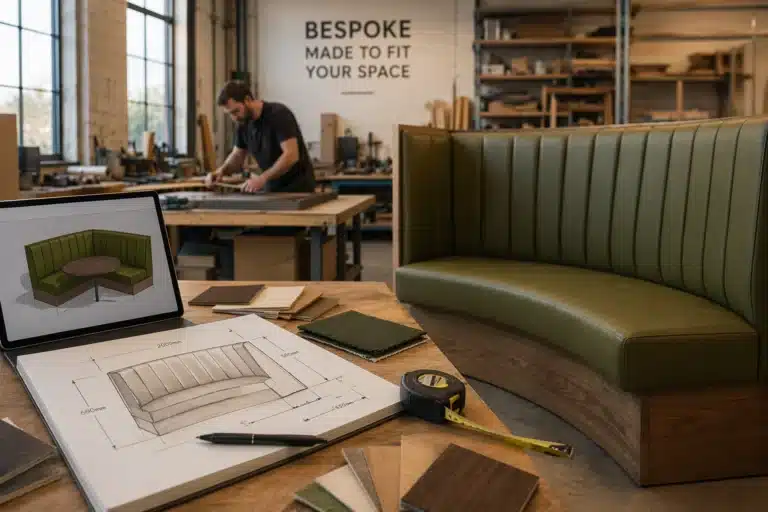
Bespoke banquette seating unit in a factory workshop, showing the breakdown of making a banquette unit
Read More
UK Cafe fixed seating run against a wall in a modern scandi style cafe, bespoke banquette manufactered by HCF Contract Furniture
Read More
author avatar
HCF Editorial Team Editorial Team
The HCF Contract Furniture Editorial Team brings together decades of experience designing and manufacturing UK-made contract furniture for restaurants, bars, pubs, hotels and hospitality venues. All content is written and reviewed by our in-house team using real manufacturing knowledge, project experience and industry standards, including Crib 5 compliance and contract-grade specifications.

Leave a Reply

Your email address will not be published. Required fields are marked *

What are you looking for?